• Skip to main content
  • Skip to header right navigation
  • Skip to after header navigation
  • Skip to site footer
MyZA

MyZA

News, Directory, Events and Other Stuff

  • Social Media
  • Sport
  • World News
  • Home
  • Submit News
  • Directory
  • Events
  • Stratlec
  • TFSA
  • News
    • APO
    • Today’s Sport News
    • Todays Social Media and Tech Headlines
    • Today’s World News
    • Today’s SA Financial News
  • Contact
You are here: Home / Archives for APO

APO

20 August 2026

Finance and Legal Leaders to Advance Africa’s Energy Investment Agenda at AEW 2026

Location: News

African Energy Chamber
Download logo

As Africa scales upstream development, industrial expansion and cross-border energy trade, access to development finance and sophisticated legal advisory has become indispensable to turning investment commitments into operational projects. Reflecting this shift, African Energy Week (AEW) 2026 – taking place in Cape Town from October 12–16 – will welcome senior representatives from South Africa's Industrial Development Corporation (IDC) and pan-African legal and advisory firm CLG to this year's speaker lineup.

The participation of these esteemed firms at AEW 2026 will provide delegates with valuable perspectives on the financial, legal and institutional frameworks needed to accelerate investment and support long-term industrial growth across the continent.

The IDC joins the conference following one of its most significant announcements of 2026. In late July, the state-owned development finance institution signed a joint framework agreement with Afreximbank targeting $8 billion in financing to strengthen South Africa's industrial base, expand manufacturing capacity and support infrastructure development under the African Continental Free Trade Area. The initiative reinforces the institution's growing role in mobilizing large-scale capital for industrialization while creating new opportunities for energy, mining and strategic infrastructure projects.

Under its 2026/27 strategic plan, the IDC has also committed R38.5 billion toward industrial development, including dedicated funding for local industrialists, women and youth-owned businesses. These initiatives underscore the organization's expanding mandate as both a development financier and industrial catalyst.

Against this backdrop, Acting Divisional Executive for Mining, Metals, Infrastructure and Energy Nina Yose brings extensive experience to this year's event. At AEW 2026, she is expected to offer valuable insight into how development finance institutions can unlock investment, strengthen capacity and support the next generation of African energy and infrastructure projects.

Complementing the financing perspective, CLG arrives at AEW 2026 as one of Africa's premier legal and corporate advisory firms. Earlier this month, CLG's Central African practice provided guidance on the Republic of Congo's certified electronic invoicing system, helping companies navigate new compliance requirements affecting business operations across the region.

xRepresenting the firm at AEW 2026, Nigeria Office Director and Group Managing Counsel Adeleke Alao brings extensive expertise in project finance, cross-border transactions and energy regulation. Joining him, Director of Tax & Legal for Central Africa Grace Yella offers deep knowledge of tax, corporate structuring and regulatory compliance throughout the CEMAC region. Together, they are positioned to provide delegates with practical perspectives on managing legal risk, facilitating investment and creating regulatory certainty for Africa's evolving energy sector.

“Mobilizing investment requires more than capital alone,” says NJ Ayuk, Executive Chairman, African Energy Chamber. “Strong development finance institutions and world-class legal expertise are essential to delivering projects, strengthening investor confidence and ensuring Africa captures greater value from its natural resources.”

The participation of these finance and legal institutions reflects the interconnected nature of Africa's energy sector, where investment success depends on capital, sound governance and regulatory certainty working in tandem. As governments and investors pursue the continent's next wave of oil, gas, mining and infrastructure developments, AEW 2026 will provide a vital platform for shaping the financial and legal frameworks needed to turn opportunity into long-term economic growth.

Distributed by APO Group on behalf of African Energy Chamber.

Read moreFinance and Legal Leaders to Advance Africa’s Energy Investment Agenda at AEW 2026
20 August 2026

Western Cape Government Welcomes New Ministers of Education and Social Development

Location: News

Western Cape Government: Office of the Premier
Download logo

Today, Premier Alan Winde announced the appointment of Jaco Londt as Western cape Minister of Education and Wendy Kaizer-Philander as provincial Minister of Social Development.

Premier Winde said, “Both Ministers Londt and Kaizer-Philander bring extensive experience, principled leadership and a proven commitment to serving the residents of the Western Cape. Their new portfolios will allow them to build on their respective track records and bring fresh energy, insight and collaborative leadership to two critical areas of government.”

Minister Londt moves from social development where he has served as provincial minister since June 2024. Under Minister Londt, Social Development now runs 21 GBV Ambassador Programmes across the province, has launched the Cape Care Fund to support the work of social development non-profit organisations, and ensured the implementation of the Social Work Integrated Management System (SWIMS) app.

Minister Londt holds a Humanities Bachelor's Degree from the University of South Africa and a Public Administration Honours Degree from the University of Stellenbosch. Prior to being sworn in as a Member of the Western Cape Provincial Parliament, Minister Londt served for 10 years as a Member of Parliament in the National Council of Provinces.

He remarked, “The tremendous responsibility being entrusted to me by Premier Winde is not taken lightly. I am looking forward to building on the solid foundation that was laid by my predecessor, Minister David Maynier. The last two years at DSD have been a great privilege and pleasure. I am proud of what we've been able to achieve in strengthening support for vulnerable residents across the province and leading the way with innovation. Thank you to the DSD management, staff, and our incredible partner organisations."

Minister Kaizer-Philander is an experienced public representative who has served as a Member of the Western Cape Provincial Parliament since 2018, before which she was a councillor and member of the mayoral committee in the Drakenstein Local Municipality.

At the time of her appointment, Minister Kaizer-Philander served as the Chairperson on Social Development and Chairperson of the Ad Hoc Committee on Child Protection Reform in the Western Cape. She has also served in senior parliamentary leadership and committee positions, including as Chief Whip and Chairperson of the TB Ad Hoc Committee and Conduct Committee.

Having served as the Chairperson of the Standing Committee on Social Development, she comes into the ministerial role with a deep understanding of the critical work done by this department. 

Minister Kaizer-Philander is completing a BAdmin Honours in Public Administration at the University of the Western Cape.

“This is a huge honour, and I would like to thank the Premier for trusting me with this enormous responsibility. I look forward to continuing the excellent work of Minister Londt, who has already achieved significant milestones in the department. I am deeply passionate about supporting vulnerable communities, particularly children, families, women, older persons and communities facing social and economic challenges. I am ready to serve the people of the Western Cape in this critical position,” she said.

“With their respective experience and commitment to public service, I have full faith in both Ministers to advance the Western Cape Government's work to create more opportunity, improve lives and build a province in which all residents can thrive,” Premier Winde concluded.

Distributed by APO Group on behalf of Western Cape Government: Office of the Premier.

Read moreWestern Cape Government Welcomes New Ministers of Education and Social Development
20 August 2026

Provincial Week – NCOP North West Delegation Calls for Urgent Intervention as North West Service Failures Persist

Location: News

Republic of South Africa: The Parliament
Download logo

The North West's permanent delegates to the National Council of Provinces (NCOP) have raised serious concerns about the pace, quality and reliability of service delivery improvements in the province since the previous oversight visit.

Although provincial departments and municipalities have reported various interventions, the delegation remains concerned that progress has not been sufficiently consistent, visible or impactful to meaningfully improve the lived realities of affected communities.

The delegation, which is conducting a week-long report-back oversight visit to the province as part of the NCOP's Provincial Week programme, met with the Office of the Premier, the South African Local Government Association (SALGA) and various provincial government departments in Mahikeng yesterday.

The delegation's concerns are particularly acute in communities that continue to experience failures in the provision of basic services, including reliable water, sanitation, safe roads and other essential services, as well as challenges relating to access to medication. These are not merely administrative inconveniences. They directly affect the dignity, health, education, economic activity and safety of households and communities.

The delegation therefore emphasises that remedial commitments must be supported by credible implementation plans, clear timeframes, designated responsible officials, funding certainty and regular, transparent public reporting.

The delegation noted with concern that some communities have reportedly been without a dependable water supply since 2015. Access to sufficient water is recognised within South Africa's constitutional framework as a fundamental right, and organs of state are required to take reasonable measures, within available resources, to progressively realise that right. A prolonged failure to provide communities with dependable access to water cannot be normalised or allowed to continue without urgent escalation and accountability.

The NCOP delegation further noted that several of the challenges identified during the oversight visit appear to be systemic and intergovernmental in nature. In particular, water services, wastewater infrastructure, municipal capacity, procurement delays, infrastructure maintenance and the credibility of recovery plans require coordinated intervention across the municipal, provincial and national spheres of government.

Where local responses remain inadequate, the delegation will ensure that these matters are referred to the Select Committee on Cooperative Governance and Traditional Affairs for further consideration and follow-up.

The delegation further emphasises that oversight cannot end with presentations, promises or revised project timelines. Communities are entitled to practical improvements that they can see and rely upon. Officials and implementing agents must therefore provide measurable commitments, including specific dates for restoring water supplies, repairing or completing infrastructure, securing sites that pose public-safety risks, resolving funding gaps and reporting honestly on obstacles that require intervention from another sphere of government.

For the NCOP delegation, the central question is whether government is responding with the seriousness required by the conditions observed in affected communities. Where people have waited years for basic services such as water, further delays erode public trust and deepen hardship.

The delegation will therefore continue to use its oversight role to press for timely action, transparent reporting and effective cooperation between all responsible authorities.

The delegation calls on the relevant municipalities, provincial departments and national departments to treat these matters with the urgency they deserve. The people of the North West are entitled to services that are reliable, lawful and responsive to their needs. The delegation will closely monitor progress and support the escalation of unresolved matters to the appropriate parliamentary structures to ensure that long-standing service delivery failures are addressed with the urgency, coordination and accountability they demand.

Site Visits:

During its site visits on Tuesday, the delegation noted that the provincial Department of Human Settlements has appointed a contractor to complete the Tshunyane Human Settlements project, which has been stalled for more than 10 years.

The delegation welcomed the appointment of the contractor and the commitment that the project will be completed by the end of November. While there is evidence of progress, including the commencement of construction and a slab already in place, the delegation urged the department to implement effective monitoring to ensure that the project is completed within the stated timeframe and that beneficiaries are finally able to occupy their long-awaited homes.

“While there is progress and the contractor has started with a slab in place, we urge the department to ensure that effective monitoring is implemented to ensure that the people occupy their long-awaited houses,” said Ms Sylvia Sithole, the Provincial Whip and delegation leader.

The delegation also visited Mahikeng Airport and expressed concern that efforts to make the airport fully functional remain a work in progress, with little tangible progress visible on the ground.

The delegation called for urgent action to ensure that the airport becomes operational and contributes to unlocking the socio-economic potential of the province. It remains a serious concern that the North West continues to experience extremely high levels of unemployment despite the province's substantial mineral, cultural and environmental assets, which have the potential to contribute significantly to economic growth and job creation.

The delegation also visited the Rooigrond Wastewater Treatment Works in Mahikeng and expressed concern that the project remains stalled, while costing and project milestones are still outstanding.

The delegation believes that the finalisation of project costs and milestones should not take such an extended period. Continued delays risk further degradation of the existing facility and could ultimately result in significantly higher costs to government.

The delegation has therefore requested an urgent implementation plan setting out clear costs, milestones, responsibilities and timeframes for the completion of the project. The delegation will also forward the matter to the Select Committee on Cooperative Governance and Traditional Affairs to ensure that progress is subjected to continued parliamentary monitoring.

The NCOP delegation remains committed to ensuring that oversight translates into tangible improvements in the lives of communities. Long-standing service delivery failures require more than assurances; they require decisive action, measurable progress and accountability.

The delegation will today visit sites in the Bojanala Local Municipality.

Distributed by APO Group on behalf of Republic of South Africa: The Parliament.

Read moreProvincial Week – NCOP North West Delegation Calls for Urgent Intervention as North West Service Failures Persist
20 August 2026

Winners of Women in Construction at the 2026 ERWIC Awards

Location: News

Republic of South Africa: The Parliament
Download logo

The Chairperson of the Portfolio Committee on Public Works and Infrastructure, Ms Carol Phiri, has congratulated the winners of the Empowerment and Recognition of Women in Construction (ERWIC) Awards, held in Johannesburg on 18 August 2026.

The annual awards, hosted by the Construction Industry Development Board (CIDB), recognise and celebrate female contractors and built-environment professionals in what remains a largely male-dominated industry. Ms Phiri said the seventh edition of the ERWIC Awards demonstrate that recognising and supporting women in construction must be more than a once-off campaign.

“We congratulate all the women who have been recognised tonight. Your achievements show that women have the skills, determination and ability to succeed in the construction industry. We must ensure that these opportunities are not limited to a few, but that more women are supported to enter the industry, grow their businesses and compete for major projects.”

Ms Phiri noted that while women make up more than 51% of the national population, they account for roughly 10 to 11 percent of the approximately 1.259 million workers in the South African construction sector.

Furthermore, Ms Phiri raised as a concern that women-owned businesses remain concentrated in the lower CIDB registration grades, particularly Grades 1 to 4, while higher-value commercial and civil construction work in Grades 7 to 9 remains largely male-dominated.

“We must change this empowerment pattern by giving women real opportunities to move up the value chain, access bigger projects and build sustainable businesses. The construction industry cannot transform while women remain concentrated at the lower end of the sector,” Ms Phiri said.

The winners of the 16 categories at the 2026 ERWIC Awards:

Project Delivery Excellence of the Year – Women-owned Construction Entity:

  • Grade 1: Galo Maarohanye from GVM Civils for the Renovations to Kgodisong Flea Market
  • Grade 2–4: Shai Tshiskule from Livhone Advisory Pty Ltd for the Design and Construction of Warehouse Extension and Mezzanine Office for ZF Lemförder South Africa Pty Ltd
  • Grade 5–6: Johanna Mokoenene from Lebohile Construction for the Naledi Development: Construction of 26 Housing Units
  • Grade 7–9: Thoko Tshabalala-Shandu from VEA Road Maintenance & Civils for the Emergency Reconstruction of Evaton Municipal Access Road

Rural Project of the Year: Matlakala Radebe from Qualicon Construction for the Borwa Primary Healthcare Clinic Design and Construction
Interior Design and Build Project of the Year: Rene Bengu from Rene Forbay Designs for TLS Centurion Design and Project Management
Specialised Project of the Year: Mpho Bantsijang from Loago Electrical and Construction Pty Ltd for the Supply, Delivery and Construction of 2,5 km Long Diamond Mesh Security Fencing At Nongo's Joint Project
Mentoring Entity of the Year: Sanele Ndlovu for the Magnacorp Project Managers for Learnerships, Skills Programmes, Workplace Learning Initiatives and Project-based Opportunities
Transformation Entity of the Year: Protilagor Laboratory and Construction for Female Participation in Technical, Managerial and Leadership Roles
Innovative Entity of the Year: Sonto Cheryl Sikhakhane from Zimisele Afrika Consulting for the Langalibomvu High School
Youth-owned Woman Construction Entity of the Year: Ayanda Phumo from Ayanda Phumo Consulting
Woman-owned Construction Entity of the Year: Noko Ramasenya from Noleo Projects Pty Ltd
Woman Mentor of the Year: Thato Mapuleng Elsie Mokhothu from RTT Africa Legacy/Thato M Foundation
Women with Disability Contractor of the Year: Katlego Charlotte Pfupa from Crystal Construction
Exceptional Woman in Construction Contributor of the Year: Tshidi Mndzebele from Avenir Holdings
Academic Excellence in the Construction and Built Environment Sector: Xolile Nokulunga Mashwama from the Walter Sisulu University
Chairman's Award: Tshidi Mndzebele from AvenirHoldings

Ms Phiri called for greater recognition of the women who are actively shaping South Africa's physical and economic landscape. She said the committee would continue to support efforts to remove barriers that limit women's meaningful participation in the construction and built environment.

Distributed by APO Group on behalf of Republic of South Africa: The Parliament.

Read moreWinners of Women in Construction at the 2026 ERWIC Awards
20 August 2026

Comsol Enters Wholesale 5G Home Broadband Market With Backing From New Shareholders

Location: News
Comsol

  • New shareholder alignment funds the multibillion-rand buildout of a purpose-built 5G-Advanced fixed wireless access (FWA) network.
  • Wholesale model enables established ISPs, MVNOs, WISPs and new market entrants to access South Africa's fastest-growing broadband category.
  • Network brings stable, high-speed home connectivity and greater consumer choice to a growing market across the nation, including underserved areas, starting in Gauteng.

Comsol (https://Comsol.co.za/), a South African fixed wireless connectivity and private network operator with a history spanning nearly three decades, is entering the home broadband market as a wholesale provider of 5G infrastructure. The move is backed by two new shareholders: Platform Investment Partners, which has made 10 founder-stage fibre investments across four geographies over the past decade, and Wimsey Capital, a privately held investment company.

The new shareholding follows the exit of Nedbank Private Equity, part of Nedbank CIB, from its investment in Comsol. Convergence Partners, a major shareholder and long-standing investor in the business, together with Solcon Capital, is investing additional growth capital. Founder and CEO Iain Stevenson (through Mactavish Investments) retains his stake and is also investing additional capital into the company. RMB arranged and provided an innovative and holistic funding solution that enabled the shareholder transaction and will support the business in its strategic capex roll-out plan.

The move gives South African internet service providers, mobile virtual network operators (MVNOs) and other potential partners access to a standalone 5G-Advanced* network purpose-built for fixed wireless access (FWA). Comsol owns and operates the network as an end-to-end wholesale product, while its partners control the customer relationship and go-to-market strategy, including branding, commercials and support.

One million households in Gauteng already covered

Comsol started building its network six months ago and already covers more than a million households in Gauteng. The company is targeting full coverage of Gauteng by March 2027. Expansion into the Western Cape, KwaZulu-Natal and major regional centres will follow in 2027 and 2028. 

Comsol aims to blanket South Africa with around 2,000 base stations, representing one of the country's largest standards-based and highest-capacity 5G networks. The network creates a new wholesale option for South African service providers, giving them more network capacity choice through new infrastructure, enhancing the competitive landscape to the benefit of the consumer.

"Comsol anticipates where the market is heading and builds ahead of demand,” said Stevenson. “This is why we were investing in licensed spectrum years before its strategic value was widely understood and building private 5G before the market had grasped what it would enable. We see 5G-Advanced for the home as a big growth opportunity.

"ICASA has allocated spectrum to network providers to expand broadband access and increase competition in the market. We believe the way to honour that mandate is to build wholesale infrastructure that extends high-speed broadband to new customer segments and creates a platform for more competition at the well-established service provider layer.” 

Backed by investors with deep experience in telecom infrastructure

Shaun Clark, CEO of Platform Investment Partners, added: “We have spent years investing in the construction of open-access digital infrastructure in South Africa, and were founding investors in assets such as DFA, Conduct, Vumatel and N99. Our approach has always been to identify trends in technology adoption and invest behind them. We see fixed wireless as an important part of the connectivity market. Comsol is a natural fit with our portfolio of digital infrastructure businesses, which are all centred around a neutral host model.”

Richard Ladbrook, Director of Wimsey Capital, said: “We see a significant opportunity in 5G fixed wireless access to bring high-quality connectivity to more South African households. Comsol has a multi-decade track record of successfully building and delivering advanced wireless networks in diverse contexts. We are excited to back the business and partner with the world-class Comsol team as they build and scale this next phase of growth.”

Said Andile Ngcaba, executive chairman of Convergence Partners and chairman of the Comsol board: “Comsol is well positioned as the world transitions from 5G to 6G. The depth of its spectrum and nationwide network presence across all provinces creates a significant opportunity to serve South Africa's enterprise, private and public sectors. Comsol's platform is equally relevant to urban and rural markets, and to companies of all sizes.”

For Nedbank Private Equity this exit concludes a successful nine-year investment in Comsol. “We are proud to have supported the company's growth, network rollout and value creation journey alongside management and our co-shareholders. The transaction positions Comsol strongly for its next phase of growth,” said Yougan Moodley of Nedbank Private Equity.

The commercial case for advanced home 5G

Comsol's wholesale 5G-Advanced offering complements existing fibre networks, expanding consumer choice and the reach of home connectivity.  Approximately 15% of South African households are connected to fibre, largely concentrated in dense metro areas where trenching costs are justified. This leaves a significant market adjacent to suburban markets where 5G FWA can be deployed quickly and at a substantially lower cost. The 5G-Advanced FWA network deployed by Comsol provides high capacity to support home broadband at scale, enabling entire towns to be covered in weeks.

Regulatory and technology developments in recent years have further strengthened the commercial case for 5G-Advanced FWA home connectivity. Comsol received its C-band spectrum licence from ICASA in 2022, providing investors with the certainty to fund the network rollout. The allocated spectrum supports speed-tiered plans with competitive pricing for consumers. Meanwhile, declining 5G chipset and CPE costs have lowered the upfront cost for consumers and ISPs entering the 5G FWA market. As a new entrant into the 5G wholesale market, Comsol also benefits from a modern 5G-Advanced standalone core, unencumbered by legacy technologies. 

These advantages of 5G FWA are expected to drive significant growth over the next five years. ICASA data shows FWA subscriptions growing by roughly 39% year on year in 2025.** BMIT predicts that 5G may account for up to 67% of all residential FWA connections by 2029, up from 35% in 2024.*** 

Built differently

Comsol's network is one of only two production 5G standalone cores currently live in South Africa. The network offers a level of ultra-low latency and dedicated capacity control that hybrid 4G/5G deployments cannot match, along with roughly double the uplink performance of typical 5G mobile operator networks.

Comsol's implementation of 5G-Advanced is IMT-conformant, taking advantage of standards-based technologies that deliver significantly greater capacity at a lower cost per bit. Comsol's network is purpose-built to deliver high-capacity 5G home connectivity at scale.

Advantages for partners

Comsol operates as a wholesaler and does not compete with its consumer-facing partners. ISPs and other partners retain ownership of their go-to-market strategies, including product commercials, packaging, billing and branding. Comsol's API-driven platform enables partners to bring a branded 5G-Advanced FWA offering to market in weeks, while retaining a high degree of control over their products and customer engagement.

Comsol has designed the network to enable ISPs to reach new customer segments with connectivity geared towards streaming, video calls and smart-home use that make up the bulk of home broadband needs. Its API-driven architecture gives partners the flexibility to build differentiated packages for different customer segments and implement or adapt products within hours, enabling them to respond quickly to changing market demand.

Distributed by APO Group on behalf of Comsol.

Notes and sources:
*The next step in the development of cellular technologies, 5G-Advanced (https://apo-opa.co/4xLp8h9) refers to a suite of technologies that will be introduced with Release 18 of the 3GPP standards.
** The-State-of-the-ICT-Sector-Report-of-South-Africa-31-March-2026.pdf (https://apo-opa.co/4xWItMF)
***5G expected to reshape South Africa's wireless broadband market (https://apo-opa.co/45CaVr6)

For media enquiries, please contact:
Masamo Majapelo
PR Account Director at Idea Engineers (on behalf of Comsol)
Cell: +27 (0)73 333 6858
Email: masamo@ideaengineers.co.za

About Comsol:
Comsol is South Africa's leading wholesale connectivity and network infrastructure provider, with nearly 30 years of wireless expertise. Working through service provider partners, Comsol enables connectivity for enterprises, businesses and homes.

Its capabilities span licensed fixed wireless access, private networks and other business-critical solutions, underpinned by significant spectrum assets, including the country's largest contiguous holding of 28 GHz spectrum and 60 MHz in the 3.7 GHz band. Comsol has a nationwide enterprise network and is rolling out a new 5G-Advanced network for home connectivity, starting in Gauteng and expanding across South Africa.

For more information, please visit https://Comsol.co.za/

Media files
Comsol
Download logo
Read moreComsol Enters Wholesale 5G Home Broadband Market With Backing From New Shareholders
20 August 2026

Electra Mining Africa: Showcasing the Technologies Shaping the Future of Industry

Location: News
Montgomery Group Africa

As industrial technologies continue to evolve and mining, manufacturing and industrial businesses across Africa pursue greater productivity, improved safety, operational efficiency and more sustainable practices, the need for practical technologies, trusted expertise and strong business partnerships has never been greater. From automation and digitalisation to energy efficiency, sustainability and advanced engineering, organisations are seeking solutions that deliver measurable business value while supporting long-term growth.

Taking place from 7-11 September at the Johannesburg Expo Centre in Nasrec, Johannesburg, Electra Mining Africa will once again provide a meeting place for industry. Recognised as one of Africa's leading industrial exhibitions, the event will bring together more than 1,000 predominantly local exhibitors, together with international companies, country pavilions, industry organisations, technical specialists, business leaders and decision-makers from across mining, manufacturing and related industries.

By bringing together six complementary sectors—mining, manufacturing, automation, electrical and power, transport and related engineering sectors—under one roof, Electra Mining Africa enables visitors to explore how integrated technologies and solutions can improve productivity, safety and operational performance. The exhibition provides a unique opportunity to compare products, engage directly with technical experts and discover how innovations from different sectors are increasingly working together to support smarter industrial operations.

Reflecting continued industry confidence, Electra Mining Africa has expanded its footprint for the 2026 edition, growing by 4,000m² to a record 44,000m² of net exhibition space across six indoor exhibition halls and expanded outdoor display areas.

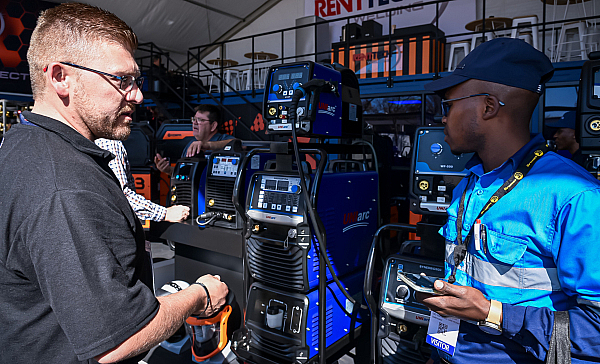
Visitors will have the opportunity to explore solutions ranging from large-scale mining equipment and industrial machinery to automation systems, artificial intelligence (AI), robotics, digital manufacturing, predictive maintenance technologies, power solutions and advanced engineering services. The exhibition also features pumps, valves, welding and fabrication equipment, safety solutions, personal protective equipment (PPE), tools, components and specialist industrial services.

Electra Mining Africa has become an important business platform for companies serving markets across Africa. At the previous edition, industry professionals from 58 countries were represented, reflecting the exhibition's growing international reach and its role in connecting manufacturers, technology suppliers, distributors, buyers and decision-makers from across the continent and beyond. For many exhibitors, the exhibition provides opportunities to strengthen customer relationships, meet prospective buyers, appoint distribution partners and explore new business opportunities. For visitors, it offers access to both internationally recognised brands and locally developed technologies designed to address the operational requirements of African industry.

Beyond the exhibition floor

Electra Mining Africa offers an extensive programme of technical knowledge sharing, professional development and industry collaboration. Free-to-attend seminars hosted by the Southern African Institute of Mining and Metallurgy (SAIMM) will explore practical operational challenges and emerging technologies, while the Society for Automation Instrumentation Mechatronics and Computer Engineering (SAIMC) will present specialist workshops on advances in automation and mechatronics. WiMSA's Women in Mining workshop will provide a forum for discussion around leadership, opportunity and professional development, and the Lifting Equipment Engineering Association of South Africa (LEEASA) will host its two-day National Conference, bringing together industry professionals to share knowledge and discuss developments affecting the sector.

New for 2026, the SA Institution of Mechanical Engineering (SAIMechE) Skills and Career Hub will strengthen collaboration between industry and the education and training sector, encouraging conversations around future workforce requirements, skills development and innovation. Visitors will also be able to experience the Geological Society of South Africa (GSSA) Explorers Pitch, where finalist student teams present their mineral exploration projects to an expert industry judging panel before the winning team is announced.

Also taking place during Electra Mining Africa are the New Products and Innovation Awards, which recognise outstanding achievements by both local and international exhibitors. Adjudicated by the South African Capital Equipment Export Council (SACEEC), entries are evaluated against a comprehensive set of criteria, including innovation, engineering excellence, research and development, product quality, technical expertise and the practical value each solution delivers to industry. The winners are announced during the exhibition, recognising companies whose products and innovations are advancing technology, performance and industrial application.

"Industrial businesses are facing increasingly complex challenges that cannot be solved in isolation. Electra Mining Africa brings together the technologies, expertise and industry relationships that help organisations make informed decisions, identify practical solutions and build partnerships that support long-term growth. That's what makes the exhibition such an important meeting place for industry, not only in South Africa but for businesses operating across the African continent," says Charlene Hefer, Portfolio Director at Montgomery Group, organisers of Electra Mining Africa..

Industry professionals wishing to attend Electra Mining Africa can register (https://apo-opa.co/4xthQPH) as a Standard Visitor free of charge. There is also an option to upgrade to a Diamond Select Visitor.

Distributed by APO Group on behalf of Montgomery Group Africa.

Media Contact:
Natasha Heiberg
Head of Marketing
Montgomery Group Africa
T. +27 (0)11 835 1565
​E. natasha.heiberg@montgomerygroup.com

About Electra Mining Africa:
Electra Mining Africa (www.ElectraMining.co.za) is Southern Africa's leading industrial exhibition, bringing together the latest innovations in mining, manufacturing, automation, electrical and power, transport and logistics. Held every two years, the exhibition connects technology providers, equipment manufacturers, engineering specialists and industrial professionals from across the industrial value chain. Through technology showcases, specialist conferences and networking opportunities, Electra Mining Africa provides a platform for industry to exchange knowledge, build business relationships and explore technologies that improve productivity, efficiency, safety and sustainability.

About Montgomery Group Africa:
Montgomery Group Africa (https://apo-opa.co/4gI7iWA) unites Montgomery Group's divisions across Africa into a single agile and future-focused organisation. With a strong portfolio of world-class exhibitions, the company is committed to building deeper connections across the continent – unlocking opportunities for innovation, business growth, and lasting impact in every market we serve. Backed by Montgomery Group's 130-year heritage, Montgomery Group Africa has built a proud track record of delivering influential events since 1968. With a strong portfolio spanning Southern Africa through Eastern and Western Africa, they create platforms where industries connect, ideas thrive, and communities benefit. Their forward-looking approach ensures they remain a trusted leader in shaping the future of exhibitions across the continent.

Media files
Montgomery Group Africa
Download logo
Read moreElectra Mining Africa: Showcasing the Technologies Shaping the Future of Industry
20 August 2026

Transnet Freight Rail CEO to Spotlight South Africa’s Rail Reform at AMW 2026

Location: News

Energy Capital & Power
Download logo

Russell Baatjies, Group Chief Executive of Transnet Freight Rail, has been confirmed as a speaker at African Mining Week (AMW) 2026 – Africa's premier gathering for the mining industry – taking place October 14-16 in Cape Town.

Baatjies will participate in the Regional Connectivity: Financing Africa's Mineral Infrastructure panel, where he is expected to discuss Transnet's strategy to modernize South Africa's freight rail network, expand private sector participation and strengthen regional logistics corridors to support mining growth and cross-border trade.

His participation comes as South Africa accelerates sweeping logistics reforms aimed at removing infrastructure bottlenecks and unlocking greater investment across its mining sector. As the country seeks to mobilize R2 trillion to develop its critical minerals industry – including an estimated R40 trillion in untapped iron ore resources – expanding rail and port capacity has become central to increasing exports of coal, platinum group metals, manganese, chrome and iron ore while improving regional trade connectivity.

In May 2026, Transnet signed rail access agreements with 11 Train Operating Companies (TOCs) serving the coal, manganese, container, fuel and general freight sectors, marking a major step toward opening the national freight rail network to private operators. The agreements are expected to add 24 million tons of annual freight capacity, with the potential to increase to 52 million tons over the next five years, supporting South Africa's goal of increasing annual rail volumes from approximately 180 million tons to 250 million tons by 2030.

Building on these reforms, Transnet launched the procurement process in June 2026 for The Leasing Company, a rolling stock leasing platform designed to improve access to locomotives and wagons for both established and emerging TOCs. The initiative is expected to increase asset utilization, strengthen freight capacity and attract greater private investment into Southern Africa's rail sector.

The company is also reinforcing its financial position to accelerate infrastructure modernization through major financing agreements, including a €300 million loan from Agence Française de Développement, a €350 million loan from the European Investment Bank, a $278 million facility from the New Development Bank, a $1 billion loan from the African Development Bank and a R94.8 billion government guarantee package supporting its long-term recovery and investment program.

Alongside infrastructure investment, Transnet is strengthening collaboration with the mining industry to improve export capacity through strategic agreements with Exxaro Resources, United Manganese of Kalahari, Hotazel Manganese Mines and Tshipi é Ntle Manganese Mining, reinforcing efforts to support higher mining production through more efficient logistics.

At AMW 2026, Baatjies is expected to examine how rail modernization, private sector participation and regional logistics integration can unlock new mining investment while strengthening Africa's mineral value chains and improving access to global markets.

Distributed by APO Group on behalf of Energy Capital & Power.

Read moreTransnet Freight Rail CEO to Spotlight South Africa’s Rail Reform at AMW 2026
20 August 2026

Committees Set Out Way Forward on Long-Running South Africa and the former Transkei, Bophuthatswana, Venda and Ciskei (SATBVC) Pension Redress

Location: News

Republic of South Africa: The Parliament
Download logo

The Portfolio Committee on Public Service and Administration and the Standing Committee on Finance on Tuesday agreed on a way forward for the long-running SATBVC pension redress matter.

During a joint meeting, the committees were briefed by the Joint Task Team (JTT), which investigated the grievances of former public servants associated with South Africa and the former Transkei, Bophuthatswana, Venda and Ciskei (SATBVC) administrations.

The Government Service Pension Fund, which was established in 1973, was the precursor to the Government Employees Pension Fund (GEPF). The various states and homelands had their own separate pension fund arrangements, which were then amalgamated after 1994 into the GEPF. However, many beneficiaries were unhappy and believed that their periods of service had not been correctly taken into account. Among their grievances were unresolved claims concerning leave gratuities and severance benefits.

Through verification efforts, the JTT found that many historical pension records could be reconciled and that many beneficiaries had already received benefits. The JTT also identified matters that cannot be resolved through technical verification alone. These include cases where historical records are incomplete and concerns about previous redress cut-off dates. Among the recommendations in the report is for Parliament to establish a high-level policy forum to address matters falling outside the administrative and technical remit of the JTT. The JTT also recommends that a Special Redress Verification Panel be established under the new policy forum, among other things.

The committees resolved to refer the JTT's recommendations to the Parliamentary Legal Services office to determine the appropriate legal and parliamentary mechanism to guide them on the way forward.

The Chairperson of the Portfolio Committee on Public Service and Administration, Mr Jan de Villiers, said Legal Services should advise on how the JTT's recommendations should be formulated – either as a resolution, a committee report or another appropriate parliamentary mechanism – so that the two committees can formally consider and adopt them.

“This will allow us to ensure that the matter is returned to the National Assembly as expeditiously as possible and in the correct legal and procedural form,” he said. The Chairperson stressed that this step should facilitate a conclusion rather than restart the process.

The committees further resolved to convene a high-level political engagement involving the Minister of Finance, the Minister of Public Service and Administration, the GEPF, the Government Pensions Administration Agency and other relevant institutions. The Chairperson of the Standing Committee on Finance, Dr Joe Maswanganyi, said the fundamental issues can be discussed at this engagement, and it must determine what decisions can be taken so that the matter does not continue indefinitely.

Dr Maswanganyi further cautioned against creating yet another structure where existing state institutions may already have the authority to implement the recommendations. “We should try to avoid establishing another structure where the existing institutions of the state already have the necessary legislative and executive mandates. If we create a structure on top of another structure, it might take another four years. Out there, people are despondent and worried about why their complaints have still not been resolved,” said Dr Maswanganyi.

The committees noted the urgency of the matter, particularly since the affected former public servants are now elderly and some have since died, with their beneficiaries and dependants still awaiting clarity. The committees agreed that the next step is to obtain legal advice on implementing the JTT recommendations and to convene the high-level political engagement. They will also work to determine which existing government institutions can execute the required interventions.

Mr De Villiers also stressed the importance of ensuring the recommendations are legally checked, placed before the committees in the correct form and dealt with as speedily as possible so that they can be sent to the National Assembly. “I fully appreciate that this has been a long and difficult process, but we must ensure that the matter is concluded correctly,” he said.

Distributed by APO Group on behalf of Republic of South Africa: The Parliament.

Read moreCommittees Set Out Way Forward on Long-Running South Africa and the former Transkei, Bophuthatswana, Venda and Ciskei (SATBVC) Pension Redress
19 August 2026

Forestry, Fisheries and the Environment Calls for Binding Global Action on Drought and Increased Land Restoration Finance at UNCCD COP17

Location: News

South African Government
Download logo

South Africa calls for binding global action on drought and increased land restoration finance at UNCCD COP17

Deputy Minister of Forestry, Fisheries and the Environment, Ms Bernice Swarts, is leading South Africa's delegation to the 17th session of the Conference of the Parties to the United Nations Convention to Combat Desertification (UNCCD COP17), taking place from 17 to 28 August 2026 in Ulaanbaatar, Mongolia, under the theme, “Restoring Land, Restoring Hope”.

South Africa will use the COP17 to advocate for stronger international cooperation on drought resilience, increased financing for land restoration and an effective post-2030 strategic framework for the Convention.

South Africa participates in COP17 with practical experience in restoring degraded landscapes and strengthening its national response to desertification, land degradation and drought. Of the approximately 17 million hectares initially identified under the country's voluntary Land Degradation Neutrality targets in 2018, approximately 2.9 million hectares have been restored, conserved or placed under sustainable management.

South Africa has since reviewed and updated its targets through the second phase of the UNCCD Land Degradation Neutrality Target Setting Programme. The revised target commits the country to the restoration, rehabilitation, conservation, maintenance and sustainable management of eight million hectares of degraded landscapes. The revised target is intended to provide a more realistic and implementable framework that is specific, time-bound, quantitative, spatially explicit, gender-responsive and better integrated into national planning. Its implementation will, however, require significantly increased financial and technical support.

“Land degradation and drought are not abstract environmental concerns for South Africa. They directly affect water security, food production, rural livelihoods, economic resilience and the well-being of vulnerable communities. South Africa goes to COP17 determined to turn global commitments into measurable action. This requires predictable finance, practical partnerships and an international drought response that matches the scale and urgency of the challenge,” said Deputy Minister Swarts.

A central priority for South Africa will be advancing negotiations towards a legally binding protocol on drought under the UNCCD. The 20th ordinary session of the African Ministerial Conference on the Environment nominated South Africa as Africa's drought champion leading up to COP17, supported by co-champions advocating for the protocol.

South Africa will therefore support the African position calling for a binding instrument that strengthens international cooperation, accountability and implementation in preparing for, responding to and recovering from drought. Such an instrument should place greater emphasis on proactive drought-risk management instead of relying primarily on emergency responses after communities, livelihoods and ecosystems have already been affected.

South Africa will also call for the mobilisation of substantially greater financial and technical resources for affected developing countries. Desertification, land degradation and drought remain among the least-funded priorities across the three Rio Conventions, despite their direct links to climate resilience, biodiversity, food security, water security and sustainable development.

The country supports the mobilisation of resources from all available sources, including the Global Environment Facility, the Green Climate Fund, multilateral development institutions and bilateral and private-sector partners. South Africa will further support decisions that reaffirm the obligation of developed countries to provide adequate and predictable support to affected developing countries.

COP17 will also consider recommendations on the future strategic framework of the Convention beyond 2030. South Africa will advocate for a framework that is inclusive, science-based and measurable, while remaining responsive to the different circumstances, priorities and capacities of Parties.

“Restoring land is ultimately about restoring opportunity and hope. The decisions taken in Ulaanbaatar must enable countries to protect livelihoods, strengthen resilience and deliver visible improvements in the lives of people who depend most directly on healthy land,” said Deputy Minister Swarts.

The United Nations Convention to Combat Desertification is one of the three Rio Conventions, alongside the United Nations Framework Convention on Climate Change and the Convention on Biological Diversity. It is the principal global agreement addressing desertification, land degradation and drought and has 197 Parties.

COP17 is the first Conference of the Parties of the three Rio Conventions to be convened in 2026. It coincides with the International Year of Rangelands and Pastoralists, placing particular emphasis on the contribution of rangelands and pastoral communities to land restoration, biodiversity conservation, food security and climate resilience.

The twenty-fourth session of the Committee for the Review of the Implementation of the Convention and the seventeenth session of the Committee on Science and Technology will take place alongside COP17.

South Africa's national implementation

South Africa's voluntary Land Degradation Neutrality targets were approved by Cabinet on 24 October 2024. Budget reductions across the three spheres of government and the reprioritisation of programmes affected progress against the original targets and contributed to the subsequent review.

South Africa was among 18 countries supported by the Global Mechanism of the UNCCD to review and update their targets through the second phase of the Land Degradation Neutrality Target Setting Programme.

South Africa reported on the implementation of the UNCCD Strategic Framework in 2018 and 2022. Working with the Food and Agriculture Organization of the United Nations and national stakeholders, the country will prepare its 2026 UNCCD national report for submission by February 2027.

The report will be developed through an inclusive process involving government departments, public entities, civil society organisations, researchers and communities. It will cover progress relating to ecosystem condition, sustainable land management, affected populations, drought resilience, global environmental benefits and the mobilisation of financial and non-financial resources.

This work will also support coordination between South Africa's land-restoration reporting under the UNCCD, Target 2 of the Kunming-Montreal Global Biodiversity Framework and the United Nations Decade on Ecosystem Restoration 2021–2030.

Key COP17 processes

COP17 is expected to:

• Advance international measures to address desertification, land degradation and drought.

• Accelerate the restoration of degraded landscapes by 2030 and beyond.

• Strengthen drought preparedness and resilience at global, regional and national levels.

• Mobilise increased investment in sustainable land management and restoration.

• Consider the future strategic framework of the UNCCD beyond 2030.

Under the Steppe Action Agenda, Mongolia is expected to launch three flagship initiatives:

• The Rangeland Flagship Initiative, promoting sustainable rangeland management and restoration across dryland regions.

• Nature-based solutions for sustainable infrastructure, aimed at fostering public-private partnerships and collaborative investment.

• The Water-Land Nexus Initiative, addressing interconnected water and land challenges in dryland regions.

High-level and thematic events

The Riyadh-Ulaanbaatar Action Agenda will include high-level and special events intended to mobilise political support, partnerships and investment. The programme includes:

• Finance Day on 24 August 2026, focused on accelerating the mobilisation of financial resources.

Distributed by APO Group on behalf of South African Government.

Read moreForestry, Fisheries and the Environment Calls for Binding Global Action on Drought and Increased Land Restoration Finance at UNCCD COP17
19 August 2026

Consultative Meeting Between the PSC and the PAP

Location: News

African Union (AU)
Download logo

The African Union (AU) Peace and Security Council (PSC) is today convening its 1362nd Session dedicated to a Consultation between the PSC and the Pan-African Parliament (PAP).

The President of the Pan-African Parliament, H.E. Dr. Fateh Boutbig, the PSC Chair for the month and Permanent Representative of Algeria to the AU, H.E. Mohamed Khaled and the Commissioner for Political Affairs, Peace and Security (PAPS), Bankole Adeoye delivered the opening remarks of this high level consultation.

This will be the Seventh Bureau of the Pan-African Parliament's first time briefing the PSC following its election in April 2026. It is worth recalling that the annual engagement emanates from the decision of the 1160th Meeting held in June 2023, which was dedicated to the annual consultative meeting between the two bodies. From the meeting, the two bodies decided to institutionalise and regularise their annual joint meeting on peace and security in Africa, to be hosted alternately between Addis Ababa, Ethiopia and Midrand, South Africa.

The annual consultation is grounded in two complementary legal foundations. First, the mandates of the Pan-African Parliament and the PSC are closely linked. According to the 2001 Protocol to the Treaty Establishing the African Economic Community Relating to the Pan-African Parliament, one of the Parliament's central objectives is to promote peace, security and stability.

As a result, the Pan-African Parliament's mandate has a component that overlaps with that of the PSC, even though the PSC retains primary responsibility for peace and security matters. Second, and more importantly, the session will also be held pursuant to Article 18 of the PSC Protocol. This provision calls for a close working relationship between the PSC and the PAP, in recognition of the complementary nature of the roles each body plays in advancing peace, security and stability across the continent.

This year's meeting will be held in Addis Ababa, Ethiopia, building on the 1290th meeting held in July 2025, in which it adopted the Conclusions of their Inaugural Joint Consultative meeting held on 17 and 18 July 2025 in Midrand, South Africa. In an effort to give greater structure and substance to their cooperation, the two bodies agreed on several concrete steps to strengthen their collaboration. These commitments are expected to be central to this year's discussions, alongside an update on activities conducted since the past interaction vis-à-vis issues related to advancing peace, security and stability in Africa.

The President of the Pan-African Parliament is leading delegation comprised of members of the Bureau including First Vice President, Hon. Gayo Ashebir, Third Vice President, Hon. Abba Djidda Mamar Mht, Fourth Vice President, Hon. Dr. Arlete Borges; several members of the Pan-African Parliament and the Clerk of Parliament and Senior Staff.

Distributed by APO Group on behalf of African Union (AU).

Read moreConsultative Meeting Between the PSC and the PAP
19 August 2026

Northern Cape Shows Solid Progress in Service Delivery and Infrastructure Development

Location: News

Republic of South Africa: The Parliament
Download logo

The National Council of Provinces (NCOP) Northern Cape Provincial Whip, Mr Patrick Mabilo, has expressed deep appreciation for the positive developments made in the province since the previous oversight visit.

Mr Mabilo is leading an NCOP delegation during the annual NCOP Provincial Week, which began yesterday at the Northern Cape Provincial Legislature. The week-long programme affords permanent NCOP delegates an opportunity to conduct oversight in their respective provinces, tracking progress on recommendations made during previous visits and assessing service delivery outcomes.

The highlight of the programme was a visit to the Sol Plaatje Municipality, where the delegation inspected the R2,5 billion Riverton Water Treatment Plant – a major infrastructure project aimed at ensuring quality water supply to the citizens of the municipality.

“We received a comprehensive report from the municipality, led by the Mayor, the Municipal Manager and the City Engineer, who explained the advanced multi-million-rand technology being used at the treatment plant. Once complete, this project will have a multiplier effect in terms of massive investment, infrastructure development and economic activity – because without water, there can never be any progress,” said Mr Mabilo, adding that the project will benefit local economic participation with 33 local small to medium enterprises (SMMEs) benefiting from the project.

He further commended the municipality for documenting all the processes for future generations, research, and public access, adding that the project also includes sanitation improvements.

Mr Mabilo emphasised the need for all government departments to strictly adhere to the 30-day payment policy in order for SMMEs to be able to sustain their businesses. He said it was also important to ensure that women, youth and people living with disabilities participate in the economy of the province.

During yesterday's engagement, the delegation received a consolidated provincial progress report delivered by Northern Cape Leader of Government Business, Mr Bentley Vass, who briefed the NCOP delegation on behalf of Premier Dr Zamani Saul, who tendered his apology.

Mr Vass reaffirmed the provincial government's commitment to strengthening service delivery, accelerating development and unlocking the full social and economic potential of the province. Among the key areas of progress since 2016 highlighted by Mr Vass was the investment of over R4,2 billion in water and sanitation infrastructure through 222 projects. He said according to Census 2022, the investment has positioned the province as the third-highest province in terms of household water services and fourth in terms of access to flush toilets.

Other key progress areas include: the drop in the province's unemployment rate to 28,7% in quarter 2 of 2026, marking the strongest quarterly reduction among all provinces; there were no adverse audit opinions as all municipalities submitted financial statements and underwent the audit process during the 2022/23 and 2024/25 financial years; and the Northern Cape Investment Jobs Conference, held in April 2026, secured R105,3 billion investment pledgers, creating 19 800 jobs, with a target to grow the provincial GDP to R200 billion and create 60 000 additional jobs by 2030.

The delegation also received comprehensive reports from the Department of Public Works, Health, Cooperative Governance, Human Settlements, and Traditional Affairs, the Office of the Auditor General (on the provincial audit outlook) and the Department of Water and Sanitation.

Distributed by APO Group on behalf of Republic of South Africa: The Parliament.

Read moreNorthern Cape Shows Solid Progress in Service Delivery and Infrastructure Development
19 August 2026

Mukuru Wallet Empowers Botswana Customers With Everyday Cashless Spending Power

Location: News
Mukuru

Mukuru (www.Mukuru.com), a leading financial services provider, has launched its Visa-branded Companion Card in Botswana. Linked to the Mukuru Wallet, this new offering expands its functionality and enables customers to make secure, cashless payments for everyday purchases directly from their Wallet balance.

With the Mukuru Wallet, customers already manage their money from their phones. Now, the Companion Card extends that convenience to in-person spending. Because the Card is linked directly to the Mukuru Wallet, there is no need to transfer funds between accounts before making a purchase. This means no traditional bank account is required, and both the Wallet and Companion Card work across all mobile networks.

For consumers in Botswana, this means fewer trips to cash-out points and greater access to cashless payment options. Customers can now pay for groceries, transport, utilities, school fees, and online shopping wherever Visa is accepted, bringing digital transactions into daily life.

The launch is timely because it addresses a critical gap in a market where digital infrastructure is robust but financial exclusion persists. Botswana has one of Africa's highest mobile penetration rates at 166%, with approximately 4.21 million connections in a population of 2.54 million. (https://apo-opa.co/3U5Rowx) Despite this, access to formal banking has not kept pace, with current estimates suggesting that 38% of adults remain unbanked.

Security Customers can Trust

Security is a key feature of the Companion Card. A customer PIN protects every transaction, and online purchases benefit from Visa's 3D Secure authentication. If a card is lost or misplaced, customers can instantly block or stop it from their phone. In addition, as a registered Electronic Payment Service Provider in Botswana, Mukuru ensures that its services are secure and regulated, helping improve everyday financial access.

Thembani Moyo, Country Manager for Mukuru Botswana, commented, “Our customers already trust the Mukuru Wallet to manage their money. The Companion Card gives them a new, practical way to use it; so paying for groceries or topping up airtime is as easy as swiping a card, without ever needing to visit a branch or carry cash.”

The Companion Card is part of Mukuru's broader ambition to be a complete financial services partner for its customers. As Botswana's economy digitises and consumers increasingly expect cashless, card-based ways to pay, the Wallet ecosystem is designed to evolve alongside these needs.

Andy Jury, Group CEO of Mukuru, added, “This is about strengthening what the Mukuru Wallet can do for our customers. We're building a financial services brand around real, everyday needs, helping customers manage, move, and spend their money securely, and on their own terms.”

For many Botswana households, the Wallet and Card together offer a practical alternative to traditional banking, giving customers control over their money without the barriers that formal banking can present.

Amon Magunje, Country Manager for Visa, Botswana added, “Visa is committed to expanding access to the digital economy through secure and innovative payment solutions. For us, the launch of the Mukuru Companion Card in Botswana marks an important step in advancing financial inclusion, connecting more consumers to the security, convenience and global reach of the Visa network. This collaboration combines Visa's global capabilities with Mukuru's deep local presence to deliver greater value and choice to consumers across Botswana.”

Shathiso Choto, Head of Retail Banking, Access Bank added, “At Access Bank, we are proud to champion initiatives that expand access to safe and reliable financial services. Supporting the Mukuru Companion Card allows us to empower more customers to actively and confidently engage in Botswana's digital economy.”

Getting Started

Customers can sign up for a Mukuru Wallet via WhatsApp on +267 7718 4600, at any Mukuru booth, branch or accredited agent across Botswana. Once their Wallet is funded with a minimum of P50, they will be issued with a Mukuru Card. The physical card extends the functionality of the digital Wallet, giving customers a simple way to use their Wallet balance for everyday payments wherever Visa is accepted.

Distributed by APO Group on behalf of Mukuru.

Media enquiries: 
Rose.Sande@apo-opa.com

About Mukuru:
Mukuru is a leading next generation financial services platform serving more than 17 million customers and processing over 100 million transactions across Africa and key global corridors. Founded over 21 years ago, it has evolved from its remittance roots into an integrated financial ecosystem, enabling customers to send, store and spend, while accessing a growing range of financial tools.

Designed for accessibility, Mukuru operates at the intersection of physical and digital services, supporting customers across varying levels of connectivity, documentation and digital readiness. The business combines scale with strong compliance, customer protection and operational resilience, completing 80% of verifications in under five minutes.

With a footprint across Southern, East and West Africa, Mukuru is committed to positive social impact, responsible innovation, financial inclusion and long-term value creation. Mukuru is fully compliant with South Africa's B-BBEE framework and has been certified as a Top Employer in South Africa in 2024, 2025 and 2026. It is also one of only four organisations to receive this certification in Zimbabwe for both 2025 and 2026.

Media files
Mukuru
Download logo
Read moreMukuru Wallet Empowers Botswana Customers With Everyday Cashless Spending Power
19 August 2026

Public Protector’s Report on R5.1 Billion in Improper Student Funding Is Deeply Concerning

Location: News

Republic of South Africa: The Parliament
Download logo

The Chairperson of the Portfolio Committee on Higher Education and Training, Mr Tebogo Letsie, has noted the damning Office of the Public Protector report relating to the National Student Financial Aid Scheme (NSFAS) and the improper funding of students.

According to the report, approximately 40 000 students across 76 higher education institutions were improperly funded to a value of R5.1 billion. The amount emanates from Special Investigating Unit (SIU) investigation in terms of proclamation R88 of 2022.

Mr Letsie said the Public Protector's findings were concerning, but not entirely surprising, given the persistent governance, administrative and system challenges at NSFAS.

“The amount involved is astronomical. R5.1 billion is not a small amount, and we cannot treat this matter as just another administrative failure. These weaknesses have real consequences for students, particularly those from poor and vulnerable households who depend on NSFAS to access and remain in higher education,” said Mr Letsie.

Mr Letsie said student should not have to bear the consequences of governance failures and administrative weaknesses in an institution that exists to support their education. “We have said repeatedly that NSFAS must put students first. Students cannot be left to suffer while those entrusted with the administration of the scheme are preoccupied with governance disputes and boardroom squabbles. The focus must be on ensuring that students receive the support they are entitled to, and that public funds are properly managed,” said Mr Letsie.

Mr Letsie said the recently restored NSFAS Board must take the findings seriously and move with urgency to address the weaknesses identified.

“I hope the restored Board is paying close attention to these findings. It must act swiftly to strengthen governance, improve systems and ensure proper accountability for every rand entrusted to NSFAS. We cannot continue to have the same failures year after year,” said Mr Letsie.

Mr Letsie said the committee will abide by the recommendations from the Public Protector giving the committee 30 days to process the report and secure Parliament's approval before submitting it to the Public Protector.

Distributed by APO Group on behalf of Republic of South Africa: The Parliament.

Read morePublic Protector’s Report on R5.1 Billion in Improper Student Funding Is Deeply Concerning
18 August 2026

Forestry, Fisheries and the Environment Calls for Calls for Equitable Finance and Stronger Implementation Ahead of UN Biodiversity COP17

Location: News

South African Government
Download logo

South Africa has called for adequate, predictable and accessible financing, stronger capacity-building and equitable international cooperation to accelerate implementation of the Kunming-Montreal Global Biodiversity Framework (KMGBF).

The call followed the conclusion of the seventh meeting of the Subsidiary Body on Implementation (SBI-7), held in Nairobi, Kenya, from 4 to 12 August 2026. The meeting was a key final preparatory milestone ahead of the 2026 United Nations Biodiversity Conference, which will take place in Yerevan, Armenia, from 19 to 30 October 2026.

SBI-7 reviewed collective progress towards the 23 targets of the KMGBF and developed recommendations for consideration by the seventeenth meeting of the Conference of the Parties to the Convention on Biological Diversity (CBD COP17) and the meetings of the Parties to the Cartagena and Nagoya Protocols.

South Africa participated actively in the negotiations, including through interventions on behalf of the African Group and the Group of Like-Minded Megadiverse Countries. The country emphasised that global ambition must be matched by the financial resources, technology transfer and institutional capacity required by developing countries to implement their commitments.

On resource mobilisation, South Africa expressed concern that international biodiversity finance remains below the level required to achieve Target 19(a) of the KMGBF, which calls for biodiversity-related international financial flows to developing countries of at least USD 20 billion annually by 2025 and USD 30 billion annually by 2030. South Africa maintained that the international biodiversity finance architecture must provide predictable, adequate and accessible support.

South Africa also supported continued oversight of the Cali Fund by the Conference of the Parties. The country stressed that contribution thresholds should not weaken the multilateral mechanism for sharing benefits arising from the use of digital sequence information on genetic resources. Non-monetary benefits should include access to technology, know-how, scientific cooperation and research results.

During discussions on the global review of KMGBF implementation, South Africa cautioned against creating new obligations or increasing reporting burdens. The country maintained that findings should be interpreted in accordance with national circumstances, capacities and development priorities.

South Africa further advocated for biodiversity to be integrated into the policies and practices of sectors such as mining, agriculture, fisheries and tourism, linking biodiversity conservation with sustainable development, economic transformation and poverty reduction. Parties were also urged to support cities and other local authorities in developing local biodiversity strategies and action plans, while addressing barriers that prevent local institutions from accessing finance.

On communication, education and public awareness, South Africa, on behalf of the African Group, welcomed the draft global plan of action for education on biodiversity. At South Africa's proposal, the draft recommendation acknowledges the country's hosting of the 2026 global celebration of the International Day for Biological Diversity under the theme, “Acting Locally for Global Impact.” South Africa also called for stronger alignment between the global plan and national biodiversity strategies and action plans, supported by adequate financial and technical resources.

The country supported the proposed thematic action plan on synthetic biology, while underscoring the need for dedicated and timely financing for capacity-building, technology transfer and knowledge-sharing. South Africa also advanced proposals to strengthen implementation and assessment of the Cartagena and Nagoya Protocols, including the operationalisation of access and benefit-sharing checkpoints, improved communication and regional cooperation.

South Africa further highlighted the technical and scientific support centre hosted by the South African National Biodiversity Institute and called for its full operationalisation as part of broader efforts to strengthen capacity-building and scientific cooperation.

While SBI-7 adopted several recommendations for consideration at COP17, significant differences remain, particularly on international finance and the operation of the multilateral mechanism on digital sequence information. South Africa will continue engaging constructively towards outcomes in Yerevan that translate global biodiversity commitments into equitable, adequately resourced and measurable implementation.

Distributed by APO Group on behalf of South African Government.

Read moreForestry, Fisheries and the Environment Calls for Calls for Equitable Finance and Stronger Implementation Ahead of UN Biodiversity COP17
18 August 2026

NCOP KwaZulu-Natal’s (KZN) Delegation Targets Stalled Infrastructure Projects in KZN

Location: News

Republic of South Africa: The Parliament
Download logo

A delegation of the KwaZulu-Natal's (KZN) permanent delegates to the NCOP has launched a firm accountability drive aimed at unblocking delayed and incomplete infrastructure projects across the province.

The delegation is in the province as part of the NCOP's annual flagship NCOP's Provincial Week programme. As part of the programme, the delegation will summon provincial departments, municipalities and implementing agencies to account for undertakings made during the 2024 and 2025 oversight programmes.

The delegation will inspect Woodlands Primary School, the Umkomaas Water Project, the Kennedy Road Housing Project, and the Aquadene and Mega housing projects.

The leader of the delegation, Mr Mzamo Billy said: “Communities cannot live on promises, presentations and repeatedly revised completion dates. We want evidence of progress, clear explanations for delays, named responsibility and enforceable timeframes for completion.”

The delegation will independently verify whether official reports reflect the reality on the ground. Where undertakings have not been honoured, the responsible departments and municipalities will be required to explain the failure and provide credible recovery plans.

The successful completion of Menzi High School in uMlazi demonstrates the value of sustained parliamentary oversight. The project had suffered repeated delays and criminal disruption linked to the construction mafia before being completed earlier this year.

“Menzi High School proves that stalled projects can be rescued when oversight is followed by cooperation, accountability and political will. Provincial Week is not a ceremonial visit or a talk shop. Our objective is to unblock projects and secure tangible results for communities,” Mr Billy said.

The delegation acknowledged the cooperation of Premier Arthur Thamsanqa Ntuli, Legislature Speaker Nontembeko Boyce and Legislature Chief Whip M. B. Gwala.

“We expect every participating institution to approach this programme with urgency. Delayed infrastructure denies communities education, water, housing and dignity. Excuses will not build schools, deliver water or provide homes,” Mr Billy concluded.

Distributed by APO Group on behalf of Republic of South Africa: The Parliament.

Read moreNCOP KwaZulu-Natal’s (KZN) Delegation Targets Stalled Infrastructure Projects in KZN
18 August 2026

EIUG of Southern Africa and VUKA Group announce joint EIUG Conference and C&I Energy + Storage Summit

Location: News
VUKA Group

The Energy Intensive Users Group of Southern Africa (EIUG), together with VUKA Group (https://WeAreVUKA.com/), will co‑host the EIUG Conference alongside the C&I Energy + Storage Summit, created by VUKA Group, on 28–29 October 2026 at The Maslow Hotel, Sandton.

The EIUG Conference will provide a platform for open dialogue on electricity industry challenges and opportunities. It will bring together government, industry leaders, energy‑intensive consumers, and service providers to exchange perspectives, strengthen industrial competitiveness, and explore solutions for South Africa's energy future.

The two‑day programme features ministerial and industry keynotes, panel discussions on tariff escalation, carbon tax, CBAM, and electricity market reforms, as well as masterclasses on financing, digitalisation, grid security, and hydrogen development.

Delegates will also benefit from networking functions, case study presentations, and practical workshops designed to accelerate the just energy transition.

 “The EIUG Conference is more than a gathering – it is a platform to shape South Africa's industrial energy future,” says Fanele Mondi, EIUG CEO. “ By bringing together government, industry, and service providers, we aim to foster open dialogue and practical solutions that support competitiveness, sustainability, and resilience.”

For more information, visit EIUG Conference (https://apo-opa.co/4x0Wzwd).

Distributed by APO Group on behalf of VUKA Group.

About the EIUG
The Energy Intensive Users Group of Southern Africa represents South Africa's largest industrial electricity consumers, whose members collectively account for a significant portion of the electrical energy consumed in the country.
https://EIUG.org.za/    

About C&I Energy + Storage Summit Johannesburg
In its third year, the C&I Summit is a platform to unlock investment and speed up localisation, helping South Africa's energy-intensive sectors build resilience through innovation and resource security. https://apo-opa.co/4xgujG7  

About VUKA Group
VUKA Group connects people and organisations to information and each other across Africa's energy, mining, infrastructure, mobility, green economy and technology sectors via events, content and networking. It helps businesses navigate markets, build connections and achieve sustainable success. www.WeAreVUKA.com

Media files
VUKA Group
Download logo
Read moreEIUG of Southern Africa and VUKA Group announce joint EIUG Conference and C&I Energy + Storage Summit
17 August 2026

Seychelles: President Herminie Joins Regional Leaders at 46th Ordinary SADC Summit in Durban

Location: News
State House Seychelles

President Dr. Patrick Herminie joined fellow Heads of State and Government at the Official Opening Ceremony of the 46th Ordinary SADC Summit, held at the Durban International Convention Centre.

South Africa formally assumed the Chairpersonship of the Southern African Development Community (SADC) during the Ceremony.

His Excellency Matamela Cyril Ramaphosa, President of the Republic of South Africa, opened proceedings as Interim Chairperson, setting the tone for a Ceremony that opened with a vibrant cultural performance before President Herminie took to the podium to deliver his maiden address to the Summit.

The Ceremony's defining moment came with the formal handover of the SADC Chairpersonship, as His Excellency Dr. Emmerson Dambudzo Mnangagwa, President of the Republic of Zimbabwe, passed the mantle of regional leadership to President Ramaphosa, who accepted the Chairpersonship before the Assembly.

President Herminie thereafter joined his regional counterparts in closed session, where deliberations on the Summit's agenda got underway.

Distributed by APO Group on behalf of State House Seychelles.

Media files
State House Seychelles
Download logo
Read moreSeychelles: President Herminie Joins Regional Leaders at 46th Ordinary SADC Summit in Durban
17 August 2026

Environmental Considerations Alone Must Not Stall South Africa’s Exploration and Job Creation Ambition

Location: News

Republic of South Africa: The Parliament
Download logo

The Chairperson of the Portfolio Committee on Mineral and Petroleum Resources, Mr Mikateko Mahlaule, has noted the judgment of the Constitutional Court, which has blocked Shell and Impact Africa's offshore exploration activities along South Africa's Wild Coast.

Mr Mahlaule said the committee respects the authority of the Constitutional Court and recognises the importance of ensuring that communities are meaningfully consulted and that environmental considerations are properly addressed in decisions relating to the country's natural resources.

However, he expressed concern about the broader implications of prolonged legal uncertainty and repeated delays for investment, exploration and economic development in South Africa's offshore petroleum sector.

“The country cannot afford for potentially significant economic opportunities and job creation initiatives to remain permanently at the conceptual stage because of uncertainty around exploration. Exploration is the process through which we establish whether resources exist and whether they can ultimately be developed for the benefit of the economy and the people of South Africa,” said Mr Mahlaule.

He stressed that economic development and environmental protection should not be treated as mutually exclusive objectives. “South Africa needs a regulatory framework that protects our environment and the rights of affected communities, while at the same time providing investors with sufficient certainty to undertake responsible exploration. If uncertainty continues to delay exploration indefinitely, we risk losing investment and opportunities for economic growth, skills development and employment,” he said.

Mr Mahlaule said South Africa cannot afford to fall behind other resource-rich countries in attracting investment into exploration and developing its natural-resource base. The committee will continue to engage with the Department of Mineral and Petroleum Resources on the implications of the judgment and the broader challenges facing offshore exploration, including regulatory certainty and the need to create an environment conducive to responsible investment.

Distributed by APO Group on behalf of Republic of South Africa: The Parliament.

Read moreEnvironmental Considerations Alone Must Not Stall South Africa’s Exploration and Job Creation Ambition
17 August 2026

Eastern Cape NCOP Delegation Leader Notes Concourt Ruling on Wildcoast Mining Ahead of Oversight Visit

Location: News

Republic of South Africa: The Parliament
Download logo

The Eastern Cape Provincial Whip in the National Council of Provinces (NCOP), Adv Nkosi Mwelo Nonkonyana, has noted the Constitutional Court's ruling setting aside exploration rights held by multinational Shell and Impact Africa, a South African oil and gas company.

Adv Nonkonyana noted that the ruling now prevents the companies from exploring for fossil fuels off the Wild Coast. He said the ruling was vindication that, despite our economic development needs, our people are listened to.

“The ruling gives the voices and decision-making to the community about the things that have a potential to affect their lives and future generations, like mining. We cannot pursue profit at all costs and ignore its impact on the lives of ordinary citizens. Multinationals should learn from this judgment that they will not be allowed to break our country further without ploughing back to the communities whose lives are impacted,” he said.

Adv Nonkonyana is leading the Eastern Cape's permanent delegates to the National Council of Provinces this week as part of the annual NCOP's Provincial Week flagship programme. The delegation will focus on the implementation of infrastructure projects.

He said the delegation was excited to be returning to the province for a fruitful visit. “We need to implement projects that benefit people and add tangible value to our communities,” said Adv Nonkonyana. He said the delegation expects a different report than last year's, when the construction mafia affected project implementation. The delegation will split into two, with one focusing on projects in the Joe Gqabi District Municipality, and the other in the Chris Hani District Municipality.

“We are calling for work to continue even on projects that we visited last year, such as the flood victims in Mthatha West, and the accommodation needs of the affected.” Adv Nonkonyana said the delegation will want to be briefed on the progress made in helping the flood victims. He said the delegation appreciates Premier Oscar Mabuyane's support during their visit to the province.

Distributed by APO Group on behalf of Republic of South Africa: The Parliament.

Read moreEastern Cape NCOP Delegation Leader Notes Concourt Ruling on Wildcoast Mining Ahead of Oversight Visit
17 August 2026

Limpopo’s Permanent Delegates to NCOP Undertake Oversight Visit to Mopani and Waterberg Districts

Location: News

Republic of South Africa: The Parliament
Download logo

Limpopo's permanent delegates to the National Council of Provinces (NCOP), alongside Members of the Provincial Legislature (MPLs), will conduct a three-day oversight visit to Mopani and Waterberg districts, beginning tomorrow, Tuesday, 18 August 2026.

These visits are part of the NCOP's National Provincial Week programme; an annual initiative held under varying themes. The two themes for this year are: “Confronting the Challenges Facing the Timely Delivery of Viable Public Infrastructure to Communities” and “Building Viable Municipalities for Enhanced Delivery of Basic Services to Communities.” The oversight will serve as follow-up on two separate visits in Waterberg District, 2024, and Mopani District, 2025.

The permanent delegates and MPLs will split into two groups, with one focusing on Mopani District and the other group on Waterberg District.

Group 1 Schedule:
Tuesday:

  • Home Affairs Offices, Tzaneen, Greater Tzaneen Local Municipality
  • Nkowankowa Water Works and Wastewater system, Nkowankowa
  • Tours Water Scheme Rhulani Village, Greater Tzaneen Local Municipality

Wednesday:

  • Middle Letaba / Mamaila Booster Pump System, Greater Letaba Local Municipality
  • Sekgosese Ground Water Scheme, Thakgalani Village, Greater Letaba Local Municipality
  • Matshwi Maphalle Bulk-water system, Greater Letaba Local Municipality
  • Kgapane Hospital
  • Sefofotsa to Ditshosini Ground Water Scheme, Greater Letaba Local Municipality

Thursday:

  • Water and Household reticulation, Thomo Village, Ward 17, Greater Giyani Local Municipality
  • Nandoni-Giyani Nsami Pipeline
  • Maphutha Malatjie Hospital
  • Rehabilitation of 1.86 Km of Lorraine Access Road, Maruleng Local Municipality
  • Upgrading of Metz Internal Street Phase 1, Maruleng Local Municipality

Group 2 Schedule:
Tuesday:

  • Altoostyd – CRU Marapong Housing Project, Lephalale Local Municipality
  • Thabo Mbeki Wastewater Project, Thabo Mbeki Township, Lephalale Local Municipality

Wednesday:

  • Northam Wastewater Treatment Plant, Thabazimbi Local Municipality
  • Northam Water Reticulation Upgrade Project, Ward 5, Thabazimbi Local Municipality
  • Regorogile Housing Project, Ward 9 – EXT 8, Thabazimbi Local Municipality
  • R572 Roads between Tomburke & Alldays, Mogalakwena Local Municipality
  • Segole 1&2 Roads from N11 to Masebe Nature Reserve, Mogalakwena Local Municipality

Thursday:

  • Taolome Mini Water Scheme – Bakenberg, Mogalakwena Local Municipality
  • Vaaltyn Local Stadium – Moshate, Mogalakwena Local Municipality

Distributed by APO Group on behalf of Republic of South Africa: The Parliament.

Read moreLimpopo’s Permanent Delegates to NCOP Undertake Oversight Visit to Mopani and Waterberg Districts
17 August 2026

President Herminie Holds Bilateral Meeting with President of Arab Bank for Economic Development in Africa (BADEA)

Location: News

State House Seychelles
Download logo

President Dr. Patrick Herminie held a bilateral meeting in Durban with the President of the Arab Bank for Economic Development in Africa (BADEA), Mr. Abdullah KH Almusaibeeh, on the margins of the 46th Ordinary SADC Summit.

The discussions centred on strengthening financial cooperation between Seychelles and BADEA, with a view to identifying potential financing opportunities for national development priorities. The meeting represents an initial step in ongoing engagement between the two sides, with several areas of possible cooperation to be further developed for consideration at the Bank's upcoming meeting later this year.

President Herminie was accompanied by the Minister for Foreign Affairs and the Diaspora, Ambassador Barry Faure; the Chief of Staff in the Office of the President, Ms. Jeniffer Vel; and the Acting High Commissioner of Seychelles to the Republic of South Africa, Mrs. Veronique Morel.

BADEA is a multilateral development finance institution owned by member states of the League of Arab States, dedicated to financing economic and social development initiatives across Sub-Saharan Africa.

Distributed by APO Group on behalf of State House Seychelles.

Read morePresident Herminie Holds Bilateral Meeting with President of Arab Bank for Economic Development in Africa (BADEA)
17 August 2026

The Supply Blockchain of Trust

Location: News
RS South Africa

By Viv Muthan Pr Eng, Head of Export Sales and Operations.

Trust has been the invisible infrastructure of supply chains for decades. Maintenance engineers trusted procurement teams to source from credible suppliers, while procurement professionals trusted manufacturers to uphold the engineering integrity of the products they supplied. In the last two decades, this reality has dramatically shifted with counterfeiters becoming more sophisticated, technology becoming more accessible, and imitation products becoming increasingly difficult to distinguish from the genuine article. The result is that trust has fragmented and the onus of verification is falling back onto the shoulders of the product users. The problem is that even the most experienced engineer will struggle to verify a genuine product under these conditions because they are no longer competing against opportunistic non-expert counterfeiters making products that are ostensibly cheap and nasty. They are competing with networked operations with access to advanced manufacturing technologies, digital design tools and increasingly sophisticated methods of replication.

Many years ago, the humble bearing became one of the first industrial products to be widely counterfeited. Initially, identifying a fake was relatively straightforward. Products carried obvious tell-tale signs: dye marks instead of genuine heat-treatment discolouration, spelling mistakes in product markings, poor packaging quality, unreliable documentation and no verifiable connection to an authorised source of supply. Bearing original equipment manufacturers (OEMs) responded quickly. They launched awareness campaigns, strengthened distributor accreditation programmes and introduced anti-counterfeiting measures such as holographic labels, serialisation and QR-code verification systems. Packaging quality improved and traceability became more robust.

Within a few years, counterfeiters adapted. They started attending trade shows, copied packaging standards and used crude optical character recognition (OCR) technology to improve the visual appearance of their products. They invested in moving from copying to manufacturing replicas at scale, learning through the process, refining and getting better with each run. It became almost impossible even for a trained application engineer to spot the differences without a lab test and an electron microscope inspection of the raceways to verify surface finishes. In fact, copies became so good that one OEM actually bought production capacity at the counterfeiting facility and after implementing some standards, started mass production of some of its high-volume SKUs at that plant. This was all before the mass market availability of machine vision and deep learning tools.

So how might modern engineers respond to the very clear and present danger of counterfeit products that potentially jeopardise the lives and livelihoods of millions of people around the world? One useful way to think about the challenge is through the concept of a blockchain. A blockchain is commonly described as a shared, tamper-resistant record of events that allows participants to trust the history of an asset without having to blindly trust one another. It can be thought of as a digital chain of custody, recording the purchase transaction, handoffs, inspections, certificates or movements resulting in a single source of truth that all participants can verify. The value of a blockchain is not the technology but in its ability to preserve history. Once events are reliably recorded, they become difficult to alter without leaving evidence behind.

It can be argued that supply chains require precisely the same capability. Authenticity depends on provenance. Provenance depends on history. And history is only valuable when it can be trusted. A supply blockchain is not necessarily a technology platform but rather the accumulation of verified events across a product's journey, from manufacture to point of installation or use. Every authorised transaction, inspection, storage movement, quality check and customer delivery contributes another link in the chain of trust.

Trusted suppliers have always maintained such records. Historically, trust was established through reputation. Customers bought from suppliers they knew and relied on brands that had proven themselves over decades. Today, reputation remains essential, but reputation alone is no longer enough. Customers increasingly require evidence. The most trusted suppliers will therefore be those that combine reputation with verification. They will be able to demonstrate where products originated, how they moved through the supply chain and whether they remained within authorised channels throughout their journey.

In this sense, every verified event strengthens the supply blockchain and every authenticated transaction reinforces customer confidence. As it always has been, trust is built one memory at a time. The difference today is that digital technologies can make those memories visible, auditable and resistant to manipulation.

For engineers tasked with keeping people safe, equipment operational and production running, that may be the most valuable innovation of all. Not because it eliminates risk, but because it makes trust verifiable. And perhaps that will help them sleep a little better at night, when they are not on standby or working shift.


References:

Zheng, Z., Xie, S., Dai, H., Chen, X., & Wang, H. (2018). Blockchain challenges and opportunities: A survey. International Journal of Web and Grid Services, 14(4), 352-375.

Saberi, S., Kouhizadeh, M., Sarkis, J. and Shen, L., 2019. Blockchain technology and its relationships to sustainable supply chain management. International journal of production research, 57(7), pp.2117-2135.

Staake, T., Thiesse, F. and Fleisch, E., 2009. The emergence of counterfeit trade: a literature review. European Journal of Marketing, 43(3-4), pp.320-349.

RS South Africa (https://Africa.RSDelivers.com) is a trading brand of RS Group plc (LSE: RS1) and a leading provider of industrial product and service solutions.

Distributed by APO Group on behalf of RS South Africa.

Further information is available via these links:
RS South Africa (https://apo-opa.co/3SEWVK2)
RS Africa Exports (https://Africa.RSDelivers.com)
DesignSpark (https://apo-opa.co/4ghSQn5)
RS Group plc (www.RSGroup.com) 

PR Contact Person - RS South Africa:
Princess Tlou
Communications & Content Specialist
RS South Africa
Princess.Tlou@rsgroup.com
+27 11 691 9366

Media Contact Person – NGAGE:
Thobile Ndlovu
PR Account Executive
thobile@ngage.co.za
+27 11 867 7763

Follow RS South Africa:
Twitter: https://apo-opa.co/4wq3PAF
LinkedIn: https://apo-opa.co/4hz5KPP
Facebook: https://apo-opa.co/3UBf1gy

About RS:
RS is a high-service global product and service solutions provider for industrial customers, enabling them to operate efficiently and sustainably.

We operate in 33 markets, stock over 875,000 industrial and specialist products and list an additional five million relevant for our industrial customers, sourced from over 2,500 suppliers. This extensive range supports our customers across the industrial lifecycle of designing, building and maintaining equipment and operations. We enhance their experience through a tailored service model, leveraging our efficient physical, digital and process infrastructure sustainably. We combine a technically led and digitally enabled approach with an exceptional team of experts; ultimately, it's our people that make the difference.

Our purpose, making amazing happen for a better world, reflects our focus on delivering results for people, planet and profit.

RS Group plc is listed on the London Stock Exchange with stock ticker RS1 and in the year ended 31 March 2026 reported revenue of £2,881 million.

Media files
RS South Africa
Download logo
Read moreThe Supply Blockchain of Trust
16 August 2026

President Herminie Meets Seychellois Diaspora in Durban, Commits to Harnessing Their Expertise for National Development

Location: News
State House Seychelles

President Dr. Patrick Herminie held talks with members of the Seychellois diaspora in South Africa on the first day of his visit to Durban, reaffirming the Government's commitment to strengthening ties with Seychellois living abroad. He was joined by the Minister for Foreign Affairs and the Diaspora, Ambassador Barry Faure; the Chief of Staff in the Office of the President, Ms. Jeniffer Vel; and the Acting High Commissioner of Seychelles to the Republic of South Africa, Mrs. Veronique Morel.

The President underscored that the diaspora's importance to national development is reflected in the establishment of a dedicated Ministry for Foreign Affairs and the Diaspora. Engaging directly with attendees, he learned of the wide-ranging careers and expertise within the diaspora, spanning business, education, health and tourism, several in fields facing demand at home. He committed the Government to pursuing concrete arrangements to harness the diaspora's expertise in service of Seychelles' development.

President Herminie shared his vision for the country to move forward in its development, stating that "the time of animosity is over". He stressed that Seychelles needs all of its people and spoke of the steps being taken to restore peace and unity among the nation.

Distributed by APO Group on behalf of State House Seychelles.

Media files
State House Seychelles
Download logo
Read morePresident Herminie Meets Seychellois Diaspora in Durban, Commits to Harnessing Their Expertise for National Development
15 August 2026

Seychelles Champions Due Process and Transitional Justice at Regional Panel on Liberty, Faith and Institutional Trust

Location: News

Ministry of Foreign Affairs and the Diaspora, Republic of Seychelles
Download logo

The Seychelles delegation, led by the Minister for Foreign Affairs and the Diaspora, Mr. Barry Faure, participated in a High-Level Panel Discussion on “Liberty, Faith and Institutional Trust in the Southern African Region,” held in Durban, Republic of South Africa, on the margins of the SADC 46th Ordinary Summit of Heads of State and Government.

The panel brought together government, legal, faith and civil society representatives to examine detention, fair trial rights and institutional trust across the region.

Addressing the panel, Minister Faure underlined that while the law may prohibit arbitrary arrest and detention, political will is essential to guarantee into practice. He pointed to the Commission of Inquiry established to independently investigate human rights violations at the Montagne Posée Prison, materialising the government's commitment to confronting past failures and upholding the rights of detained persons.

The Minister also called for continued regional learning on human rights, citing Seychelles' own transitional justice process through the Truth, Reconciliation and National Unity Commission.

Distributed by APO Group on behalf of Ministry of Foreign Affairs and the Diaspora, Republic of Seychelles.

Read moreSeychelles Champions Due Process and Transitional Justice at Regional Panel on Liberty, Faith and Institutional Trust
  • Page 1
  • Page 2
  • Page 3
  • Interim pages omitted …
  • Page 116
  • Next

Copyright © 2026 · MyZA · All Rights Reserved · Powered by Stratlec Online