South Africa has one of the world’s most expansive social grant system: 47% of the population relies on a monthly grant. Of these, 18 million are permanent beneficiaries and about 10 million receive a temporary Social Relief of Distress Grant. This was introduced during the Covid-19 pandemic for working age adults who do not receive formal social protection, such as unemployment insurance and for those engaged in informal work.
The vast majority of the grants are child support grants (R500 or around US$27 a month) paid to a child’s primary caregiver based on a means test.
There is ample, global evidence that such cash transfers bring many positive outcomes. For instance, they reduce child hunger, improve school attendance and help reduce poverty.
Although social grants are spent largely on food, there is growing evidence that they are also used for productive investments in livelihood activities. These are actions people undertake to meet their basic needs such food, shelter and clothing. Recipients find various ways to “grow” their grant by engaging in informal work and other income generating activities.
But not much is known about the nature and scope of these activities, or how the government and other social partners like NGOs, development agencies and corporate social investment (CSI) initiatives could support recipients’ agency and strengthen their livelihood strategies. This is important to consider against the backdrop of South Africa’s 32.8% unemployment rate.
To fill this knowledge gap, we conducted a quantitative analysis of social grant beneficiaries’ employment status drawn from household survey data from 2008 to 2021. We wanted to get a better idea of how many grant recipients – caregivers of children, older persons, people with disabilities and unemployed adults engage – in informal work and income generating activities.
Read more: South Africa’s relief grant: how it can be used to help young people into jobs
We found that 31% of grant beneficiaries engage in informal work. These are jobs with no written contract and where the businesses are not registered for tax. They include care work, informal trading or self employment. In 2021, grant beneficiaries were 13% more likely to be doing informal work than formal work. There was a greater probability of child support grant beneficiaries being engaged in survival-oriented business activities (11%) followed by 9% of beneficiaries of the Social Relief of Distress grant and 4% of old age pensioners.
Although the study found that the proportion of self-employed social grant recipients appears to be small, this is not the case when compared to self-employment (10%) as a proportion of total employment. In this regard South Africa fairs poorer than other upper middle income countries such as Turkey, Brazil and Mexico.
Second, we synthesised the findings from three qualitative studies by post-graduate students of the Centre for Social Development in Africa and the Department of Anthropology and Development Studies at the University of Johannesburg.
Grant beneficiaries’ stories emerging from these studies show a strong desire to be productive – such as having a job, or starting their own business and to find ways to improve income and personal and family well-being. They also faced significant barriers in promoting liveihoods, reducing poverty and improving psychosocial well-being. These findings point to the need to design multi-pronged poverty reduction strategies that combine grants with livelihood support services.
Livelihood activities
Participants across all three studies articulated a strong motivation to improve their lives. Others expressed a strong desire for independence, to be active and productive.
In all three studies, regardless of the grant received and its value, interviewees said the grant monies were insufficient to meet their needs.
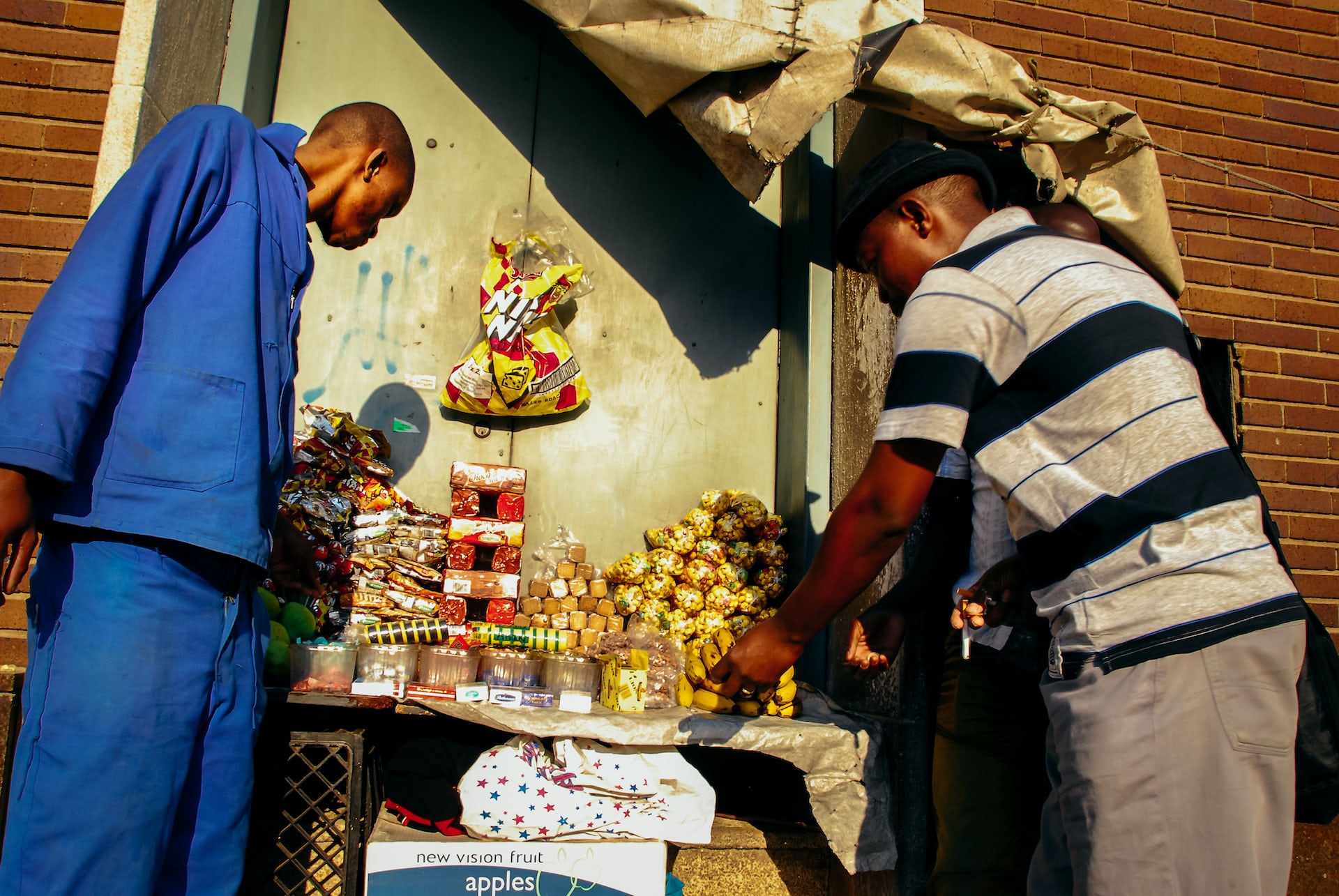
They found various ways to “grow” their grant. Some were income generating activities like buying and selling of goods, providing services such as building, painting, photography, running restaurants or taverns, renting accommodation and traditional healing. Some played fahfee (a form of betting) or engaged in community gardening, sewing, recycling and beadwork.
Others invested in future livelihood strategies such as supporting children with their job search. Some used their grants as seed money to cover business start-up costs, buy new equipment such as a chip fryer, beads for their craft work or to expand their existing operations.
We also found that some recipients were investing a portion of their grants, primarily through stokvels (a type of informal credit union) or savings schemes. They hoped to reinvest savings in their businesses or to use the money during an emergency. Across the three qualitative studies, beneficiaries reported that households with multiple income streams were more financially stable.
The most common barriers identified were related to
-
women’s childcare responsibilities in the home;
-
the opportunity costs of working (such as high transport and childcare costs);
-
a lack of jobs:
-
lack of capital;
-
lack of access to affordable micro loans;
-
competition for customers from large retailers;
-
a lack of experience, knowledge and skills in, for example, financial literacy
-
some expressed concerns about crime and violence in the community.
Read more: Ex-offenders in South Africa should get a resettlement grant. Here’s why
Few grant beneficiaries were able to access formal support services from the government. Only one group of women crafters engaged in bead work received support from a local cooperative. Most turned to their social networks, family and friends to support them, provide guidance, advice and financial assistance. Due to a lack of access to small loans, they turned to money lenders when they needed to access cash resulting in indebtedness.
A major barrier also relates to the precarious nature of informal work and the lack of protection for vulnerable workers.
Implications for social development policies
Informal work is a crucial livelihood strategy for grant beneficiaries who supplement their income through multiple livelihood activities. Most worked in elementary occupations, services, sales and craft related trade. A small proportion are self-employed, running survivalist businesses. This is contrary to the view that beneficiaries are passive and disengaged from the labour market or do not desire to work.
There is a need for greater recognition of informal work and its role in poverty reduction as a national policy objective. Moreover, social grants plus complementary livelihood supports are needed. These include access to capital, credit and small loans. The development of knowledge and skills and mentoring and coaching are also critical.
Few government departments target beneficiaries for livelihoods support such as small-scale farming and entrepreneurship programmes. There is a need to explore innovative delivery modalities – whereby livelihood supports may be crafted onto existing government programmes. Incentives should be provided for those who wish to pursue productive activities.
There is room to scale up livelihood support through existing governmental, NGOs, development agencies and CSI programmes. However, more research and experimental intervention research is needed to inform the design of livelihood support policies and strategies.
Viwe Dikoko and Jade Archer co-authored the research brief on which this article is based.


