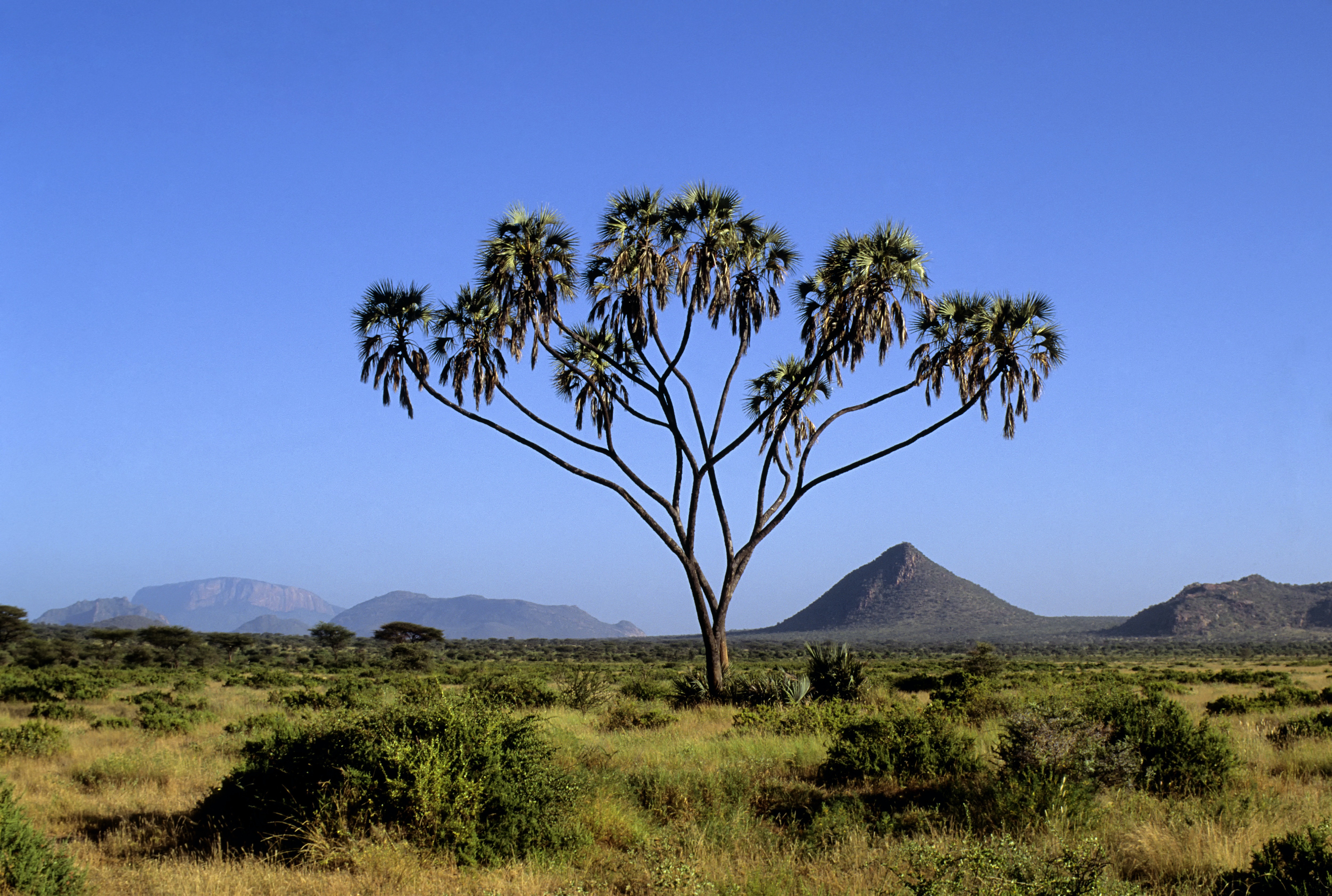
Indigenous fruits have been collected from the wild for centuries for human consumption and other purposes. Across the African continent, indigenous fruit trees are valuable assets for local communities.
But the natural habitats of trees are being lost, mainly to widespread deforestation resulting from population growth. Industrial agriculture is also contributing to their loss.
Indigenous fruit trees provide vital nutrients that may be scarce in other food sources. They are naturally adapted to local soils and climates, can enhance food and nutrition security and often adapt and survive environmental stresses better than exotic species.
My colleague and I reviewed information on 10 fruit trees indigenous to Africa that are considered to be underused. We assessed their occurrence, distribution, nutritional components and medicinal potential. We also explored their challenges and prospects.
Our research showed that indigenous fruit trees, which occur across different ecological zones in Africa, are rich sources of vitamins, minerals, protein and valuable phytochemicals. They also have recognised medicinal value and are used as therapeutic remedies by many people especially in rural areas with limited access to orthodox health care.
Based on our findings we recommended that the value chain of underutilised fruit trees should be increased. This could contribute to the livelihoods of smallholder farmers and other stakeholders. In addition a multidisciplinary approach is needed to provide incentives and encourage the domestication, commercialisation, and agro‐processing of fruit trees.
Our findings
We conducted a literature search of African indigenous fruit trees considered to be underutilised. We then selected 10 underutilised African fruits based on absence of existing studies and their potential.
Our study explained the diverse distribution and duration of fruiting of the 10 selected fruit trees in different regions of Africa.
Examples in southern African and other tropical African countries included:
-
African baobab (Adansonia digitata L),
-
Transvaal red milk wood (Mimusops zeyheri Sond.),
-
Wild loquat (Uapaca kirkiana Mull.Arg.),
-
Kei-apple (Dovyalis caffra (Hook.f. & Harv.) Sim), and
-
Mobola plum (Parinari curatellifolia Planch.ex Benth.).
In southern and west Africa we identified that monkey orange (Strychnos spinosa Lam.)
In the south of the Sahel-Savannah region across Africa, especially in West African countries, we identified the balanite (Balanites aegyptiaca (L.) Delile).
The imbe (Garcinia livingstonei T. Anderson) is found in Uganda, the Kingdom of Eswatini (Swaziland), South Africa, Somalia, Angola and Congo.
We also identified the marula (Sclerocarya birrea (A.Rich.) Hochst. subsp. caffra (Sond.) Kokwaro). This is found in Niger, Burkina Faso and Benin. Lastly, the wild medlar (Vangueria infausta Burch.) is found in Uganda, Kenya, Tanzania, Malawi, Mozambique, Zimbabwe, Namibia, Botswana, Eswatini and South Africa.
The availability of fruits from these trees is guaranteed because of the different fruiting periods. This means they are able to meet the food and nutrition needs of the local communities.
Our study also reported a rich phytochemical and nutritional content across the selected trees. These included fibre, minerals, carbohydrates, organic acids, fats, proteins, iron, calcium, magnesium, sodium, zinc and vitamins.
Many of the fruits contain well-known phytochemicals. These included saponins, flavonoids, alkaloids, tannins, cardiac glycosides, terpenes, anthraquinones and phenolics. Examples of the biological activities demonstrated by fruit trees were anti-oxidant, anti-microbial and anti-inflammatory activities.
Based on our findings, there is still a scarcity of research investment and development for the improvement of underutilised fruit trees in Africa. Many still only grow in the wild. This limits their potential for higher yield and growth.
Other challenges identified were the inadequate baseline data on the nutritional properties, low-level acceptability and accessibility.
Indiscriminate and illegal use of the trees is also a problem.
What we recommend
Africa’s key to future food-nutrition security may depend on the untapped potential of indigenous fruit trees. Particularly, the rich nutritional composition of indigenous fruits revealed a potential contribution to human diet.
We argue that exploring the potential of these indigenous fruit trees in a holistic manner is a good starting point. This should include the domestication of indigenous fruit trees in Africa. This would ensure a steady supply of fruit, nutrients and associated products. This, in turn, would have a positive impact on the economic and health sectors in the region.
The future of the 10 selected indigenous fruit trees is promising for Africa provided the co‐operation of different stakeholders is secured.


