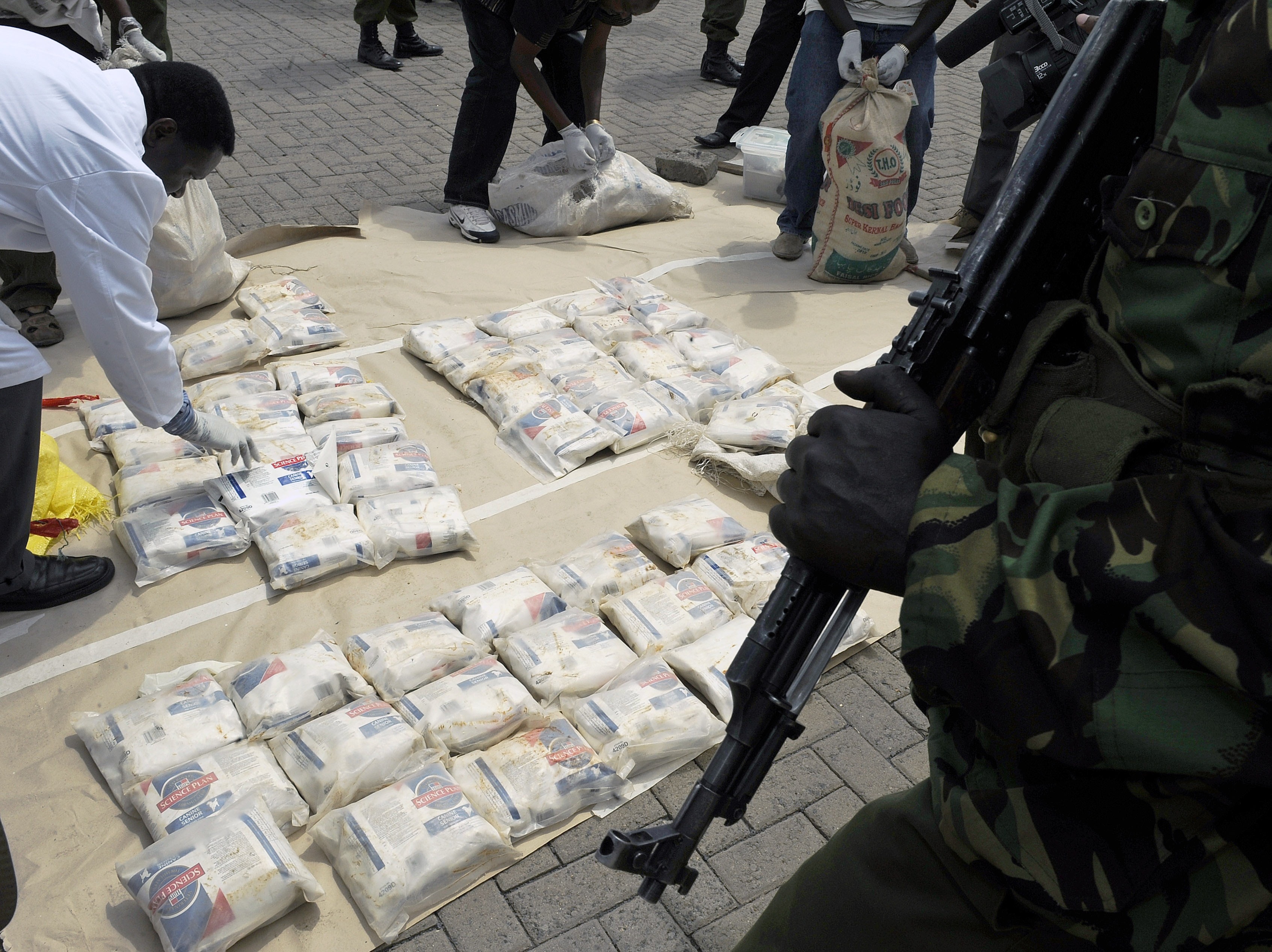
Awukye received a 10-year prison sentence in Ghana for cannabis possession. The experience, he said, shattered his family’s dreams. Michael Anami, a Kenyan, recalled the “multiple arrests, beatings, incarcerations, and untimely deaths” he had witnessed as a drug policy activist and former user.
These were just some of the harrowing stories we heard while developing the recently launched Global Drug Policy Index, a way of comparing countries’ policies on drugs. Such stories suggest that drug policy all too often blights lives. But there are also inspiring individuals and communities working to help people who use drugs. They provide medicine to combat overdoses, needle and syringe exchange programmes to prevent the spread of blood borne diseases, and drug checking services to inform people about the potency and quality of drugs that they might ingest.
It has long been clear that some countries have policies that cause harm and violate human rights, while others have more rational, evidence based and humane policies. But it has been difficult to assess and compare them.
The Global Drug Policy Index aims to fill this gap. It is designed to provide rigorous, transparent and comparative evidence about the quality of countries’ drug policies. It’s a tool to hold governments accountable and ensure that policies are based on health, human rights and development.
Measure, compare, guide
The United Nations’ Human Development Index, Transparency International’s Corruption Perception Index and Freedom House’s Global Freedom Index are just three examples of projects that measure and compare countries in complex areas of policy. Such indices are useful because they crystallise the performance of states and offer clear guidance on how to improve.
The Global Drug Policy Index was driven by the Harm Reduction Consortium and developed by academics at Swansea University’s Global Drug Policy Observatory.
In the sphere of drug policy, academics often collaborate with policymakers, activists and people who use drugs. For the 30 countries covered in this first version of the Global Drug Policy Index, we consulted widely with organisations rooted within the communities affected by drug policies. We also surveyed 371 individuals with “on the ground” knowledge of each state’s drug policy.
The index specifies 75 policy indicators. These are derived from a recent UN report on best practice in state drug policy.
Based on how they perform on these indicators, states get a score from 0 to 100. One hundred would represent a full implementation of recommended policies across five areas.
The first area is the absence of extreme response, like the death penalty and extrajudicial killing.
Second is the proportionality of the criminal justice response. This looks at levels of violence, discrimination and human rights abuse in states’ policing of drug policy.
Health and harm reduction is the third. This focuses on the funding, availability and accessibility of interventions that reduce the harms arising from problematic drug use.
Access to controlled medicines is fourth. It looks at states’ provision of medicines for pain relief and palliative care.
Finally, there’s development: programmes designed to provide alternative livelihoods to people who grow illicit crops.
Drug policies in African countries
Even a quick glance at the index results for states in Africa reveals a grim truth: African states are among the worst performers in the world in terms of drug policy.
Uganda scores just 28 in the overall index. The country has a perfect storm of punitive, highly violent drug law enforcement combined with minimal availability of basic medical interventions to reduce the harms caused by drug use.
In Kenya, which scores only 32 overall, access to harm reduction interventions is better, although still patchy. Our expert respondents in Kenya described frequent use of violence and torture by police, as well as arbitrary arrest. They said drug law enforcement was particularly harsh on women, certain ethnic groups, and the less wealthy. Such features are common in all low-ranked states in the Global Drug Policy Index.
In other African states evaluated in the index (such as South Africa, Mozambique and Senegal), the picture was more mixed. There were areas of good practice, including less “extreme” responses to drug crimes such as the death sentence. And there were some promising developments in harm reduction. But access to essential medicines is very limited across the continent. And most states are exercising disproportionate force in delivering their drug policies.
These problems aren’t separate. Money spent on police, courts and prisons is money that could be spent on healthcare and harm reduction. Sadly, it seems that Africa’s states are still largely operating from an outdated and discredited “War on Drugs” perspective. Even South Africa, a regional leader in decriminalisation policy, has implemented it in a cautious, limited way. Our expert respondents collectively judged that South African decriminalisation has so far been ineffective in reducing contacts between people who use drugs and the criminal justice system.
We hope the information contained in this index will help to develop constructive debates that will lead to more humane and evidenced based policies in the region. To achieve this, states should reorient their approaches to focus on the health and human rights implications of drug use. The index provides a clear guide to the types of policies and actions that will move them towards this goal.


