Developing countries in general, and African countries in particular, confront an enormous financing challenge to meet the UN’s sustainable development goals. This financing gap featured prominently at the 2021 United Nations climate change conference (COP26) and has been intensified by the impacts of the COVID-19 pandemic.
Even prior to COVID-19 the prospects of mobilising the annual US$2.5 trillion needed to meet the sustainable development goals by 2030 was rapidly receding despite a global savings and liquidity glut.
The bulk of funding is needed to close gaps in electricity, transport and water infrastructure. This must be done in ways that place the continent on a decisive trajectory towards net zero emissions. At the same time, substantial funding is required for agricultural modernisation and greener industrialisation.
The moral case for international provision of large-scale concessional funding to Africa is overwhelming. Countries on the continent are projected to feel the impacts of climate change the most. This is despite the fact that they account for a minuscule share of cumulative global carbon dioxide emissions.
Climate funding from multilateral development banks has been growing. But it comes nowhere near the estimated annual African financing gap of $200 billion to meet the development goals. Figures for the whole continent are not readily available. But the $7.4 billion of commitments by multilateral development banks to sub-Saharan African countries in 2019 is reflective of the scale of the gap.
Ambitious recommendations have gained little traction. These include the proposal by the UN’s Task Force on Financing for Development for the development of long-term financing instruments. An example is the 40-50 year bonds, necessary to fund a global Green New Deal.
Emphasis is also being placed on the role of “blended finance” to plug the financing gap by leveraging scarce low-cost funding via multilateral development banks and overseas development assistance. In the World Bank’s conceptualisation, billions of dollars of such concessional funding can be used to attract trillions of private investment by reducing the risk of projects aligned with the sustainable development goals to render them attractive to private investors.
But blended finance projects have failed to take off at scale. They have only reached about $20 billion per annum for all developing countries combined.
In my view, far more effort is needed to increase the capacity of African national and regional development banks to mobilise public and private investment for structural transformation.
This has been done successfully elsewhere in the world. Examples include the European Investment Bank, Germany’s KfW, Brazil’s BNDES and China’s policy banks.
The potential
Development banks have played a pivotal role in mobilising long-term finance for industrialisation, developing new industries and project de-risking through developing capabilities to undertake project development, implementation and monitoring.
Effective development banks act as important voices for shaping favourable economic policy for productive investments. They crowd in private finance directly and unlock private investment up and down-stream from catalytic projects.
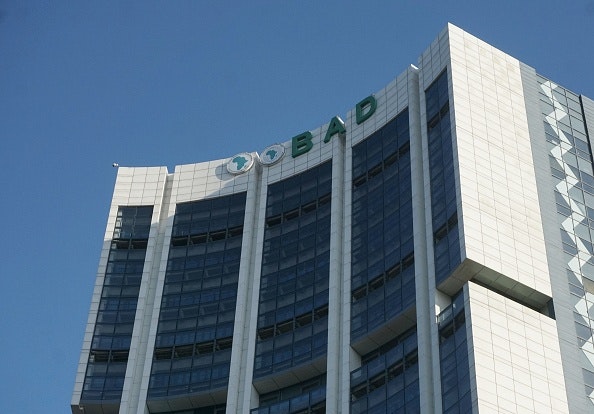
Africa in fact has a lot of development banks. There are 95 of them, representing 21% of national and regional banks worldwide. But a handful dominate assets and financing. They are the regional African Development Bank and African Export and Import Bank (Afreximbank) and national banks in Morocco, South Africa and Egypt.
The rest are mostly small and under-capitalised. Hence African development banks collectively account for only 1% of development bank assets worldwide.
African countries cannot afford to tread water waiting for the global multilateral and private financing system to become more equitable or responsive – although they do need to fight for this in the medium to long term. Rather they should rapidly raise the capitalisation of their development banks to enable higher levels of lending.
How is this to be achieved when public debt in sub-Saharan Africa is at a two-decade high and viewed as unsustainable by ratings agencies and multilateral finance institutions?
What needs to be done
First, there is a strong case for the consolidation of fragmented and under-capitalised national banks into larger sub-regional development banks.
Second, shareholding from other development banks in the global south with proven scale and expertise should be encouraged. A prominent example is the New Development Bank. Founded by Brazil, Russia, India, China and South Africa in 2014, it has rapidly scaled up loans to member countries.
Third, proceeds from periodic commodity booms need to directed towards development banks. And there needs to be a clamp down on illicit financial flows.
Fourth, governments can lower the cost of borrowing by guaranteeing repayment of bonds issued by their development banks.
Fifth, budgetary transfers at appropriate points in the sovereign debt cycle should not be ruled out.
Finally, if central banks are serious about ensuring long term financial stability they need to support financing instruments that address long term social and climate risks. For instance, they can lower the cost of climate finance by purchasing green bonds.
Added bonuses
The scaling up and consolidation of African development banks would also improve governance and developmental capacity. A broader range of shareholders would make it more difficult for crude political appointments at managerial level that are closely associated with poor performance. Other Southern development banks bring technical expertise critical to building capabilities needed to de-risk projects, including project development, monitoring and enforcement.
In addition, the scaling up of African development banks could well induce multilateral development banks to raise their own financing efforts in Africa.
Rather than crowding out private financing, the scaling up of African development banks offers the most promising route to attract long-term private finance to achieve the sustainable development goals and structural transformation.
A version of this article was first published by LSE Business Review under the heading, Africa’s development banks: the urgent need for scale.


