Africa’s ability to deliver peace and security rests on fixing key relationships:
The recent African Union (AU) summit was overshadowed by peace and security issues. In particular, the focus was on political instability and armed conflict in Libya, Democratic Republic of Congo, Central African Republic, Mali, Guinea-Bissau, South Sudan, Ethiopia and Eritrea and Somalia.
Conflict patterns on the continent, particularly when it comes to terrorism, have changed rapidly in recent years. This means that the AU has to respond to a highly complex and dynamic environment to achieve peace. And a rich variety of institutional partnerships, locally and globally, are needed to manage conflicts and bring about peace.
Several items discussed at the summit give an indication of the key unresolved issues.
Firstly, discussions on the AU’s 2019 budget showed that it depends largely on external donor funding. This matters because it keeps the AU reliant on ad hoc funding arrangements for peacekeeping operations.
Secondly, there was no substantial progress on reforming its institutions, including the Peace and Security Council. Reform is vital if the AU is going to be more responsive to conflicts.
Thirdly, given the power dynamics in the organisation, there wasn’t any agreement on integration among key actors in Africa. This means that the much debated issue on the division of labour between the AU and five regional arrangements has not been resolved. The five include three regional communities: the Economic Community of West African States, the Economic Community of Central African States and the South African Development Community. And two other collaborations: the Eastern African Standby Force and the North African Regional Capability.
Where does this leave the AU in terms of next steps?
Recent research highlights several issues that should top the list of priorities. The first is that the AU needs to refine its strategic partnerships with other international actors. This includes its relationships with its five regional actors and the United Nations (UN).
The AU also needs to make the African Standby Force fully operational. This needs to be based on all the technical requirements, ranging from pledged military capabilities to sustainable peacekeeping operations. Related to this, is the need to agree on the relationship between the (envisaged) standby force and the interim body that was set up to manage crises.
Lastly, it needs to resolve the issue of funding for African peacekeeping operations.
Strategic partnerships
An important aspect of African peace and security is the AU’s relationships with strategic partners. These include the UN, the continent’s regional actors and the EU.
These relationships have become of the utmost importance given that hybrid peacekeeping operations have become increasingly vital in Africa. The African Mission in Somalia (AMISOM) is a case in point. Several actors played key roles in the mission in recent years.
The AU acted as a primary security actor with several African countries providing troops – initially Uganda and Burundi, and later Ethiopia, Djibouti, Kenya and Sierra Leone. The UN, the EU, the Intergovernmental Authority on Development in east Africa, as well as several countries – especially the US, the UK, Turkey and the United Arab Emirates – played key roles in giving political support, and the required funding.
Being able to organise something as complex as this requires clarity about the roles and responsibilities of particular players.
That’s not always the case. Take the role of regional bodies and the AU’s relationship with the UN. The AU works on the principle that the regional actor(s) nearest to a particular conflict is best positioned to conduct a peacekeeping operation. The UN Security Council devolves power to the local level. The AU finds itself at the intersection of these interactions.
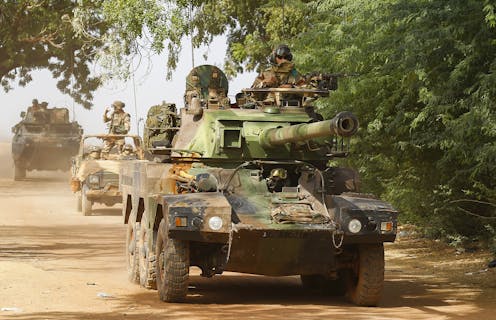
The recent case of the African Support Mission in Mali clearly showed how divisions between the AU and the Economic Community of West African States prevented African actors from effectively mediating and managing the crisis. This case also highlighted the unresolved tensions and unclear divisions of political roles between the UN, the AU and the regional actors. This got in the way of the peacekeeping effort. The security situation continued to deteriorate and ended up in the (unwanted) French intervention in 2013.
African Standby Force
Another example that highlights the need for better relationships is experiences around the African Standby Force. The standby force is a long-standing pan-African dream and is planned to be a continental peacekeeping force with military, police and civilian contingents under the direction of the AU.
In December 2017, four of the five regions where the African Standby Force is based were declared to have reached full operational capability. This is a major achievement and shows how far the AU has moved in its stride as Africa’s leading peacekeeping actor.
But challenges remain. A lack of progress in some of regions was behind the AU’s decision to establish a transitional arrangement. Called the African Capacity for Immediate Response to Crises, the idea is based on the principle that states across the continent should voluntarily contribute troops for peacekeeping. It’s seen as a short to medium term arrangement until the African Standby Force is fully developed in all the regions.
In the meantime, harmonising and aligning the two is hugely important and needs ongoing attention.
Funding peace operations
A more systematic and predictable financing model for peacekeeping operations authorised by the UN, but led by the AU, remains a critical concern. The AU decided in 2015 that African states should take responsibility for 25% of the AU peacekeeping budget. This was meant to be done gradually over five years.
But the USD$ 681 million budget approved for 2019 is still not enough for the AU to respond to highly complex and dynamic peace and security challenges on the continent.
Global
As African peacekeeping actors face rapidly changing conflict patterns, especially increasing acts of terrorism, they increasingly need a rich variety of global-local institutional linkages and hybrid partnerships. But they’re not all in place yet and many need further development and refinement.
And to be a truly meaningful and leading continental peacekeeping actor the AU also needs to develop the African Standby Force and to work on having more predictable funding for peacekeeping operations.

Theo Neethling receives funding from the National Research Foundation.
Source: The Conversation – Articles (AFRICA)
Read more on The Conversation.
Join the fun: Add Your event | Submit a Press Release | Add your listing.


