Across most of the world, and particularly in the tropics and subtropics, large wild aquatic animals – such as manatees, turtles and dolphins – are being hunted and traded. This is not a new phenomenon. Aquatic animal meat has been eaten, and sometimes used as remedies or in traditional ceremonies, throughout history.
This type of consumption is widespread. In some places this wild meat is an important source of nutrition, income, and cultural identity. Yet opportunities to exploit wildlife for economic gain – often illegally – increase the number of animals hunted in some places. Coupled with growing human populations, this has led to the unsustainable exploitation of some species.
Understanding the scope and potential threat of aquatic wild meat exploitation is an important first step toward appropriate conservation actions and policies.
We’re part of a large international team of conservation researchers and practitioners that recently published a paper on this. We carried out a literature review on the use of large aquatic animals (excluding fish) – what we call “aquatic megafauna” – for wild meat in the global tropics and subtropics. This topic is hugely under-researched, so this review represents one of the most in-depth assessments of the topic to date.
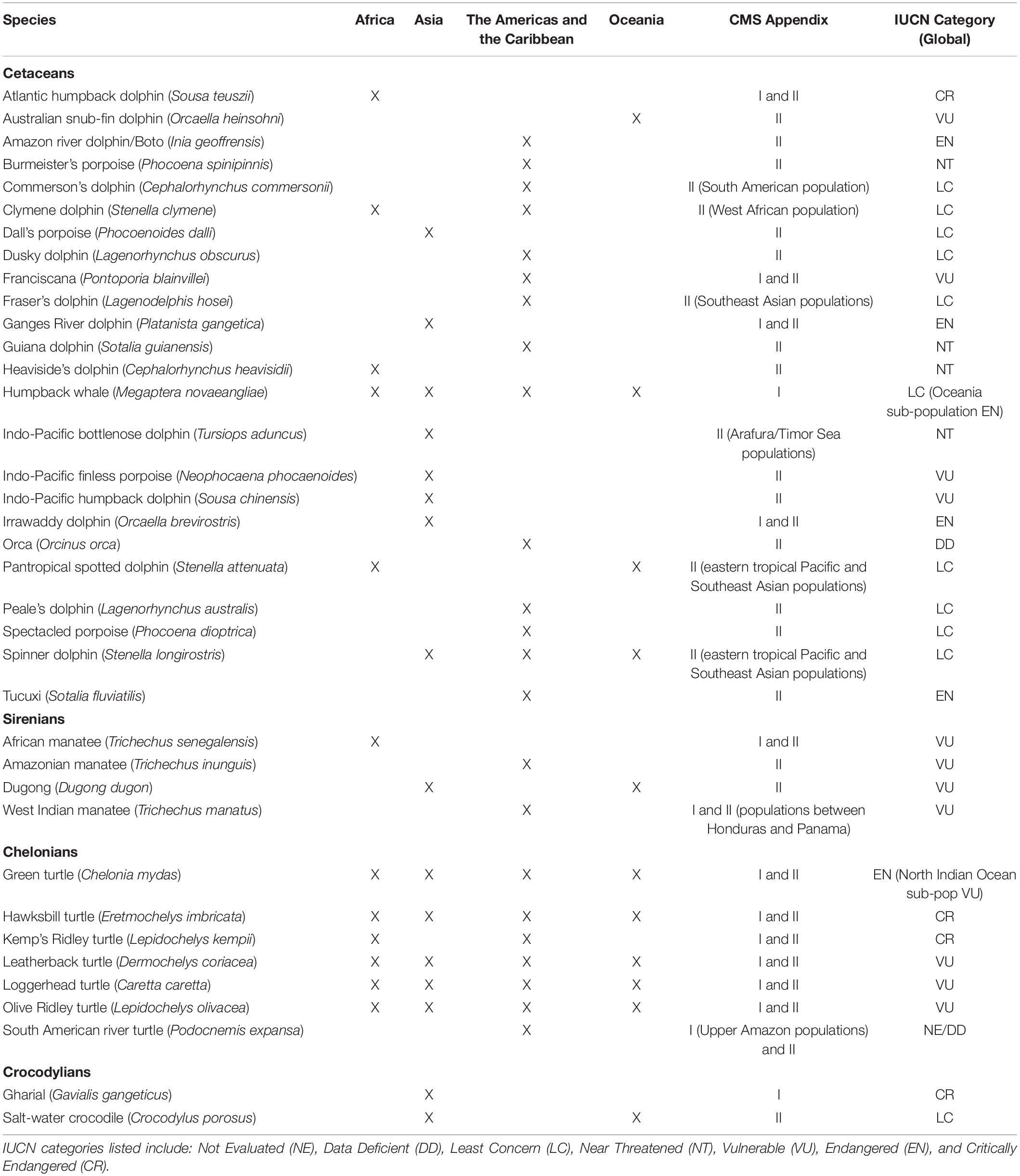
We focused on 37 species of conservation concern that are listed on the Appendices of the Convention on the Conservation of Migratory Species of Wild Animals. The list includes several species of whales, dolphins, and porpoises (cetaceans), manatees and dugongs (sirenians), marine turtles (chelonians), and crocodiles (crocodylians).
Twelve of these species inhabit oceans and rivers in West, Central and Eastern Africa. These are regions that were in the tropics and subtropics and are where there are concerns about hunting, consumption and trade.
We found that the consumption of these aquatic animals is widespread in coastal regions, to varying degrees. Some species are likely to be at risk from over-exploitation, particularly species inhabiting rivers and freshwater areas.
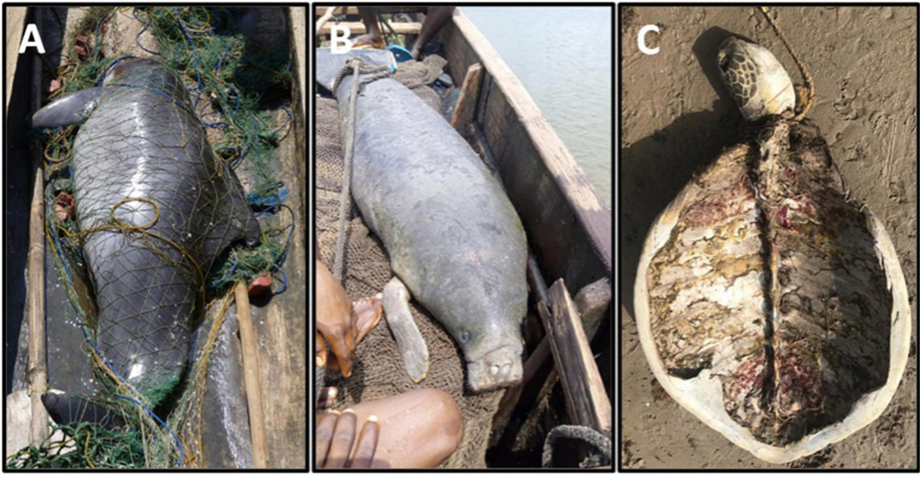
For most of the species monitored, a major issue is that animals are unintentionally caught as bycatch during fishing. They’re then opportunistically killed and eaten or sold, instead of being released when alive.
Dolphins, manatees and turtles
We found evidence of the use of cetaceans (whales, dolphins and porpoises) in most countries in tropical Africa, particularly in West Africa. Their meat was used for a variety of purposes including food, shark bait, and traditional medicine.
One species considered to be particularly at risk is the Atlantic humpback dolphin (Sousa teuszii). Distributed solely along Africa’s Atlantic coast, it’s one of the least understood coastal dolphins in the world. Because it has such a small population size and lives close to shores – where it can get captured by small-scale fishers – it’s highly vulnerable.
African manatees (Trichechus senegalensis), distributed exclusively in West and Central Africa, and dugong (Dugong dugon), whose range spans into East Africa, are legally protected in nearly all countries in which they occur. However, the team found evidence that they were being used for various purposes including food and traditional medicine to some degree in all countries. Most manatee populations cannot withstand human-induced mortality because their populations are highly sensitive to changes in adult survival. In recent years, high losses to populations of African manatees have been reported.
Turtles face a similar threat. The capture and consumption of marine turtle adults, and harvest of their eggs, is ubiquitous across much of the species’ ranges. This includes mainland Africa and the African islands. However, as with the other aquatic megafauna, larger-scale monitoring is needed to assess impacts and sustainability.
River animals
Risks to riverine megafauna – those living in rivers – from harvest may be particularly high, even if opportunistic, because these species face multiple threats in the same restricted area. The threats include dams, intensive fishing, and pollution where human population density is high. In Africa, this is true of African manatees and freshwater turtles (which were not assessed in the study, but are widely hunted).
Riverine megafauna may suffer from a lack of management and research, and will require increased conservation efforts. This is because they’re neither seen as terrestrial species nor as fish, so it’s not often clear at the national level who is responsible for their conservation and management.
Widespread
Across the tropics and subtropics, there are clearly differences in local circumstances between areas. The drivers of hunting and consumption, hunting technologies used, human density and other threats to animals and their habitats, and how they change over time, will influence harvest sustainability.
Nonetheless, it’s clear that the use of aquatic megafauna for meat is likely to be far more widespread in terms of frequency and species than reported in the review. This is because monitoring and reporting is limited. Also because many of the species are protected by national laws, or are charismatic, so their use is secretive.
The trans-boundary nature of harvests and associated trade of these oceanic, coastal, and riverine species requires increased international attention and cooperation.