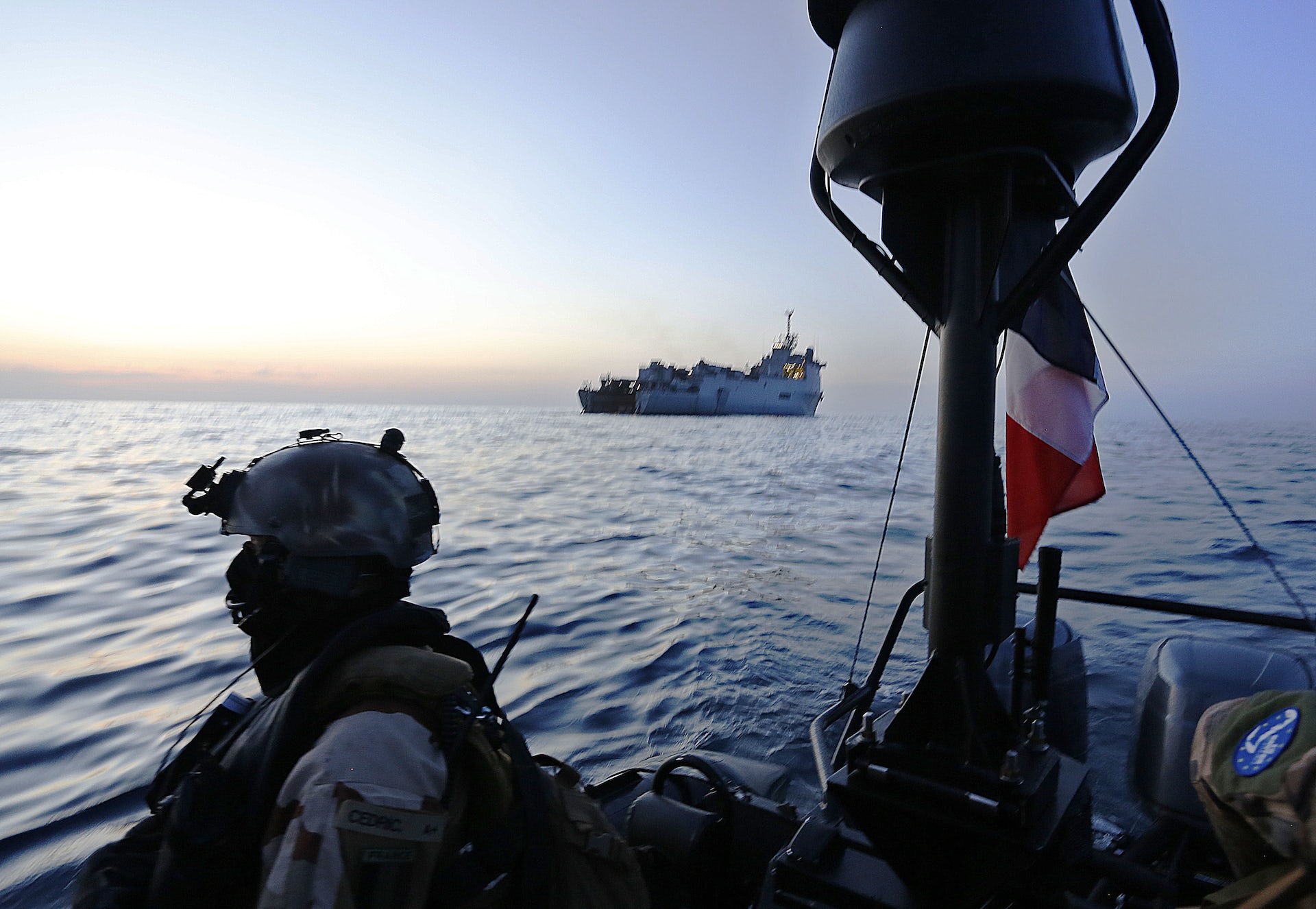
Africa’s valuable ocean resources have drawn the interest of foreign nations, particularly those in the West and Asia.
How they exploit these resources can be problematic because these oceans offer a wide range of important resources – from fish to minerals and hydrocarbons – that are also crucial to the continent’s economy and food security.
But, in some countries, foreign interests dominate. For instance, the continent’s oil exploration, shipping, ports infrastructure, and industrial fishing sectors are sometimes dominated by foreign companies.
Angola’s oil production, for example, is dominated by the major international oil exploration and production companies including Total (France) with a 41% market share, Chevron (US) with 26%, Exxon Mobil (US) with 19%, and BP (UK) with 13%.
And so, despite these waters being vital to African countries and their citizens, foreign actors will act in a way that’s in their best interests – at times to the detriment of African countries and citizens.
One illustration of this relates to maritime (ocean) security. The United Nations Convention on the Law of the Sea (UNCLOS) stipulates that coastal countries are responsible for managing the security of their territorial waters (up to 12 nautical miles from their shorelines) and that of their exclusive economic zones, between 12 and 200 nautical miles from their shoreline. This includes protection against unlawful acts at sea, such as illegal fishing, piracy and armed robbery, terrorism and other related crimes.
However, the same convention allows other countries to act, against piracy, for example, in the exclusive economic zones.
Drawing on our expertise on African maritime governance and security, we reviewed literature, databases of policy documents and maritime security reports, to explore how non-African countries selectively frame what constitutes threats. How these threats are framed determines the response to them and how those response are resourced. The effect is that it undermines a holistic notion of maritime security that would benefit the African people.
We argue that the focus by non-African countries is on piracy and armed robbery at sea which threaten resource extraction, transportation and safety. They hardly focus on the protection of Africa’s marine resources, in particular from pollution and illegal fishing caused by foreign powers.
This approach is illogical. It fails to recognise that there’s a link between deprivation and maritime crimes, including piracy and armed robbery at sea. African coastal communities, many of whom are already marginalised and deprived, are highly dependent on marine resources. The depletion of these resources only worsens their situation. Failing to prioritise protecting African marine resources will push people further into poverty and continue the cycle of insecurity at sea.
Fighting piracy
The foreign focus on piracy is clear. Over 20 United Nations Security Council Resolutions or presidential statements have been issued on piracy in the Gulf of Aden (East Africa) and the Gulf of Guinea (West and Central Africa).
Piracy is a problem. It can involve kidnap for ransom and, in extreme cases, can lead to the death of crew members. Between 2005 and 2012, pirates in the Gulf of Aden received an estimated US$500 million ransom. Almost 2,000 sailors were kidnapped and many were killed.
At the heights of piracy in the Gulf of Guinea, pirates accrued about US$4 million every year.
The first UN resolutions on piracy in Africa were introduced in the Gulf of Aden in 2008 and in the Gulf of Guinea in 2011. Since then, piracy incidents have reduced in both Gulfs.
Fish and the environment
But the problem is, the focus of African nations needs to be on the protection of fish stocks and the environment which affects the livelihoods and food sources of African citizens. Some threats – like oil pollution and illegal fishing – are often perpetrated by foreign entities.
Fish is a source of food and income for millions of Africans. When there’s less fish catch, poverty increases as do the number of out of school children and poor health.
Yet, as we found during our research, no UN resolutions exist for environmental degradation or marine resource plunder. This is typically caused by pollution and illegal fishing perpetrated by foreign companies and distant water vessels.
An agreement to put an end to harmful fisheries subsidies, which enable overfishing and illegal fishing, was adopted at the World Trade Organisation’s ministerial conference in 2022. But, to date, only four countries have accented to the agreement.
Along with pollution, overfishing and illegal fishing are key factors that contribute to the depletion of Africa’s fish stocks, pushing people into poverty. In West Africa, for instance, the income of small-scale fishers decreased by up to 40% between 2006 and 2016. Reduced catch also led to a decrease in the availability, and an increase in prices, of fish for local consumption.
Illegal fishing
Illegal fishing, perpertrated largely by foreign fleets, exacerbates the depletion of fish stocks. It has a massive impact on economies. In West Africa it costs six countries an estimated US$2.3 billion every year.
Despite the international coalition’s success in neutralising piracy in the Gulf of Aden, illegal fishing by foreign vessels continues to pose a significant threat to the food and economic security of millions of Africans.
What’s ironic is that illegal fishing has been cited as a major contributory factor to piracy in the Gulf of Aden. And in the Gulf of Guinea, historical pollution by foreign oil companies, and resulting deprivation, gave way to militancy which morphed into piracy.
Conceivably, as more people are pushed into poverty, more people are pushed towards criminal activities, including piracy-related activities.
Shifting focus
Focusing mainly on piracy isn’t the solution. Its root causes – depleted fish stocks, loss of livelihoods and poverty – need to be addressed.
Maritime safety and security in Africa will only be achieved when the same level of attention and resources that are given to countering piracy by African governments and their foreign counterparts is extended to sustainable fisheries and curbing of marine pollution.
Achieving this balance requires several clear actions.
5 steps to be taken
First, the African Union and Regional Economic Communities must take collective action to push for an end to exploitative relationships in the continent’s ocean resources. This includes urging the UN to recognise illegal fishing and associated crimes as grave security threats.
International partners must go beyond rhetoric and stop financing the exploitation of the continent’s resources through subsidies that allows for legal exploitation of depleted species and illegal fishing.
Secondly, African states should adopt a holistic approach to maritime security that encourages cooperation and collaboration across sectors, as outlined in the AIMS 2050 and Lomé Charter. This approach should use piracy countermeasures to combat illegal fishing and associated activities.
Third, to understand the impact of threats to maritime security and resource extraction, African voices (at the community level) should be reflected in the formulation of policies and strategies.
Fourth, while successful in reducing piracy, the current approach to maritime security in Africa is not sustainable. The root causes of insecurity, such as youth unemployment and environmental degradation, should be addressed. This requires urgent attention with a focus on social and ecological well-being.
Finally, the reduction in incidents of piracy and armed robbery at sea, especially in the Gulf of Guinea, is due to cooperation, collaboration and coordination between regional navies and their partners. This approach is widely recognised as sustainable. It should be maintained, and indeed extended to address other security threats at sea.
Taking these steps will ensure that no one is left behind and that the continent’s prospects for future prosperity are not undermined.


