After school clubs aren’t always safe spaces: what should be done about it:
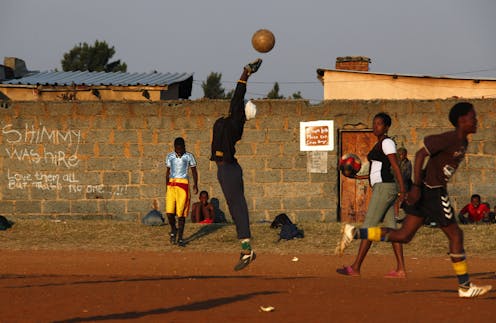
Young people around the world are encouraged to get involved in extracurricular activities. These range from choirs and drama clubs to sports teams, with many other options available depending on the school. These activities are important for several reasons.
Sports and other physical activities, such as drama clubs, support the development of young people into healthy adults. For parents who work long days, these activities are a productive way to keep their children busy when nobody is at home to supervise them. Finally, these activities often differ from what children are taught in class, so they encourage new interests beyond school work.
But, as research I’ve just published with my colleagues shows, after school clubs can also be risky environments because they’re not always properly supervised. This can present opportunities for risky sexual behaviour and drug use. Our study focused on South Africa, and bears out an extensive global body of research that’s found an association between young people’s participation in sport and their use of drugs and alcohol.
South Africa’s Department of Sports and Recreation has found that 51.7% of the country’s young people participate in sports and recreational activities.
This is not to suggest that after-school clubs and teams should be scrapped in South Africa. Rather, greater supervision is needed; parents need to get more involved so they know exactly what their children are doing in their after-school time and policies must be created that better monitor and evaluate extracurricular activities.
Risky business
Risky behaviour, including sexual and illicit drug use, have devastating health consequences. Some of these relate to health: young women may fall pregnant and contracting HIV is a real risk especially in a country with such high prevalence rates of the disease.
There’s also a real risk of young people becoming addicted to drugs or alcohol. They may also be separated from their families, lose out on future and current employment or even end up in jail.
To many parents, after-school activities are a way to prevent their children from engaging in risky behaviour. The idea is that if youth are kept “busy” during their leisure periods they will not have time to experiment in these behaviours. They also believe that their kids will benefit from the social interaction and physical exercise. And research has confirmed that these benefits exist.
But after-school clubs are not always entirely safe. They can be spaces where young people try their first cigarette or experiment with alcohol for the first time.
Our study concentrated on young people aged between 10 and 22 – in South Africa, it’s not unusual for those aged between 18 and 22 to still be in the secondary school system. This is usually because of prolonged absence through illness, the responsibility of caring for an ill relative, pregnancy and grade repetition.
Our statistical analysis of the South African Youth Lifestyle Survey 2009 controlled for a number of factors. These included age, sex, race, whether they lived in an urban or rural area, the number of income earners in the household, food security in the household and whether or not the youth had set goals for their future.
We found an association between sports participation and youth group involvement and risky sexual behaviour as well as illicit drug use. The risks were higher for females and those who live in the country’s rural areas; they were lower for those who’d identified predefined goals for their future and those involved in choirs or drama groups.
Finding solutions
Several things can be done to tackle the issues raised in our research. For starters, there’s a clear need for better supervision and organisation of after-school activities so that they don’t become enabling environments for risky behaviour.
Young people who participate in sports and other clubs should not be left unattended. And supervisors, coaches and other authority figures should be monitored to ensure that they’re not allowing anyone to engage in risky behaviour on their watch.
Parent involvement is also key. Parents should attend practices and events to meet the people who supervise these clubs, and ask their children about their activities. Of course, it can be tough for parents who work long hours to make time for this; other adult relatives could be asked to get involved here.
National policies and programmes also need to be aware of these issues. Policymakers must broaden their scope to include the monitoring and evaluation of after-school programmes.
This will allow South Africa to protect its young people from peer and adult pressure to engage in acts which risk their health and social well-being.

Nicole De Wet receives funding from the National Research Foundation Thuthuka Post-Doc Grant.
Source: The Conversation – Articles (AFRICA)
Read more on The Conversation.
Join the fun: Add Your event | Submit a Press Release | Add your listing.


