The world’s food systems have developed in a way that is not serving health and sustainability.
People are increasingly eating industrially produced foods that are low in nutrients and high in fats and sugars. For example, in South Africa between 2005 and 2010, sales of snack bars, ready meals and noodles all rose by more than 40%. These are associated with increasing levels of obesity and diet-related non-communicable diseases like diabetes.
The diets of people living in poverty are typically monotonous, dominated by refined cereals with impacts on nutrition, especially for children. Healthy diets remain unaffordable for most South Africans.
The way food is produced, processed and transported also has environmental impacts. Among these are loss of biodiversity, high levels of water extraction and greenhouse gas emissions.
At the heart of the food system’s problems is a lack of diversity. Power is consolidated in the hands of a few mega-corporations. Growing single crops in a big area makes them susceptible to shocks. And the world relies on four main staple crops – wheat, rice, maize and soybean – to meet most food needs.
Read more: Russia-Ukraine crisis highlights Africa’s need to diversify its wheat sources
There have been widespread calls for the food system to change. The question is how.
In our research project on sustainable and healthy food systems, we set out to explore some options. We looked at the South African, English and Indian food systems and how they could become more sustainable, healthy and fair. In particular we explored how to make these systems more diverse by growing local and indigenous foods.
We found that the benefits and value of indigenous foods in the African context have not been fully understood. Knowledge of how to use these foods is being lost from one generation to the next.
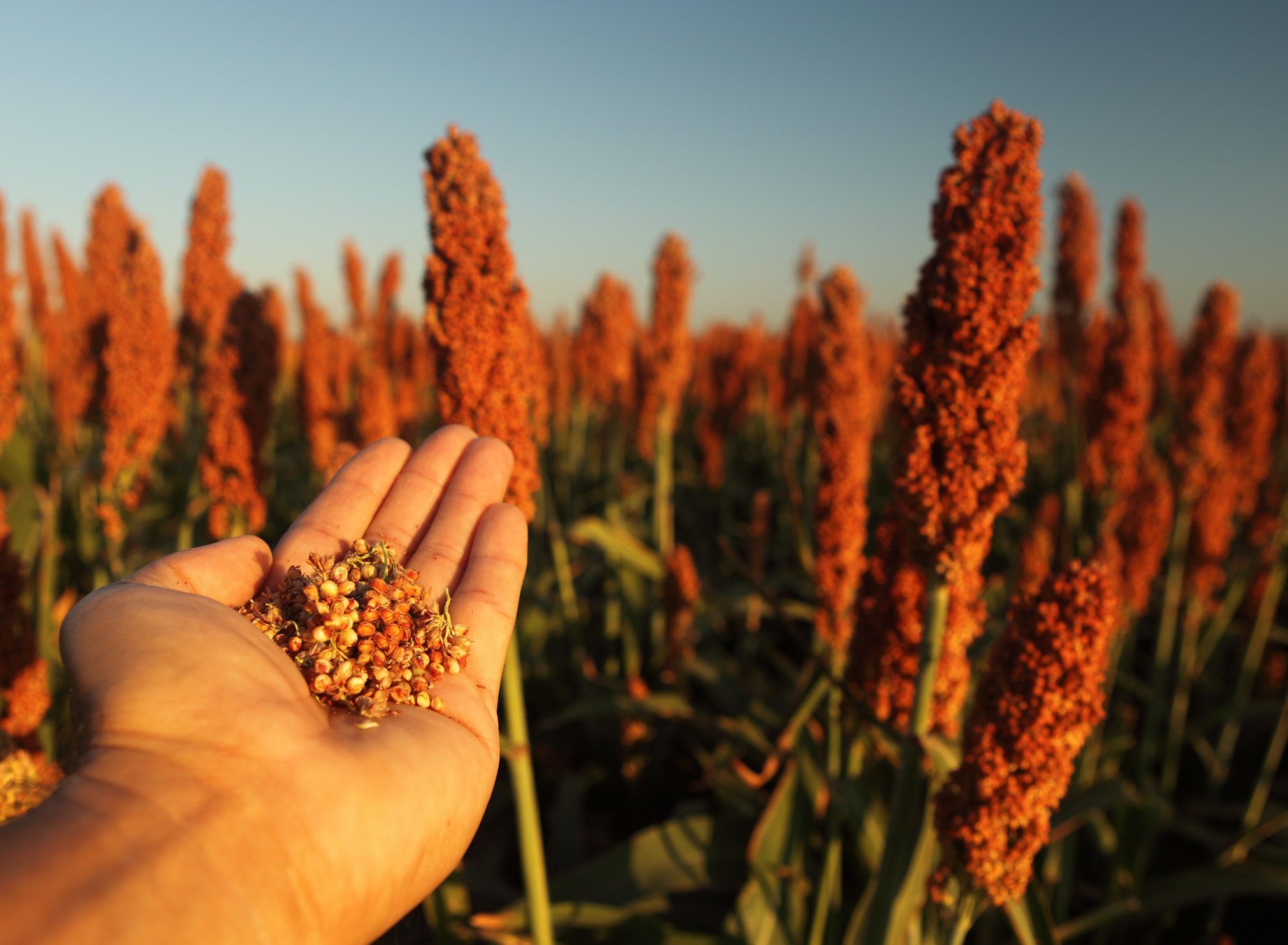
So we decided to do a deep dive into one specific crop indigenous to the African continent: sorghum. In South Africa it’s also known by names like ting ya mabele and amazimba.
Following the ting
Sorghum is one of the most important cereal grains for food consumption in Africa. Africa is the world regional leader in total production of sorghum at 25.6 million tonnes, but it has the average lowest yield at 967 kilograms per hectare. It is indigenous to the continent’s savannas and there is archaeological evidence in the Sahara of the use of sorghum dating back 8,000 years.
Sorghum is as nutritious as maize and has high drought tolerance. This makes it a resilient option for farmers to plant under changing climatic conditions.
Sorghum also has traditional significance. Umqombothi or utshwala is a beer traditionally made from maize and sorghum by the family matriarch for special occasions. As well as traditional beer, the Tswana people of South Africa also make a fermented porridge (ting ya mabele) from sorghum.
Despite these benefits and traditional significance, production of sorghum in South Africa has declined, with a peak of around 700,000 tonnes in the 1980s to a low of 100,000 in the later 2010s.
There is also a need to overcome its perception as a backward or “poor man’s food” and its association with drunkenness, which was reinforced during apartheid to denigrate indigenous food and traditional practices.
From encounters with a range of South Africans connected through sorghum by either its consumption, processing or production, we learned of three key interventions that could be made to reinvigorate this food. They involve availability, affordability and appeal.
New life for sorghum
There is a need to focus research on improving sorghum production in collaboration with small scale farmers to allow them to adapt to new local conditions under climate change. This can also improve yields to be more competitive with maize, which has globally received a lot more research funding for crop improvement.
Making sorghum a zero-rated tax foodstuff so that it can compete with maize on the shelf could make it more competitive. As a rough comparison, the cheapest house brand mabele meal product in one retailer’s online store is R26.99 (US$1.58) for 2kg, whereas a brand of maizemeal is R22.49 (US$1.32) for 2.5kg.
Innovation meets tradition
Another important intervention is around product innovation and, through this, increase in demand, to offer a more guaranteed market to farmers. Once local production can be increased, this should reduce dependence on sorghum imports. As a respondent in our research said:
If sorghum can be bought at the same price as maize, then people will start to shift their consumption because of its health benefits and because its indigenous heritage has marketing potential.
Another respondent said:
You need to create aspirational products. It shouldn’t be considered poor man’s food – if you ask many people in (South Africa) about sorghum, they come up with two associations: beer and the ‘drunk uncle’; and poor man’s food, ‘porridge’.
Sorghum products – newly developed ones and reconfigurations of traditional gastronomy – must meet modern consumers’ need for convenience and aspirational preferences. Then there could be a revolution in the sorghum market. Public procurement of sorghum, for example in schools, could not only teach children about these crops, but provide a more diversified and healthy diet – while enabling a market for farmers. As a third respondent told us:
Most people have a positive story about sorghum – we need to tap into tradition and culture … People remember things – what grandmother would eat. There is a lot of marketing in the stories – it’s tradition. It’s gogo (grandmother).
Ting ya mabele is now registered on Slow Food’s Ark of Taste. This features a collection of artisanal products steeped in culture, but also at risk of extinction as the traditional practices upon which they are based are lost or the species from which they are made become endangered.
The potential loss of sorghum from the South African food system has implications not only for climate adaptation and agro-biodiversity, but for nutrition security, cultural practices and a sense of identity.
Our research highlights that a strong cultural link to sorghum remains in South Africa. If an enabling policy environment for research and innovation could be broadly interpreted, this might invigorate a richer engagement with sorghum. Not just as a commodity, but as a culturally significant food that could help build resilience in local food systems.


