Arts and culture were given money in South Africa’s budget. Why it matters:
Analysts came to a range of conclusions about the budget speech delivered recently by South Africa’s Finance Minister Tito Mboweni. But few paid attention to his comments on arts and culture. He made a commitment that National Treasury will identify funds to support a new national theatre and museum, among other initiatives.
Mboweni justified making financial commitments to these institutions by arguing that they could be seen as tools of “soft power”. Soft power is a term coined by American political scientist and former Clinton administration official, Joseph Nye, nearly three decades ago. It is,
the ability of a country to persuade others to do what it wants without force or coercion.
Applied properly, soft power can help play a part in the way a country wants people to see it. A creative industry example is the K-Pop phenomena, which took a Korean music subculture to a global audience. So it’s no surprise that Mboweni said:
the global renown of South Africa’s art and culture is an expression of our soft power and our heritage. Our public finance choices should reflect an intention to preserve and add to our cultural canon.
In national budgets, the hard issues like tax rates, economic growth, state-owned enterprises and national debt levels always, and understandably, attract more column inches than touchy, feely stuff like a “soft power” investment plan for 2019.
In Mboweni’s speech, delivered against the backdrop of weak economic growth coupled with deteriorating public finances, he went further:
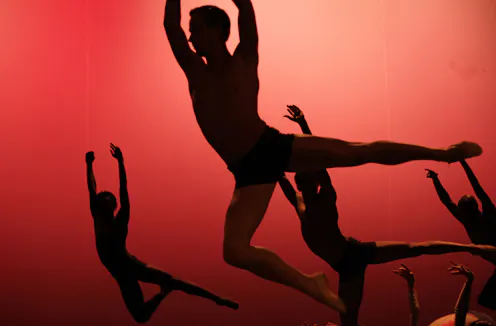
Officials from the National Treasury and the Department of Arts and Culture will consider proposals for the development of a new national theatre, a new national museum, and also consider financial support for the National Archives, a national orchestra and ballet troupe.
This may have come as something of a surprise to the sector. Arts and culture are often the first area to face budget cuts when economic growth slows, as seen after the 2008 global financial crisis.
Indeed, the South African arts and culture industry is struggling. This is clear from the recent closure of Johannesburg jazz mecca, The Orbit. Funding is also harder than usual to secure and some institutions are increasingly mismanaged.
Yet, arts and culture play a critical role in developing a sustainable and dynamic tourism industry in South Africa. Many cities such as Barcelona and New York, are tourist destinations because they have made art and culture the major attraction. They offer a diverse “art in tourism” experience.
South Africa, with its rich heritage of diverse cultures, communities, artefacts and art has the potential to boost the country’s economy in the same way. Given the importance of tourism as one of the biggest income producing industries and generators of employment in the failing South Africa economy, the arts can simply not be neglected, and may require the long-term investments outlined by Mboweni.
Creating value
The cultural and creative industries are increasingly recognised as potential drivers of job creation, economic growth and development. They include the more traditional areas of the cultural sector, such as visual arts, music and performing arts – what academic David Throsby calls the “core” – as well as commercial sectors, such as design, advertising and architecture, what’s known as the “periphery”.
The South African cultural and creative economy is not insignificant. Estimates show the GDP contribution of the cultural and creative industries was just over R62 billion or 1.7% of the total GDP in 2017. A 2018 South African Cultural Observatory mapping study shows the greater cultural economy employs 6.94% of the national workforce. It generates one million jobs.
But Mboweni’s speech focused on the social and intrinsic value of arts and culture rather than economic value. Here he listed identity, heritage and soft power.
This is good news. Even in times of slow growth, the intrinsic values of culture are not being sidelined, which could so easily be the case.
This is particularly important in the South African context given the country’s history. As political scientist Kevin V Mulcahy argues, cultural policy is political, much like art:
Reclaiming the past by a newly independent people is a necessary element for regaining political sovereignty… a process of cultural nation building.
Cultural institutions are key to this process. The inclusion of these in Mboweni’s speech is a commitment to platforms that support nation-building and social cohesion – essential ingredients for social stability, economic growth and exporting and importing soft power products.
Something old, something new
South Africa has a thriving and vibrant arts, culture and heritage sector. Many of the artists, institutions and the businesses thrive and, as acknowledged by Mboweni, contribute to South Africa’s cultural soft power.
Following the Budget Speech, there has been much debate at industry level about how the proposed new institutions might be constituted, funded and run. This includes how they could fit into existing institutions, such as the Cape Philharmonic Orchestra, KwaZulu-Natal Philharmonic Orchestra and Johannesburg Philharmonic Orchestra, Cape Town City Ballet and Jo’burg Ballet.
Yet, the development of a new national theatre and a new national museum does not necessarily mean new buildings or new entities – it could be that existing ones receive national status. The missing element though may be more direct support for an industry that gives a lot, albeit softly.
However, there is something to be said for government investment in both the economic and intrinsic value of arts, culture and heritage, when economies are in a recession and public resources under pressure.

Jen Snowball is a researcher at the South African Cultural Observatory, which is funded by the Department of Arts and Culture.
Amy Shelver is an associate researcher for the South African Cultural Observatory.
Source: The Conversation – Articles (AFRICA)
Read more on The Conversation.
Join the fun: Add Your event | Submit a Press Release | Add your listing.


