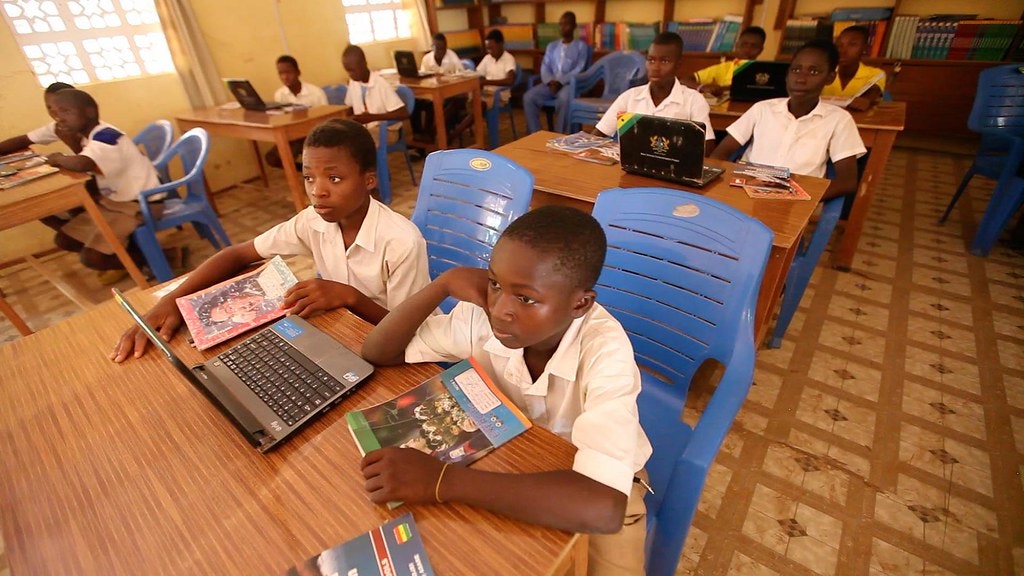
Primary school enrolment is now almost complete in developing countries and child labour is illegal in almost all countries. But the quality of education – especially in reading and mathematics – has not shown parallel improvement.
Low education quality reduces the probability that children stay in school and attain any educational qualification. It also decreases the future return of any qualifications. In other words, low quality of education decreases the years of education and the returns to education. The outcome is inefficient education systems and less incentive for parents to invest in education.
Governments have limited resources to improve school quality, and most of their budgets go to staff compensation. That leaves only a little for schools, books, and the other materials students need. Parents are usually responsible for providing textbooks, food, uniforms, and transport, as well as covering other costs through fees. But can they play a bigger part in improving the quality of schooling? What would spur them to do so?
We developed a model that shows investment in schooling produces a better output (the quality of the child, as it were), which in turn encourages parents to invest in schooling. We tested the model in Ghana and found that families do tend to spend more on education in response to changes in their children’s cognitive achievements.
This has two main implications for policymakers. Better quality of schooling would keep more children in school for longer. And it would encourage families to invest more in supplementary school material and reduce the amount of time children are required to spend working on non-school tasks.
School quality in Ghana
Ghana is a good example of a country experiencing significant increases in enrolment rates in primary school but still finding the quality of schooling lagging behind.
Net enrolment in primary education increased from 62% in 1999 to 91% in 2015. Over the same period, the primary school completion rate went from 65% to almost 100%, repeaters decreased from 4.2% to 1.9%, and the share of trained teachers increased from 29.2% to 45.5%.
Despite the significant improvement, there are still gaps in the provision of quality education, especially in rural areas.
In 2015, 55% of teachers were not trained, 16% of students in primary schools were over-aged, and 8.1% of children of primary school age were out of school.
Based on international reports on schooling outcomes, 21.1% of Ghanaian sixth-grade students have not learned to read, and 43.1% have not learned maths.
The model and results
We created a model of overlapping generations: school children, young adults, and older adults. The middle generation is people whose earnings are related to the human capital they built at school. And they have to make decisions about investing in their children, saving for their future, and supporting their parents.
The model predicts that if the available schooling is better, and if parents expect more altruistic behavior from their children, then parents tend to spend more on their children’s schooling. Parents also tend to decrease their child’s work activity in response to an increase in schooling quality.
We tested the hypothesis that families consider better school performance to be a reliable predictor of future return, and this gives them an incentive to invest more in academically promising children. Since parents’ expenditure is an important determinant of children’s school performance, we investigated parents’ investments in the quality of their children’s education, measured by their spending on books and other school materials.
To do this, we needed a household income and expenditure survey that contained information about the cost of schooling, along with measures of child quality. We also needed data about school quality that could be matched with the survey. School quality includes teacher characteristics, the availability of clean water and a functional toilet, features of classrooms, the existence and quality of seating, and the quality of a school’s library. We used the Ghana Socio-economic Panel Survey (2009-2010), which has data for 5,010 households.
The survey consists of data on households and schools, including absenteeism records of teachers, whether there is one teacher for all classes, the amount of fees the school received, whether there is a free feeding program, book provision, distance to school, and more. It also has test results as a measure of children’s cognitive ability, and information about parents’ educational level and how children’s time is spent. We also use the ministry of education’s data about school facilities, resources, and other school characteristics.
We summed up all parental expenditure on a child’s school activity, other than the fees paid to the school.
Good results boost investment
Our results show that there is a strong relationship between children’s schooling output and parents’ investment and that parents adjust their investment in education in response to changes in their children’s cognitive achievements. Families tend to spend more on children whose quality is higher. For example, a 1% increase in the child’s average score increases parents’ expenditure by 2.32%. We also show that a better schooling output can incentivize parents to decrease students’ non-school activities, which in turn helps children to spend more time on school.
Our results introduce a channel of causation that could stimulate education and its impact by increasing families’ investments in supplementary school materials.


