Black and queer women invite the Black Atlantic into the 21st century:

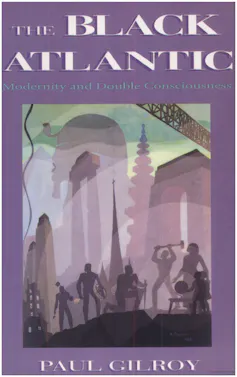
In 1993 British academic Paul Gilroy published The Black Atlantic: Modernity and Double Consciousness. It has become a very important text in global blackness studies.
Gilroy’s book provided the inspiration for a colloquium I organised at the Stellenbosch Institute for Advanced Study. Called Revising the Black Atlantic: African Diaspora Perspectives, it was part of my ongoing efforts to re-imagine the current thinking around African decolonisation. It set out to listen to and foreground women and queer feminist academics.
The Atlantic world referred to by Gilroy tells the histories of Europe, Africa and the Americas, two hemispheres joined by the Atlantic ocean. The diaspora is the spread of people – in the case of our studies, black people – across continents. The Black Atlantic is a term typically credited to Gilroy.
It tells a history, shaped by the brutality of the slave trade, that leads to the development of black consciousness in other parts of the Atlantic world. These histories then interact with one another in creative and useful ways.

Gilroy’s text has helped to highlight the influential role and place of the black diaspora within global race studies. But it remains largely shaped by the West. In its focus on disproving the racist assumptions of Western thinking, it downplays the place of Africa and its peoples in contributing to the modern world.
The Black Atlantic also, unfortunately, does not acknowledge the contributions of women and queer people. A similarly narrow and unimaginative approach affects traditional and current thinking about decolonisation. It is focused largely on tackling and contradicting philosophy and thought that is centred on Western, European culture and history.
Resistance to Western dominance over knowledge is understandable and necessary, considering the continent’s lingering, violent colonial past. But there’s a risk of our decolonising efforts becoming prescriptive.
In South African academic life, a racialised and gendered decolonising narrative is also in danger of playing into the kind of exclusionary thinking that it opposes.
Various commentators have highlighted the threat posed by feminism to institutionalised norms. Author Chimamanda Ngozi Adichie observes
Gender is not an easy conversation to have … Because thinking of changing the status quo is always uncomfortable.
Academic Jennifer C. Nash has argued that black women in particular are not normally associated with analysis. Their intellectual production, therefore, is viewed as threatening to existing social structures.
Our colloquium aimed to probe the limits and possibilities of both the Black Atlantic and current thinking around African decolonisation. We wanted to offer new interpretations from the perspectives of today’s African diaspora.
The papers
An interdisciplinary approach encouraged comparative, transnational readings from the humanities and social sciences. We also wanted to realign contemporary African beliefs and lived experiences.
Only women and queer feminist scholars were invited to present papers.
Michelle Wright’s paper Black in Time: Diaspora, Diversity and Identity challenged linear ideas of the Black Atlantic which mimic Western assumptions about history. These result in a simplified reading of race and racial belonging. She argued for tangible versions of history that allow for more inclusive and complex Black diaspora.
Sam Naidu’s paper That Ever-Blurry Line Between us and the Criminal: Re-visioning Justice in African Noir looked at the classic, Western genre of crime fiction. And then reconsidered it from the perspective of African crime fiction. She showed how this evolving genre could reflect issues of sociopolitical justice and philosophical dilemmas that affect Africans.
Some topics explicitly challenged the racial and gendered shortcomings of Gilroy’s text. Marzia Milazzo delivered a paper titled, The Black Atlantic, the ‘New Racism,’ and the Politics of Hybridity. It took to task Gilroy’s colourblind understanding of racism and his uncritical interpretation of the mixing of cultures to shape his theory of the Black Atlantic.
Rocío Cobo-Piñero’s paper was called Queering the Black Atlantic: Transgender Spaces in Akwaeke Emezi’s Freshwater (2018). It used Emezi’s novel of Ada, a child born with a troubled and troubling spirit, to offer ways in which emerging African queer literature could disrupt traditional, heterosexist readings of The Black Atlantic.
Other topics explored the possibility of embodied research and teaching methods. This is about the physical ways we know and teach. For example, Danai Mupotsa’s paper Knowing From Loss referenced the #FeesMustFall movement. Her aim was to highlight (marginalised) experiences and contexts in students’ ongoing calls for a decolonised, transformed higher education.
Uhuru Phalafala’s paper Encountering the M(other) in black radical traditions focused on celebrated South African poet Keorapetse Kgositsile. It examined the unacknowledged influence of the oral Setswana maternal lineage on his transnational black radical poetry and politics.
Our discussions were rigorous and robust and we weren’t necessarily always in agreement. But all the participants were committed to one thing: rethinking the dominant thinking around decolonisation and the Black Atlantic.
The colloquium demonstrated the crucial significance of nonconformist, disruptive research and teaching methods. And while I am excited about the prospects for queer African feminist scholarship, gender equity is an aspiration yet to be realised.
This is the first article in a series called Decolonising the Black Atlantic in which black and queer women literary academics rethink and disrupt Paul Gilroy’s concept of the the Black Atlantic. The series is based on papers delivered at the Revising the Black Atlantic: African Diaspora Perspectives colloqium at the Stellenbosch Institute for Advanced Study.

Aretha Phiri is an NRF rated researcher. She is affiliated with the Stellenbosch Institute for Advanced Study.
Source: The Conversation – Articles (AFRICA)
Read more on The Conversation.
Join the fun: Add Your event | Submit a Press Release | Add your listing.


