There are two widely available views of Nelson Mandela, the first post-apartheid president of South Africa. The first is a reverential and uncritical celebration of his life and achievements. It resonated in the obituaries and eulogies when Mandela died in December 2013.
Madiba (his clan name) was “sent by God”, said Irish newspaper magnate Tony O’Reilly, who’s said to have been a friend of Mandela’s. His purchase of South Africa’s then largest newspaper company, Argus Newspapers, was made possible by Mandela’s support. Former American president Barack Obama declared that Mandela
changed the arc of history, transforming his country, the continent and the world.
A second prevailing view is hostile and dismissive. By 2015, a reputation that had appeared invincible was being shredded in some media outlets, on the streets and especially on university campuses across South Africa. The critique centred on the 1994 negotiated settlement that ended apartheid. It accused Mandela of betraying the black majority to appease the economically powerful white minority.
Both narratives – Mandela as secular saint or Mandela as sellout – are poor history. The suggestion that Mandela single-handedly achieved democracy is as intellectually threadbare as its mirror image: that he was responsible for the failure to transform social and economic relations after 1994.
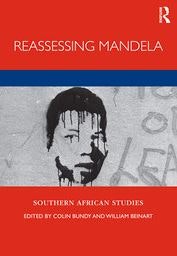
Our edited collection, Reassessing Mandela, provides a scholarly counterweight to the two polarised positions. It attempts to begin the task of revisiting the canonical biographies, rethinking aspects of Mandela’s life and his politics, and evaluating how he is and should be remembered.
Reassessing Mandela
The first aspect of Mandela’s life reassessed in the book is his family and its background, his childhood and youth, and his Thembu lineage. Two chapters – by the late Phil Bonner and by Xolela Mangcu – complement one another in intriguing ways. Both historians remind us that Mandela’s 1994 autobiography, Long Walk to Freedom, is an unreliable text. Some of its flaws are replicated in the work of others.
Bonner’s archivally based chapter corrects some of the shaky chronology in Long Walk. It identifies Mandela’s father Gadla Mandela as “a significant if little recognised historical figure” but shows that Mandela’s own account of his father defying the white magistrate cannot be read as history.
Mangcu’s chapter challenges Mandela’s own account of his descent. He locates him within a history of the Thembu royal house’s “pragmatic co-operation” with colonial rule. Mandela did not mention this.
Mangcu emphasises the history of “African political modernity” in the Transkei, a territory comprising a number of African kingdoms and chiefdoms annexed in the 19th century. He also considers Gadla’s role in the local administrative body (Bungha), where he is portrayed as resisting both missionary influence and colonial regulations.
Bonner and Mangcu underline the complexity of “indirect rule” in the Transkei. They correct the tendency to discuss Mandela’s early years through a lens of rural nostalgia.
Mandela’s political activism
A second broad area of reassessment emerges from three chapters which consider Mandela’s relationship with the South African Communist Party (SACP), his activism and especially his leadership in underground politics. Tom Lodge produces a fine-grained account of Mandela’s “association with South Africa’s communist left”. His is a study of friendships and social networks, of left-wing readings and writings, and of political alliances and tactics.
Paul Landau’s chapter focuses on the period between the 1960 Sharpeville massacre of black protesters by apartheid police, and Mandela’s arrest in August 1962. It traces the efforts to implement the M-Plan – a template for an underground structure of the liberation movement, the African National Congress (ANC).
Mandela and a small group of like-minded colleagues sought to use the plan to transform the ANC into a militant vanguard movement willing to employ violence against the state.
Thula Simpson’s chapter reconsiders Mandela’s role as commander-in-chief of umKhonto we Sizwe, (an armed wing set up by the ANC and SACP). He suggests that its campaign of urban sabotage was more effective than generally acknowledged.
Three other chapters cast new light on different aspects of Mandela’s life: his marriage to Winnie Madikizela-Mandela; his years in jail on Robben Island, and his role in the human rights discourse that shaped South Africa’s new constitution.
Shireen Hassim provides a compelling rereading of
one of the most iconic political marriages in history.
First, she establishes Mandela’s wife Winnie’s own political career and significance. She says it offered “a form of intimate political leadership” to young activists. Secondly, she explores the complex relationship between Winnie’s political trajectory and Nelson’s, and how a widening political divide accompanied the breakdown of the marriage.
Martha Evans examines four visits by journalists to Robben Island between 1964 and 1977, their interactions with Mandela and their published accounts. She discusses Mandela’s capacity to capitalise on brief contacts from an apparent position of weakness, and shows how incarceration enhanced his iconic status.
Recalibrating Mandela
These chapters are book-ended by Colin Bundy’s introduction and Elleke Boehmer’s postscript. Boehmer explores how memories of Mandela are constructed and contested, and what fresh interpretations can teach us.
This collection treats Mandela not as an individual miracle-maker or traitor to the cause of transformation. It shows him as one political actor, alongside a multitude of others, within complex political and social forces.
It suggests that scholarship on Mandela will continue to explore and explain his politics and his ability to assert leadership. It will also continue to explore the contradictions and continuities of his personal makeup, and his determination over decades to bring people together. All this, while negotiating the corrugated terrain of race and identity in South Africa.


