The phrase “building back better” has been prominent in calls for a recovery from the COVID-19 pandemic. It invokes the opportunity to use the disruption to rethink our ways of organising societies and communities. And to use the recovery effort to channel investments towards more inclusive, resilient and environmentally friendly outcomes.
An increasingly diverse array of actors in different parts of the world have been using the phrase. US President Joe Biden made “Build Back Better” the leitmotif of his election campaign and his transition into the White House. A plethora of agencies and think-tanks are proposing ways of “building back better” during the pandemic. These range from the British Academy to the World Bank and even a coalition of corporate CEOs. Meanwhile, civil society activists around the world connect the phrase to Arundhati Roy’s description of the pandemic as “a portal, a gateway between one world and the next”.
But hidden in these various invocations are likely disparate visions of what “better” actually means and how to achieve it. Also, there may be a need to reconsider whether a crisis is indeed a good time to implement potentially far-reaching changes.
In a recently published paper I outline the opportunities and risks associated with ambitions to “build back better” at this point in time.
Opportunities and risks
The phrase “building back better” entered the lexicon of policymakers, aid workers and scholars in the wake of the 2004 Indian Ocean tsunami, though its basic idea has been around much longer. Since then, numerous articles have sought to define the term, provide empirical analyses and make recommendations.
They show that building back better “is quite challenging to implement in practice” and it may involve diverse emphases or dimensions. There are both opportunities and risks.
First to the opportunities.
Building in the current context of the pandemic refers to broader, more intangible public benefits, such as public health and welfare systems. Governments’ expansion of public health infrastructure in response to the virus may have longer term benefits, and it makes sense to identify those synergies and invest in them.
Another domain of public sector policy innovation is in welfare. The pandemic has shown that societies without effective social welfare systems are not only more susceptible to greater humanitarian and social fallout during crises. They are also more vulnerable to the spread of disease, as people without adequate sick leave or medical and unemployment insurance are more likely to go to work despite feeling unwell.
There is thus a growing recognition of social welfare as a kind of “social immune system”. This has reinvigorated debates about a basic income grant. It is also highlighting the importance of local community activism in not only responding to immediate public health and welfare needs, but also in longer-term social innovation.
Now to the risks.
The first revolves around timing. The period following a disaster may not be the best time – morally and practically – to attempt longer term social change, given that many people have immediate needs. There may thus be a tension between the fairness principle and the need to channel support to the most vulnerable, on the one hand, and the longer term view encased in “build back better” ambitions, on the other.
Also, psychologists point out that individual and collective decision-making capabilities are challenged in times of stress. We are more likely to make judgments and decisions based on pre-existing biases when we are under pressure.
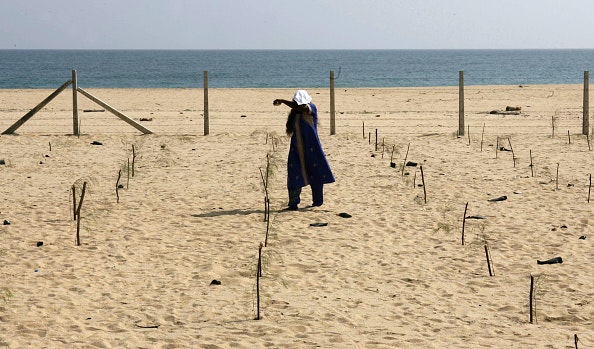
An example was the Sri Lankan government’s decision to establish a 200-metre “buffer zone” along the coast after the 2004 tsunami. But instead of protecting people it had the effect of displacing poor fishers and small, informal traders from their traditional locations adjacent to the beach. Some of this may be explained as a form of “disaster capitalism”, where elites make intentional use of a crisis to displace local people for their own benefit.
My own research in Sri Lanka suggested that unintentional biases also played a role. The buffer zone fiasco showed how, in a crisis, decision makers are prone to rash and unsubstantiated decisions based on pre-existing biases, which, as in this case, include a bias among government and business leaders against informal economic activity. The resulting interventions have clear “losers”.
What’s different this time
The current crisis has at least four important, interrelated characteristics that make it notably different from previous disasters evoking the call to “build back better”.
-
It is not a physical disaster, but about public health and socioeconomic contraction. The physical aspects of actually building back better do not apply. The phrase is thus used in an even more metaphorical way, which could further increase the risks of vacuity, bias, or even intentional misdirection.
-
The pandemic is not a short and sudden event, but a drawn-out crisis involving cascading and interlinked disruptions. The challenge of balancing tensions between short-term relief and longer-term objectives are acute, and they are further complicated by profound uncertainties surrounding the trajectory of the disease.
-
COVID-19 has a global geographic scope and affects everybody, though in unequal ways. Thus, while disasters such as tsunamis, earthquakes or fires normally affect particular regions that can then receive targeted assistance from national governments or even global relief efforts, COVID-19 is affecting all countries and this constrains the support given to especially vulnerable regions or groups.
-
The COVID-19 pandemic involves interlinked health, economic and social crises. It thus creates an especially complex and intersectional set of difficulties. This means that people who invoke “building back better” may either focus on one particular aspect of the crisis, or attempt to tackle a bewilderingly complex set of interactions across natural, social and economic systems. Either of these strategies creates risks of oversimplification, bias and unintended consequences.
Caution required
The phrase “building back better” should be used with caution. Different people will have different views of what “better” actually means and how to achieve it. Crisis situations exacerbate our tendency to emphasise pre-established templates for action and to succumb to biases, such as the all-too-common bias against informal economic activity.
But this does not mean that we should give up on the basic aspiration invoked by the phrase. The essential requirement is to explicate and discuss the underlying tensions and synergies between short- and long-term objectives, as well as the assumptions we hold around what we consider to be “better” and how to achieve it.
Key criteria by which to assess such assumptions and plans include fairness and inclusion, in that the needs, interests, and participation of the poor and vulnerable need to be prioritised.


