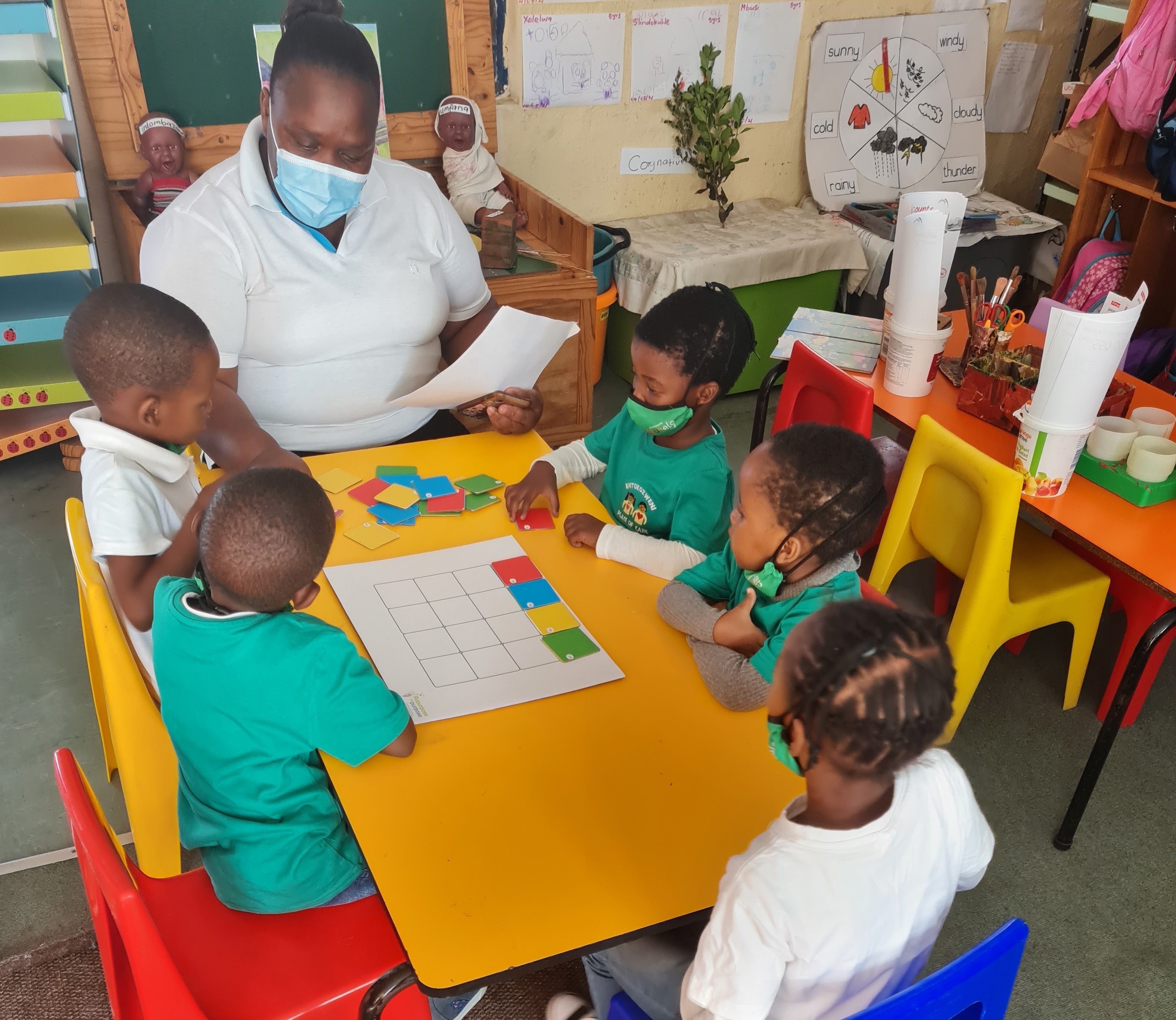
Early childhood development centres, often referred to as crèches, day cares, edu-cares or preschools, are vital spaces for young children. There, they can learn and play, interacting with their peers and receiving care while their parents are at work or looking for work. These centres are crucial building blocks for children’s development – and their futures.
In South Africa, 1, 660, 3173 children are enrolled in 42, 420 early childhood development programmes.
Early childhood development centres have another role, too, that isn’t often discussed: as employers. This is particularly important in a country like South Africa, which has an unemployment rate of 33.9%. Across the country, early childhood development centres employ 165, 059 people, most of them women, as “teaching” staff which. That’s a substantial and growing workforce.
Managing employees, children, parents and infrastructure is a tough task. That means early childhood development centre principals are key figures. They are, of course, often a facility’s public face and figurehead. But they are also business people: managers, charged with resource allocation, planning and organisational leadership.
These skills have become even more crucial since a shift in April 2022 that means South Africa’s Department of Basic Education governs the early childhood development sector, a role that used to be performed by the Department of Social Development. Principals are called upon to be adaptable and responsive to change as the sector adjusts to the new processes and policies under the Department of Basic Education.
The problem, as my recent PhD research shows, is that many early childhood development centre principals don’t have the necessary human resource and programme management skills to turn the governance shift into an opportunity. Nor have they been properly taught how to coordinate the many moving parts involved in running a centre.
That’s despite the importance of these skills being highlighted in the government’s early childhood development policy. The policy states that, by 2030, all early childhood development practitioners and principals should have adequate knowledge, skills, infrastructure, and materials to support a “comprehensive package” of early learning services. It also says that:
It is the responsibility of the government departments such as Department of Basic Education to mobilise funding and implement programmes to build the capacity of early childhood development practitioners.
My research suggests this is an ambitious plan and deadline – but the goal doesn’t have to be unattainable with the right political will and investment in leadership.
What principals told me
The aim of my PhD study was to gain an understanding of the essential management competencies of principals in the early childhood development sector to effectively manage centres in South Africa. There were 30 participants; 14 were principals of early childhood development centres and 16 were managers working in the early childhood development sector.
Some of the problems I identified among principals (based on their own assessment and managers’ views) in my research were:
-
Principals were juggling many tasks without adequate skills and support.
-
A lack of financial literacy. Even when centres were generating decent income, principals didn’t always know how to manage money or set budgets.
-
Poor administrative skills and incomplete record keeping.
-
Poor communication skills. Principals know that these are key to building relationships with parents and staff, but aren’t always confident of their own skills.
-
Difficulties in registering centres or collecting the documentation necessary to do so. Principals said they often struggled to access the right information or meet the requirements for receiving government subsidies. This was especially problematic during COVID lockdowns, when extra financial support made the difference between centres surviving the pandemic or having to close their doors.
Principals also told me they lacked the resources, time and support needed for professional development that would benefit themselves and their staff. Principals and teaching staff learn on the job, but continuing education is also crucial.
So, what’s the way forward?
Recommendations
Several recommendations emerged from my research. Applying these can help the sector to meet its policy requirements.
First, all early childhood development centres should create a document that defines a principal’s role and outlines what support they’ll need to fulfil that role. This document could help principals understand their functions and tasks better.
Second, training organisations and the government must prioritise both professional and personal development through forums and workshops for principals. This should be ongoing rather than once-off and requires investment both financial and in human resources.
Among other things, principals should be taught how to manage wages and resources, and to take accountability. Principals also need to be equipped with the necessary business management skills to seek out funding opportunities and cultivate partnerships who understand the nature of the early childhood development sector.
I also recommend that early childhood development centre managers and those working with such centres adopt evidence-based monitoring and evaluation processes for supporting registration and principal management processes.
Training and mentorship could help principals to develop their management and business skills. Establishing management competencies for principals can only improve the outcomes of South Africa’s youngest citizens. As one participant told me: “Leadership is a process, not a position. There is no organisational learning without individual learning.”


