Calestous Juma: how Africa can honour his legacy:

No discussion about the history of science, technology and innovation policy in Africa is complete without mentioning Calestous Juma. Juma, Professor of International Development at Harvard University, passed away late last year after a long battle with cancer.
Juma championed the use of technological innovation to tackle sustainable development challenges like food insecurity, climate change, poverty and disease – especially in African countries. He was working on a book, A New Culture of Innovation before he passed away. The book would have followed his 2016 publication, Innovation and Its Enemies: Why People Resist New Technologies. He had also agreed to co-write the foreword for an ongoing interdisciplinary book project that I am leading on using science, technology and innovation for meeting sustainable development goals.
Juma was a passionate advocate for strong national science, technology and innovation policies. He spent decades engaging with policymakers, convincing many African governments that integrated frameworks could bolster a country’s economic growth and prosperity.
So, how successful was he? What do Africa’s science, technology and innovation (STI) frameworks look like today? And what more must be done – using his ideas and knowledge – to harness science, technology and innovation for the continent’s economic success?
Innovation and investment
Juma believed that Africa needed an integrated science, technology and innovation framework. This would be reflected in national development strategies and aligned with institutional changes across African countries.
This framework could be built, he argued, by focusing on building strong institutions and innovative universities. These universities ought to concentrate on agriculture, engineering, entrepreneurship and transformative governance; they should be able to train scientific experts, entrepreneurs, policymakers and engineers, among others, to create long-term, sustained growth and foster competitiveness at global level.
Sadly, these ideas remain for the most part a dream. Africa’s science, technology and innovation framework is fragmented. On average countries invest very little in research and development compared to the rest of the world.
Such investment is crucial to strengthening innovation and technology. It bolsters science, technology, engineering and maths education (STEM). This clears the path for the kind of scientific discovery and breakthroughs that can solve the sustainable development challenges that vexed Juma throughout his life.
For example, according to a report by UNESCO, South Africa spends 0.73% on research and development as a percent of gross domestic product (GDP) compared to 0.22% in Nigeria. South Africa’s higher spending is reflected in its good academic publication and patent output rates.
Compare this to how two of the world’s largest economies approach investment in science education. China invests USD$ 15 billion in STEM annually; the US invests over USD$ 3 billion. And US corporations have unveiled a plan to invest more than USD$ 350 billion annually in STEM initiatives to boost the nation’s workforce.
China and the US also both invest heavily in physical infrastructure: waterways, railways and airways. These countries engage science, technology and innovation to build infrastructure. This drives innovation and promotes competitive economies. Africa must do the same. The continent needs good roads and efficient railway systems that connect Lagos to Accra; Nairobi to Johannesburg. This will not happen if the continent doesn’t prioritise and implement strong STI initiatives.
Juma believed that all of this – and more – was possible in Africa. And Nigeria, he argued, could be the continent’s science, technology and innovation powerhouse.
Juma’s dream for Nigeria
One of Juma’s many projects was the creation of the Lagos Innovation Advisory Council. He wanted to help address food security problems in Nigeria’s largest state and to put the city of Lagos on a low-carbon path to a stronger, sustainable economy.
He also tried to help revamp Lagos State’s Ministry of Science and Technology. He was frustrated in these efforts by the Nigerian Federal government, which didn’t offer the necessary support.
I know all of this because Juma and I had extensive discussions about what could be done to improve my government’s support for a functional STI framework. He argued that Africa’s most populous nation should be leading by example. It should be creating a world class Ministry of Science and Technology and excellent science, technology and innovation policies.
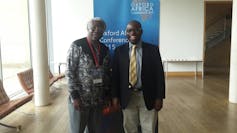
Nigeria is Africa’s leading economy. It is blessed with human, financial and natural resources. These could all be used to turn Nigeria into the continent’s leading light in science, technology and innovation. Unfortunately, Juma and I will not be able to complete this ambitious project together. In honour of his exemplary life, though, I will continue. I hope to bring his dream for Nigeria to life.
This is just one way for one African country to honour him. Another would be to nurture a committed group of African leaders who are willing to implement science, technology and innovation policy and to invest in STEM initiatives. More participation and partnership is also necessary: the private sector, national and regional governments can all work together to develop robust STEM programmes that will boost Africa’s economies and infrastructure.

Ademola Adenle does not work for, consult, own shares in or receive funding from any company or organisation that would benefit from this article, and has disclosed no relevant affiliations beyond their academic appointment.
Source: The Conversation – Articles (AFRICA)
Read more on The Conversation.
Join the fun: Add Your event | Submit a Press Release | Add your listing.


