Cape Town has a plan to manage its water. But there are big gaps:
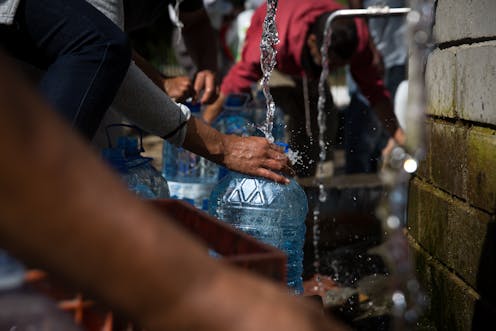
The City of Cape Town – and southwest Africa more generally – experienced its worst drought on record between 2015 and 2018. With fresh rains as well as careful water management, the city has now emerged from this environmental and economic emergency.
The final consequences of the drought might never be known for certain. This is because the effects on groundwater depletion or biodiversity loss may not appear until years after the event. But the economic impact of the drought is more easily identified. Over 30,000 jobs have been lost in the agricultural sector in the Western Cape region, caused by a 20% decrease in agricultural production.
There are other consequences too, such as the impact on the city’s international reputation, as well as residents’ and policymakers’ experiences of water restrictions and the threat of “Day Zero”.
So what are the lessons learnt?
The City of Cape Town has recently released a draft strategy for water supply and management which aims to ensure safe access to water and sanitation for all the city’s residents, efficient water use, diversified water sources and shared costs and benefits by 2040. This strategy has been strongly informed by events of the past three years and is a bold statement of intent. As such, it sets a benchmark for sustainable development in the city and the wider region. The strategy is aimed at increasing usable water availability and managing that water better. But some elements are missing.
An uncertain future
Missing parts of the strategy include the uncertainty of future trends in climate, economic activities, population growth, water demand and infrastructure investment needs. Increasing water availability is easy in theory because it is based on balancing supply to need. But this water needs to come from somewhere.
Rainfall is becoming ever more precarious, groundwater aquifers are depleted, and river and dam water is already allocated. Desalinisation is an option. But this is expensive and has unknown environmental impacts.
Another option is water redistribution. In the recent drought, water was diverted from the agriculture sector to supply the city. But this had ripple effects on farming communities and economies. This approach is probably no longer sustainable.
There is also the option of reducing water demand. The new draft strategy doesn’t specifically mention managing demand – it makes vague reference to the need to use water wisely. It may be that the memory of water restrictions is too recent to discuss in this document. But water management is not just about supplying water, it’s about changing hearts and minds. These take much longer to change. For some Capetonians, the drought is over and normal business is resumed. For others, the spectre of Day Zero still remains.
And the plan doesn’t indicate that lessons have been learnt. For example, an innovative Water Map used by the City of Cape Town was able to “name and shame” excessive water users, but some township users were exempt from restrictions while other wealthy users largely ignored the water restrictions because they could afford to pay the resulting fines.
This kind of behavioural analysis is important when it comes to equitable planning and water management, and provides a rich source of data for drought epidemiology – Cape Town knows more about how its residents use water than most cities.
Emerging from disaster
Over the next decades, it’s anticipated that southern Africa will experience both higher average annual temperatures, in particular in summer. It’s also expected to have more variable and somewhat lower rainfall. Collectively, these climatic changes will result in greater water insecurity, irrespective of any changes in population, water demand or capacity of water infrastructure.
A recent study shows that climate change has trebled drought risk in Cape Town. Future-proofing cities such as Cape Town to withstand water insecurity and drought conditions cannot be done without managing water infrastructure better. In South Africa, 56% of waste water treatment plants are not fully operational. This limits its ability to deliver on the future promises outlined in the City of Cape Town strategy document.
Water restrictions in Cape Town have eased over recent months. But persistent drought still exists elsewhere in the region, in small town rural communities where there’s a lack of water infrastructure, lack of access to dam water supplies and depleting aquifers. Addressing the future water problem for Cape Town should not be done at the expense of the wider region, and must be formulated as a national-scale strategy. This should be a government priority.

Jasper Knight does not work for, consult, own shares in or receive funding from any company or organisation that would benefit from this article, and has disclosed no relevant affiliations beyond their academic appointment.
Source: The Conversation – Articles (AFRICA)
Read more on The Conversation.
Join the fun: Add Your event | Submit a Press Release | Add your listing.


