Carbon tax revenues could be harnessed to help South Africa’s poor:
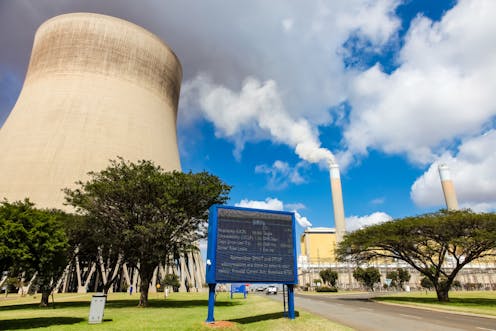
Climate change needs urgent action by all countries, and by all means. All countries agreed in the Paris Agreement to keep temperature “well below 2℃” and pursue efforts to keep global temperature increase below 1.5℃. Virtually all countries have nationally determined contributions, but currently these are on a path to 3℃ or more. The negative impacts of climate change increase as the temperature increase – and the poor suffer the most.
As part of its contribution to the global effort on climate change, South Africa is introducing the Carbon Tax Act. It comes into effect on 1 June 2019 and is a great step for the country; it also puts South Africa in the company of a steadily-increasing number of countries that are pricing carbon. There are 46 national jurisdictions and 28 subnational jurisdictions that have implemented a price on carbon, or are scheduled to do so, according to the Carbon Pricing dashboard created by the World Bank
Companies in South Africa will now pay a small amount each time they emit a ton of greenhouse gases. Putting a price on carbon is a key way of responding to the climate emergency. It will also raise awareness and improve reporting on emissions. The tax revenues should be used to ensure benefits to poor communities, and the tax will need to be increased over time to provide a long-term price signal to decarbonise the economy.
How it works
The carbon tax is being introduced at a much lower rate than needed in the longer term. The nominal amount of carbon tax that a company will pay is R120 per ton CO2-eq.
But multiple allowances, including a 60% “basic” tax-free allowance, means big emitting companies pay at most R48/ton. The tax is payable by companies which exceed the threshold of carbon emissions. Other further “allowances” mean that several of South Africa’s major emitting companies will pay a minimum of R6/ton. At current exchange rates, that is as little as $ 0.42/ton, much lower than required globally.
The High Level Commission on Carbon Prices recently reported that by 2030, countries should be looking at a carbon price of US$ 50–100/tCO2. Given the rate of change of key technologies for mitigation, the appropriate tax level will have to be periodically assessed. But there is no doubt that South Africa’s current tax rate is too low to transform the economy.
The tax will be paid by companies to the South African Revenue Services (SARS). As for other taxes, SARS collects the revenue for the general fiscus. Revenue should be used for two purposes, which should be funded on budget.
-
To fund programmes that provide access to cleaner and safer energy to the poor. Poor households should pay less for energy under a carbon tax-revenue scheme, rather than more.
-
Energy-intensive firms should be able to claim transitional assistance if they pay the full tax, contribute to socio-economic development, and agree to reduce where they can. The assistance would be money clawed back by the company, to fund lower-carbon activities – until this is no longer needed.
How the tax could be used
Most important from an ethical point of view is that the tax should be implemented in a way that ensures poor communities pay less for energy. This can be done by using revenues to fund programmes to reduce energy poverty.
Various scenarios exist for carbon tax revenues, depending on whether companies on average pay R6 or R48 per ton CO2-eq. The revenues could fund the national budget for electrification – if companies paid a “medium” carbon tax of R30 per ton.
Another option is that hundreds of thousands, and up to tens of millions, of households could be given 5kg liquified petrolum gas free each month, extending free basic electricity to other energy.
A few hundred thousand better houses – warmer in winter with better insulation and with fewer health impacts due to use of cleaner fuels indoors – could be funded from carbon tax revenue. Or the country could decide to subsidise at least 100 000 rooftop solar systems per year for poor households.
The carbon tax should be complemented by other mitigation measures, such as carbon budgets for companies and a cap on greenhouse gas emission from electricity in the integrated resource plan, the country’s national electricity plan.
Given the climate emergency, all these measures need pursuing and the understanding of how they best relate to one another. Many other countries have carbon taxes, emissions trading, indirect carbon pricing and regulations, and South Africa could learn from their experiences. These countries include the EU, Scandinavian countries, China, India and increasing numbers of developing countries.
Whatever approach it takes from here, South Africa’s decision to introduce a carbon tax should be hailed as an important milestone in the transition to a low-carbon and climate resilient economy and society.

Harald Winkler does not work for, consult, own shares in or receive funding from any company or organisation that would benefit from this article. He writes in his personal capacity. The Energy Research Centre has undertaken studies related to the carbon tax, including for National Treasury and the Department of Environmental Affairs, but not received funding for writing this piece, or specific research on the Act.
Andrew Marquard does not work for, consult, own shares in or receive funding from any company or organisation that would benefit from this article. He writes in his personal capacity. The Energy Research Centre has undertaken studies related to the carbon tax, including for National Treasury and the Department of Environmental Affairs, but not received funding for writing this piece, or specific research on the Act.
Source: The Conversation – Articles (AFRICA)
Read more on The Conversation.
Join the fun: Add Your event | Submit a Press Release | Add your listing.


