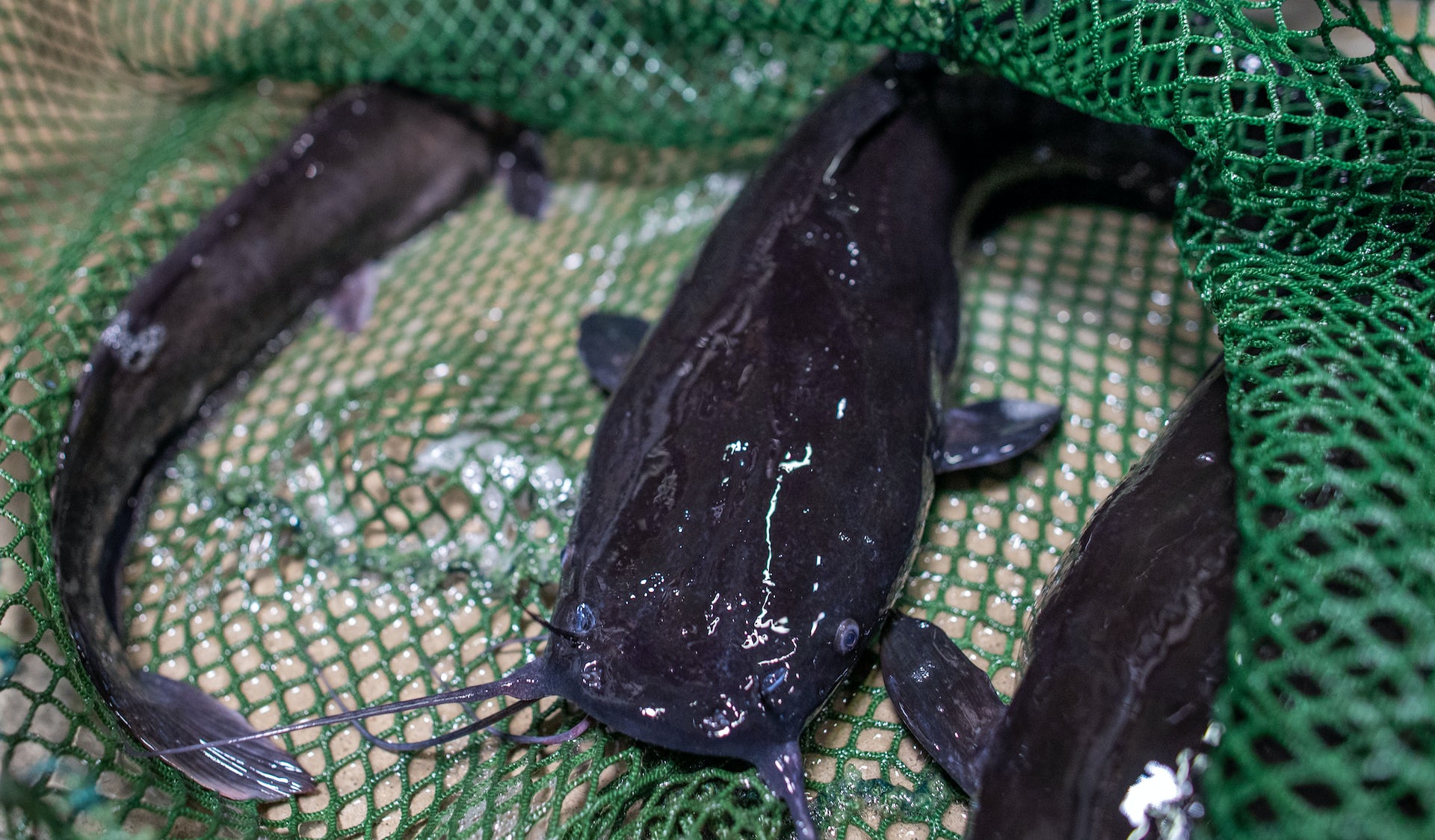
African catfish (Clarias gariepinus) farming has become a popular agricultural business sector in Nigeria. This is because the species can adapt to a wide range of temperatures and to low oxygen and low salinity levels. Salinity refers to the salt content of water. And the fish matures in about six months. Nigeria is now the largest producer of catfish in the world and the livelihoods of millions depends on it.
Despite being the highest producer of African catfish, the country is still struggling to bridge the gap between consumer demand and fish supply. The country’s annual fish demand is 3.6 million metric tonnes, but only 1.2 million tonnes is produced domestically. The shortfall is usually met through importing frozen fish.
About 2.5 million tonnes of frozen fish is imported into Nigeria annually to meet demand. This depletes the country’s revenue. Imported fish is expensive.
One way to support and boost the local catfish production industry would be to improve the processing and packaging of the fish.
Though catfish is popular, preparing and cooking it is not easy. It takes time and patience to remove the slime from the flesh. And processed products such as dried catfish are not always appealing to urban consumers and foreigners in or outside the country.
What’s needed, then, is a way of processing it that adds value to the fish and makes it more attractive for both domestic consumption and export.
We did an experiment to establish if the fish could be canned in a way that would make it appealing to more people. If we could establish a way of preserving the fish it might attract investors, generate employment and help meet the food demands of the growing population.
Canning catfish
Our research was conducted for several purposes: to add value to African catfish; reduce reliance on expensive imported fish; create employment; increase accessibility to protein all year round; create a Nigerian brand; encourage small and medium scale industries; and promote agribusiness and bioeconomy. These aims are aligned with sustainable development goals. The research was not patented because our team is interested in promoting agribusiness in Nigeria.
We canned catfish in tomato sauce with turmeric, known as ata ile pupa in the Yoruba language. Turmeric is a deep, golden-orange spice known for adding colour, flavour and nutrition to foods. A relative of ginger, turmeric comes from the rhizome (root) of a native Asian plant and has been used in cooking for hundreds of years. The turmeric was used as a spice and a bio-preservative.
Catfish were slaughtered and washed in hot salty water to remove the slime. The fish were cut into chunks, gutted, washed, cooked and drained. The chunks were placed in cans and boiled tomato paste containing turmeric was added to fill the can to the brim. The cans were sealed and sterilised in an autoclave for 30 minutes under pressure at 121℃. Cooking at this temperature was done to ensure safety and prevent spoilage.
Safely preserved
The canned African catfish was evaluated for safety and spoilage during the period of storage. Canned fish stored at room temperature and elevated temperature (40℃, as is sometimes experienced in Nigeria) were both safe and their qualities conformed to specified standards. This means that it cannot cause illness when consumed and the fish will not get spoilt. After three weeks on the shelf the fish was still safe for consumption. Further work should be done to evaluate the products for an extended period.
The canned catfish samples were also presented to people for evaluation to determine consumer acceptability. All samples compared favourably with the most popular commercial brand available on the market.
The data obtained from this research showed that African catfish can be canned in tomato sauce and still maintain an acceptable taste, colour, aroma and appearance. The analyses conducted also confirmed that there was no spoilage and the products were safe for consumption.
Benefits and opportunities
Canned catfish can provide nutrition for people living in urban areas who have little or no time to prepare food. They can use it to prepare stew or soup or eat it with bread or yam as part of a balanced diet. The products contained no chemical preservatives.
Canning of African catfish could provide work and trade opportunities for small and medium scale operators.
We plan to work more on increasing the shelf life of the product, to make it more marketable and acceptable. Microbial and other analysis will be considered beyond three weeks of storage. Then we will be ready to introduce this product onto the global market.


