West African cuisine is known for its distinct ingredients and flavours, often including a diverse range of plant foods. A traditional meal comprises a starchy staple cooked in a pot, served with a sauce prepared from vegetables, fish or meat. It is often accompanied by pulses. Today, these starchy staples include root crops such as yams, cassava, sorghum, pearl millet and maize.
In the northern Sahel and savanna zones, pearl millet is mainly prepared as porridge, while in the southern forest zone, a pounded mash from tuber crops such as yam, called fufu, is the major starch-rich element.
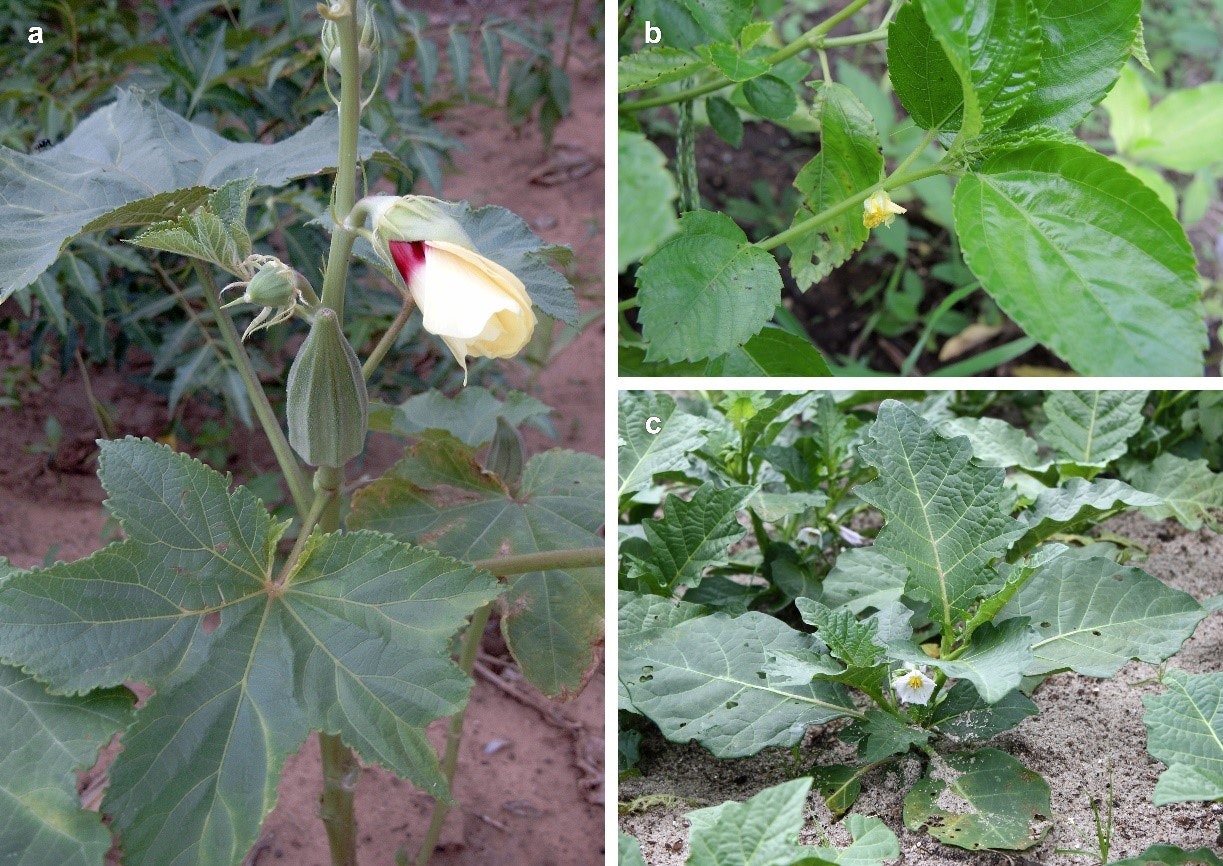
Indigenous vegetables, eaten at almost every West African meal, include eggplant, pumpkin, watermelon and okra (used as a thickener for soups and stews). A great variety of both farmed and foraged green leafy vegetables, little known outside the African continent, are also eaten. These include leaves from the amaranth, roselle and baobab tree.
Little has been known about how long all these plants have been grown and eaten in the region. Plant domestication plays a fundamental role in human history. And many globally used plants were domesticated in West Africa, for example pearl millet, cowpea, African yam, fonio (an ancient grain) and African rice. Investigating the origin and development of indigenous West African crops has global relevance, providing information on human adaptation and plant history.
Finding archaeological evidence of their use helps clarify the origins of human manipulation of wild species, including planting and harvesting.
Some food plants, including grain and legume crops, have been found on archaeological sites in West Africa dating as far back as 3,000 years ago. Finding evidence for vegetables and leafy greens is difficult, however, as they do not generally survive over archaeological timescales.
Read more: Kenya’s push to promote traditional food is good for nutrition and cultural heritage
The only way to investigate this is to analyse organic residues preserved in ancient pottery. Our research combined organic residue analysis of 458 prehistoric vessels with archaeobotanical evidence from 10 sites of the prehistoric Nok culture in Nigeria. This culture spanned a period of around 1,500 years, from around the middle of the second millennium BC to the last century BC.
What we found in the Nok pottery was chemical evidence of a remarkable range of plants. It is impossible to say how many but this suggested that – like today – a wide variety of leafy greens were processed together with cereals, pulses and what were probably yams. The method we used, lipid analysis, can now be added to the “toolset” of useful techniques to identify plant exploitation in West Africa, giving a fuller picture of food preparation and ancient diet. This has been done elsewhere but it is the first in West Africa.
Organic residue analysis of ancient pottery
The technique of analysing organic residue involves grinding up small pieces of potsherds excavated from archaeological sites and chemically extracting lipids preserved in the vessels. Lipids are the fats, oils and waxes of the natural world. They provide a “biomolecular fingerprint” of the foods that were cooked in the vessels.
The people of the Nok culture, known for its terracotta figurines and early iron working, lived around 3,500 years ago in Nigeria. Little was known of their diet and subsistence practices because acidic soils at Nok archaeological sites didn’t preserve much organic material. For example there were few animal bones to provide information on whether they kept domesticated animals or hunted wild game.
Carbonised plant remains did suggest that they cultivated pearl millet (Cenchrus americanus syn. Pennisetum glaucum) and cowpea (Vigna unguiculata) and foraged for tree fruits, such as canarium (Canarium schweinfurthii) and African peach (Nauclea latifolia).
Read more: Beeswax in Nok pots provides evidence of early West African honey use
Animal fats, such as milk or meat, are by far the most common foodstuffs identified in ancient pots worldwide. So we were surprised when our analyses revealed that over one third of Nok potsherds yielded a remarkable range of plant lipid profiles, some of which had not previously been seen in archaeological vessels anywhere – though evidence for plant processing has been found in the Libyan Sahara.
Our results suggest that Nok people consumed “greens” or leaves from plants such as jute mallow, African eggplant, okra, cowpea and bombax, widely used today. These provide cheap but quality nutrition and add taste and flavour to the otherwise monotonous starch-based staples consumed. They can be kept dried and stored for use throughout the year, affording a buffer in periods of food shortage.
One of the most important leaf-providing species today is the baobab, which, together with okra, false sesame, jute mallow and black sesame, is cooked in soups with a little potash (potassium carbonate) to give a high mucilage content, or “slimy” consistency. This soup is often found in areas that produce a lot of yam, likely because pounded yam is complemented by sauces of this consistency, as are other local cereal and tuber dishes.
Evidence for leafy vegetables and starchy plants in the ancient pots mirrors the starches and sauces cooked today.
These exciting results have allowed us to go beyond the identification of meals thought to consist mainly of meat and starchy plants. We can now confirm, based on the highly diverse range of lipid profiles we found, the preparation of ancient meals combining vegetables, pulses, tubers and, possibly, herbs and spices, in prehistoric West Africa.
The early invention of pottery around 10,000 years ago in this region, crucial in facilitating plant processing, suggests that West African plant cuisine may be thousands of years older than was thought. This question remains open for now.


