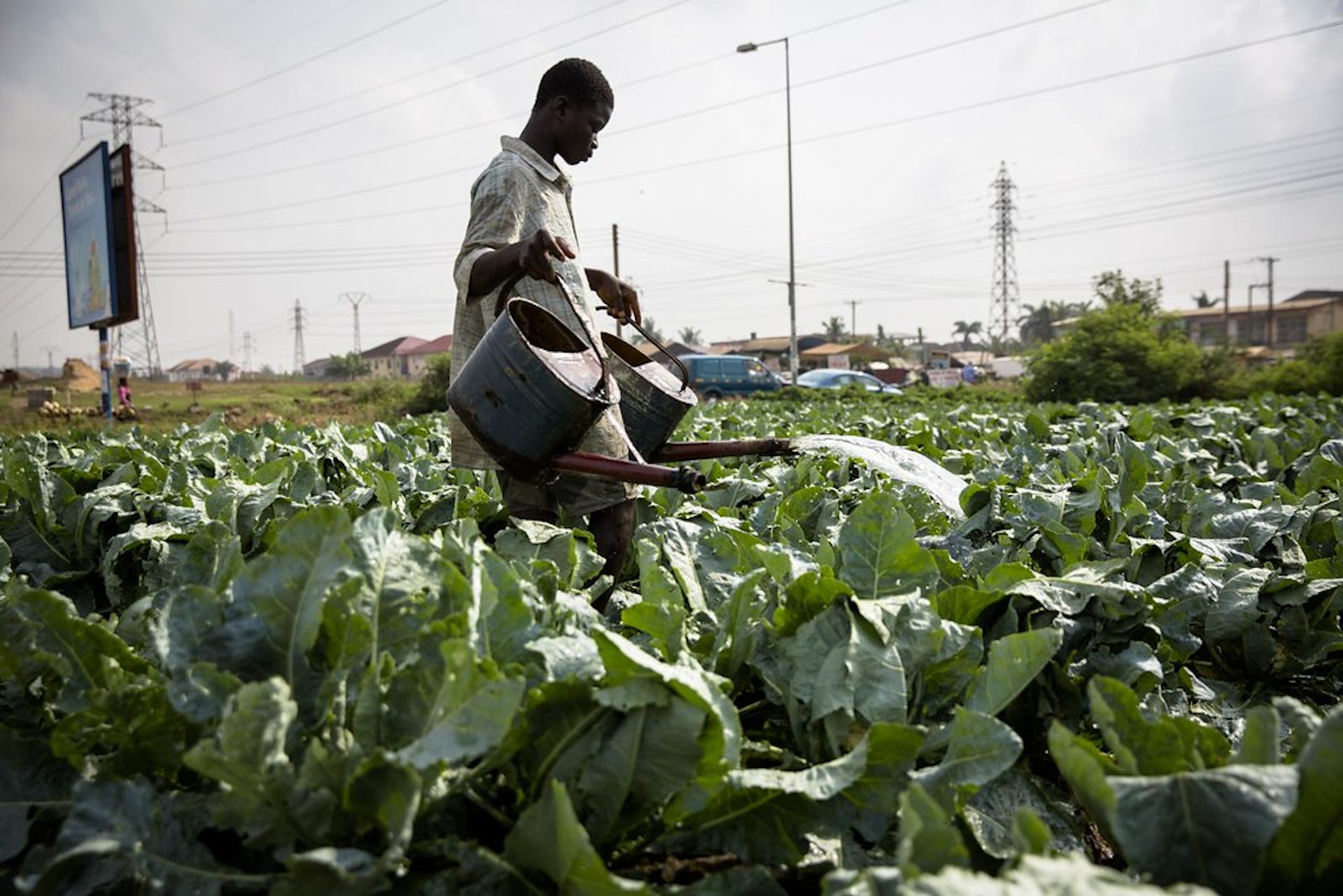
Children across the vast expanse of rural Africa hoe, dig, plant, carry, tend livestock, cook, scrub, care for their siblings, and undertake many other farm and domestic tasks. Most of their work is on the farms of parents or relatives, and in most rural communities, learning to work is a normal part of growing up.
We examined a number of dimensions of children’s work in African agriculture in papers published in 2020 and 2022. It is certainly the case that some children are harmed by the work they do, and others may be forced to work, exploited or trafficked.
Yet, based on this and other work informed by extensive literature review and initial research, children who are harmed by working represent a minority of working children. And critically, neither their interests, nor those of other rural children, are necessarily served by ongoing efforts to eradicate child labour from African agriculture.
We are researchers in development studies with long-standing interests in the complex intersections of agriculture and social development in rural Africa. Between us we have researched and published extensively on poverty and vulnerability, land, rural youth, social protection, and policy across West and East Africa.
As part of our ongoing academic work we recently co-edited a book, Children’s Work in African Agriculture: The Harmful and the Harmless. It is the first book that directly and singularly addresses children’s work in African agriculture. It puts the notions of “harm” and “harmful work” at centre stage, and argues that in most cases the work children do on farms does not result in harm.
Through a combination of thematic and case-based chapters the book seeks to re-frame the debate about children’s work and harm in African agriculture. We argue such a re-framing can help rural children in two ways.
First, by disrupting the dominant child labour discourse that pushes all children’s work, whether it be harmful or harmless, into the category of harmful child labour.
Second, by opening new avenues to more effectively address that portion of children’s work that is harmful. For example, by asking how the existing framework of international conventions, instruments and organisational mandates can be made more reflective of, and relevant to, the diversity of circumstances within which rural children and their families live and work.
But more fundamentally, re-framing can be a powerful tool if it more explicitly links the continued existence of children’s harmful work to multiple, interacting forms of power: discursive, economic, political and so on. The point is simple enough: we can expect little from policies, strategies and interventions that do not focus in on, disrupt and realign these power relations.
Key insights: harm and the school-work dichotomy
For the purposes of this article we highlight insights from two chapters.
Chapter 2 introduces the concept of “harm” that is foundational to understanding the “rights and wrongs of children’s work”. The authors – Roy Maconachie, Neil Howard and Rosilin Bock – draw on their many years of research, activism and practice around children’s work in Africa.
They note that harm remains a contested concept, despite being central to efforts to define and eradicate child labour, and having been theorised within various academic disciplines. And harm arising from children’s work is likely to remain difficult to identify, assess and understand.
Nevertheless, progress could be made with an approach to harm which incorporates its subjective dimensions, including children’s lived experience of harm, and is focused on well-being. Such an approach would involve processes that prioritise the perspectives and voices of children themselves, as well as their families and communities.
Chapter 4 on children’s work and schooling is written by Máiréad Dunne, Sara Humphreys and Carolina Szyp. Máiréad and Sara are international experts on the sociology of education, while Carolina is a young researcher.
The chapter highlights how the relationship between school and work is grossly oversimplified in much of what is written about child labour. For example, it is commonly asserted that a child’s place is in school, and any work that interferes with school harms the child, and must therefore be considered as child labour.
However, when the quality of schooling is low, as in much of rural Africa, children may have better opportunities for learning, skill development and future livelihood enhancement through their work on the family farm.
The simplistic school-work dichotomy is further undermined by the fact that for many children, periods of work are formally scheduled during the school day. They clean, farm, carry water and so on, either for the school or for individual teachers. There is also an assumption that while work is harmful, school is safe.
The reality is that harm is experienced at school, and while travelling between home and school, as bullying, gender violence and physical abuse. Girls and children with disabilities may be particularly vulnerable.
When children are not in school, or when they combine school and work, parents are blamed for not appreciating the value of schooling. But research suggests that they are well aware of the realities – both good and bad – of schooling. The problem is that the school-work dichotomy, and equating children’s work with child labour, leaves no room for the very real and difficult trade-offs and compromises that rural children and their families must navigate daily.
Don’t cause further harm
Reframing the debate about child labour in African agriculture, and how best to address it, is particularly timely. There are ongoing initiatives to eradicate child labour from a handful of global agricultural value chains, including the cocoa chain in West Africa. As long as such initiatives fail to appreciate that much of the children’s work is harmless, and indeed beneficial, they have the potential to cause significant negative consequences – in fact, to harm – rural children and their families.


