Children and HIV: what we found about vaccine-preventable diseases:
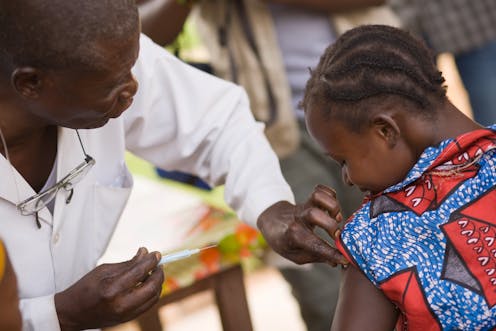
Sub-Saharan African countries account for about a third of the global burden of vaccine-preventable diseases. These diseases are responsible for a large proportion of deaths in children under the age of five.
But there is a knowledge gap about the burden of vaccine-preventable diseases among HIV-infected and HIV-exposed children (HIV-negative children born to women with HIV) in sub-Saharan Africa. It’s important to know more about this because of the extra vulnerability of children infected with and exposed to HIV. It’s also essential because health care interventions such as vaccination programmes need to be based on evidence.
We wanted to get a better understanding of the disease burden and to determine what kind of information is missing. We reviewed and analysed scientific literature about how children in sub-Saharan Africa have been affected by vaccine-preventable diseases since the advent of HIV in the 1980s. We wanted to find out how prevalent these diseases are among children who are infected by or exposed to HIV. We also wanted to know how many new infections are occurring each year and how many children are dying as a result. We looked for trends and the current burden of vaccine-preventable disease in the region.
The diseases we looked at are tuberculosis (TB), rotavirus gastroenteritis, diphtheria, pertussis, pneumococcal diseases, hepatitis B infection and measles.
What we found
This study shows that some vaccine-preventable diseases still have high incidence, prevalence and fatality rates in HIV-infected and HIV-exposed children.
We found that, across sub-Saharan African countries, new cases of TB have been decreasing by a rate of 12.5% per year from 2000 to 2010, and 1.5% per year between 2011 and 2018. But the number of new cases every year is still relatively high when compared to the World Health Orgaisation’s goals to end the disease. Despite the reduction in new TB cases among children in general, there are still hotspots such as Nigeria, South Africa and Cote d’Ivoire.
Sub-Saharan Africa had the highest hepatitis B virus burden among children and adolescents in the 1990s. Our study shows the burden has declined, primarily due to immunisation programmes.
But a study conducted in Rwanda still showed high prevalence of hepatitis B virus infection among HIV-infected and HIV-exposed children. Likewise, new cases and deaths due to diarrhoea and pneumonia are much higher in low-income African countries than in the more developed western high-income countries.
We also found that TB was the most researched disease in HIV-infected and HIV-exposed children in Africa. This is because people with HIV are highly susceptible to TB.
Additionally, we found some gaps in the available knowledge. Many African countries haven’t done much research on diseases among HIV-infected and HIV-exposed children. Important vaccine-preventable diseases such as poliomyelitis, diphtheria, tetanus and yellow fever had no eligible studies that we could include in our review.
There were also geographical inequalities in the available research. South Africa contributed about half of the articles we included. Nigeria and Kenya followed with fewer studies.
It’s important to know the burden of different diseases so that health care workers and policymakers can allocate resources where they are needed most and get the best possible vaccination coverage. It’s especially important to know more about the disease burden and trends among HIV-infected and exposed children because their immune systems are compromised.
For example, the TB vaccine may not be suitable for children with poor immune systems, so more needs to be done about finding a suitable vaccine. These children may also need booster doses of vaccines for preventable diseases.
The way forward:
Governments and other supporting agencies should ensure that every child has access to routine childhood vaccines.
The research capacity of clinicians, researchers and health administrators in African countries should be built up so that they can conduct basic epidemiological research to inform their vaccination programmes. Health budgets should provide for research training. Researchers must share their findings with their immediate communities and health authorities and publish them in peer-reviewed journals.
Vaccination has proven to be the most medically effective and cost-effective intervention against certain diseases. But policymakers and health workers must have a good handle on vaccine-preventable diseases in their geographic areas to come up with effective interventions.
Countries should urgently introduce newer vaccines for illnesses such as rotavirus, Haemophilus influenzae type B and pneumococcal disease.
To ensure better vaccine uptake, it’s necessary to ensure that children are vaccinated when they get in touch with health care workers. Health care workers also need to address the myths, misconceptions and misinformation that cause community members to avoid vaccination.
Other supportive interventions such as provision of potable water and promotion of hygiene practices can also mitigate the effect of diseases in the vulnerable population.
Policymakers should work towards ensuring an equitable share of health care finance and resources.
All these activities will help in the control and prevention of vaccine-preventable diseases in sub-Saharan Africa.

Olatunji Adetokunboh receives funding from National Research Foundation
Source: The Conversation – Articles (AFRICA)
Read more on The Conversation.
Join the fun: Add Your event | Submit a Press Release | Add your listing.


