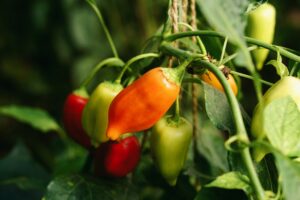
Durban is South Africa’s HQ when it comes to cooking with chilli, and many of us here on the East Coast can’t go a day without it in our meals. And now, with our weather changing and summer is slipping past us, we are gearing up for those chilly nights!
A perfect place to “stay toasty” and escape from the “chilli” air would be inside, by a fireplace, at Granny Mouse Country House & Spa. This is where our head culinary artists will bring in a slight chilli heat onto selective dishes for the regular Eaves Restaurant diners to keep you warm from those crispy cool evenings in the Midlands.
Some trivia for those who don’t know, chilli peppers actually originated from Bolivia and were first cultivated in Mexico. After the Columbian exchange, many cultivars of chilli pepper spread across the globe, used for both food and traditional medicine.
Legend states that in the 17th century the first chilli recipe was prepared by a Spanish nun, sister Mary of Agreda, who never left her convent but whose spirit visited the Jumano people while her body remained in Spain in a trance.
There are said to be about 4 000 varieties of chilli in the world and are divided into five capsicum species and an additional 28 wild forms. The five cultivated Capsicum chilli varieties are: Annuum / Baccatum / Chinense / Frutescens & Pubescens
The chilli comes in a variety of textures, colours and flavours, and not all are hot in flavour.
1. Carolina Reaper: The hottest on the planet and is even ranked in the Guinness Book of World Records. It was bred for heat and that it is, with an average SHU of 1,641,000 SHU and peaks at 2.2 Million SHU on the Scoville scale! The Carolina Reaper pepper is 200x hotter than a Jalapeno #WorldsHottestPepper
The Carolina Reaper is one hot pepper with a unique stinger tail that is unlike any other pepper, and every pod is different! The Carolina Reaper prices start from R280 for growing seed kits.
2. Trinidad Moruga Scorpion Red: This variety of chilli pepper originates from Moruga in Trinidad. The variety is considered as the world’s second-hottest variety with a SHU ranking of 1.2 million units to 2,009,231.
3. Ghost pepper: This chilli is the hottest commercially available chilli seed. Firmly up there as part of the “Killer Category”. Touching the flesh has been known to cause severe skin burns. The Bhut Jolokia is officially rated at an inferno like 1,001,304 Scoville heat units, according to the Guinness World Record.
4. Bird’s eye chilli: The name of this variety is attributed to the fact that the peppers are often very small, making it easier for birds to spread their seeds and the garden birds definitely do love this snack. A must for a Durban curry or bunny chow. This variety comes in either green or red colours. However small they are, they are known to be beneficial in controlling pains as well as acting as antibacterial agents. The bird’s eye ranges from 100,000 to 225,000 SHU on the Scoville scale.
5. Habanero chilli: The habanero pepper is a fiery chilli pepper with a fruity, citrusy flavour. It is prized for its level of heat, and is perfect for making hot sauces, spicy salsas, and infusing both heat and flavour into many dishes. They start off green on the habanero plants, but mature to a vibrant orange or red, depending on the variety. The pungency of the variety ranges from 100,000 to 350,000 SHU on the chilli scale.
6. Piri Piri (African Bird’s eye or Peri Peri): This type of spice is vastly known among us here in South Africa. Its common use is in the preparation of Peri Peri chicken dishes. Peri Peri sauce is a traditional African sauce made from these peppers and is also known as Piri piri or pili pili and loved by any spicy food lover. It may be a small chilli but does provide some heat. Piri Piri has a ranking of 50,000 to 175,000 on the Scoville scale.
7. Red cayenne pepper: The red pepper is named after the city of Cayenne and predominantly used for flavouring dishes, as well as for medicinal purposes. Just about everyone has a glass bottle of cayenne in their kitchen to help spice up your pasta, seafood etc. These red chillies have a ranking of 30,000 to 50,000 SHU units.
8. Serrano: Serrano measures 10,000 to 25,000 SHU units on the Scoville scale. They are usually green when unripe but turn into a range of colours when ripe. The hot chilli pepper comes in handy when preparing salsa, fried, or pickled dishes.
9. Jalapeño and Chipotle: The terms Jalapeño and Chipotle are quite common in the pepper world. How are the two related? Chipotle peppers are typically Jalapeños, only that they have aged, dried, and smoked. As the chilli ripens, their capsaicin levels increase. Therefore, the heat difference is due to the ‘age differences.’ Chipotle South Africa looks dried and smoky while Jalapeños are fresh and crispy. Jalapeños range from 1,000 to 20,000 SHU, while Chipotles range from 2,500 to 10,000 SHU.
10. Peppadew: A South African pepper which was discovered in the 90’s. Since then, the variety continues to gain global popularity. The heat of the variety is mild, giving it a unique taste. The pepper has a rating of 1,100 to 1,200 SHU units. The peppadew chilli is vastly used in salads, a sandwich, quiches and so much more (depending on your personal choice).
So, head on up to the Midlands to visit the “Mouse” team at Granny Mouse Country House & Spa for that cosy & “chilli” experience. Go to www.grannymouse.co.za for restaurant or accommodation bookings!
For your information on ratings:
• SHU = Scoville Heat Unit (A measure of Spiciness) Pepper Scoville Scale displayed as Peak SHU Values
• SHU is a way of quantifying how spicy a pepper is by measuring the concentration of capsaicinoids. Capsaicin is the chemical responsible for the spicy sensation within a pepper.
CLICK HERE to submit your press release to MyPR.co.za.
Press Release Views: 119


