Boots on the ground, a sound strategy and the promise of a better tomorrow are some of the crucial ingredients needed to win a war.
In this war, South Africa and many other countries around the world share a common enemy — COVID-19.
Artilleries and grenades are not required but the expertise of scientists, health researchers and healthcare professionals is what is desperately needed.
They are at the forefront of the response as they work around the clock to diagnose, treat and study the virus.
As the race to find a cure continues, epidemiologists have played a critical role in monitoring developments.
Epidemiologists continue to be responsible for collecting information on the disease from surveillance systems, which report the data of new cases, hospitalisations, deaths, as well as demographic information.
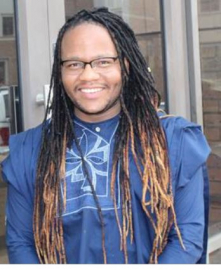
Leading the Epidemiology and Surveillance Work Stream at the North West provincial COVID-19 nerve centre is National Institute for Communicable Diseases (NICD) provincial Epidemiologist, Wellington Maruma.
At a time when the country commemorates Public Service Month (PSM), Maruma, 27, takes pride in his work as a public servant.
Commemorated annually in September, PSM serves as a reminder of what it means to serve communities, while also looking at the impact that government has, especially on service delivery.
Maruma has imparted the skills needed in the battlefield against Coronavirus.
“One of the greatest things that I have been able to achieve at the nerve centre is the transfer of skills. This is very important with epidemiology because it’s a scarce skill and you don’t want to be the only one with a specific skill,” he tells SAnews in an interview.
Like anyone intent on winning a war will know, gathering intelligence on the enemy is crucial.
As part of the country’s response, the nerve centre produces COVID-19 situational reports, which describes the distribution of cases, identifies hotspots and incident risk, progress on contact tracing, statistics on the enhanced community screening program, the recovery rate, as well as the case fatality rate on a daily basis.
The centre also analyses and interprets data on all confirmed cases.
When the centre was established, Maruma, who is also part of the first cohort of qualified Implementation Scientists in Africa, assisted in the drafting of its terms of reference.
With 216 countries affected by COVID-19, Maruma emphasises the importance of keeping up to date with the latest global knowledge, as information on the virus is evolving and vaccine clinical trials are being conducted.
“We want to know what went wrong, so that we don’t try out something that has been proven not to work and waste resources on that. My job is to make sure the province understands the knowledge in the simplest form because most of the knowledge uses scientific jargon,” he says.
The making of a dedicated civil servant
Maruma’s journey to where he is today in the public service began at Monash University in 2012, when he pursued a degree in Public Health and later went on to graduate with an Honours degree. His research focused on the relationship between stunting and childhood obesity by exploring the prevalence of malnutrition from a nutritional feeding program in early childhood development centres.
While studying towards his degree, he completed an internship with HOPE Worldwide, an organisation that serves vulnerable children, households and communities.
During this time, he also supported the development of the assessment data collection tools for the Early Childhood Household Stimulation (ECHS) program funded by the United States Agency for International Development (USAID) and non-profit human development organisation FHI360.
He was also awarded a scholarship by the United States of America’s National Institutes of Health (NIH) Fogarty International Centre and the National Institute for Mental Health (NIMH) to pursue a Masters of Science in Epidemiology at the University of the Witwatersrand.
“I chose to do a Masters of Science in Epidemiology. [This is] because the degree equips you with a lot of skills to conceptualise epidemiologic approaches to understanding the causes of ill health in population-based research, knowledge of appropriate data collection methods, handling large data sets and being able to use the different statistical approaches to summarise data and write the scientific output for different audiences,” he says.
In 2017, Maruma was placed at the Aurum Institute, where he conducted his research for his Master’s degree, which focused on factors influencing the collection of data by ward-based outreach teams (WBOT) for Tuberculosis (TB) contact tracing.
The institute is a leading healthcare organisation, which has been successfully battling HIV and TB for over 20 years.
In as much as he was doing his research, Maruma made sure to use his time wisely by working on various research projects with scientists at the institute, providing them with technical support in terms of data quality assessments, drafting of standard operating procedures (SOPs), data collection and analysis using both quantitative and qualitative research methodologies.
His hard work paid off when the organisation offered him a contract position as a research assistant.
One of the key studies that was paramount in his career was on ‘Optimising the efficiency of household contact tracing for TB control in South Africa’ where he assisted with data quality assessments.
The findings of that scientific output were presented at the 2018 TB Conference in Durban.
Maruma also presented the findings of his Masters research project at the same conference and also at the 2018 Ekurhuleni Research Conference.
“That was one of the key highlights, seeing my contribution being recognised by the scientific community. I worked with scientists at the Aurum Institute, Dr. Candice Chetty and Professor Charalambous, who are the principal investigators for the main study to which my research was nested under.”
While at the institute, he also played a significant role on the pilot study that assessed the use of incentivised mobile technology to improve uptake of HIV testing services among 15 to 24-year-olds.
Maruma was thrown in the deep end a few months into his job as a provincial epidemiologist, when he had to conduct an outbreak investigation on mumps at a primary school in Zeerust in 2019.
He took this challenge, which he now cites as one of his career highlights, in his stride.
“I supported the Communicable Disease Control Directorate within the provincial Department of Health to do the outbreak response. I went on to write the scientific output, which I presented at the 2019 Federation of Infectious Diseases Societies of Southern Africa (FIDSSA).”
Last year, Maruma also worked with the Wits Health Consortium on the National Department of Health`s National Immunisation Coverage Survey – specifically conducting training on the data collection tools and supporting the data management processes.
He was also part of the NICD`s provincial epidemiology team that provided support to the department when conducting the Ebola preparedness assessment for the would-be designated treatment hospital in the North-West.
Maruma’s dedication to his work embodies the theme for this year’s Public Service Month – ‘Growing South Africa together for an Ethical Public Service’.
The theme seeks to instil and rebuild good ethics and professionalism in how public servants perform their functions, while also recognising the selflessness of thousands of frontline public servants.
This month, public servants are encouraged to reflect on the services they provide, and gain a thorough and deep understanding of what it means to be professional and ethical.
At a time when government is working to rid the country of corruption and nepotism, the contribution and hard work of public servants like Maruma are the building blocks to winning the war against the virus.
Just as an archer carries their arrows on the journey to battle, public servants across the various government spheres remain as crucial cogs not only in fighting COVID-19 but also in the rendering of essential services to citizens.
After all, winning any kind of war – be it against COVID-19, corruption, gender-based violence or injustice – requires national effort. – SAnews.gov.za


