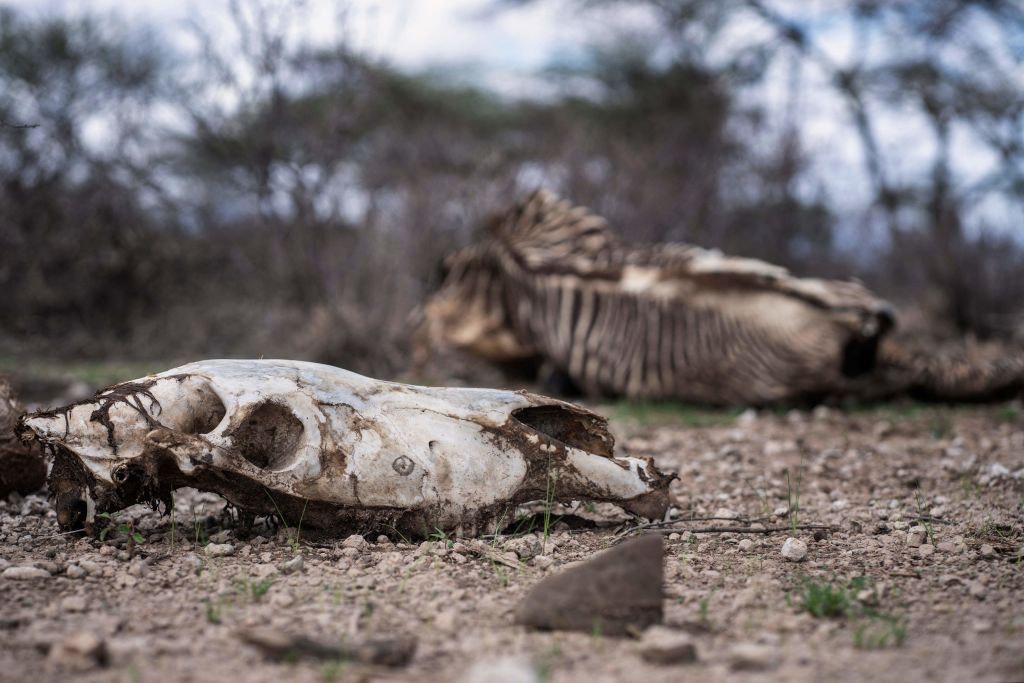
Climate change has produced a number of threats to wildlife. Over time, changing rainfall patterns have transformed habitats and forced animals to move. Increasing temperatures are causing mass die-off events during heat waves and making it hard for animals to find food.
Drought is recurring in parts of the continent. The increased frequency means there’s little or no time to recover before the next one occurs. The wildlife in some of these regions lives alongside people who are also struggling to survive and keep their livestock alive. This puts people and wildlife into conflict as they compete for diminishing sources of water and food.
Climate change can also strongly influence the physiology, behaviour and breeding success of animals.
Academics writing for The Conversation Africa have covered some of these issues. Their articles and research sound a warning bell on the effects of climate change on wildlife. Here we share three of these important reads.
_
Drought takes a toll on East Africa’s wildlife
Over the past two decades, the Horn of Africa – specifically Ethiopia, Somalia and Kenya – has experienced more intense and frequent droughts. Drought adds to the pressure on resources like water and pasture. This makes livestock and wildlife more susceptible to malnutrition, disease, mass mortalities and competition with each other over resources.
Kenyan scientist and conservationist Abdullahi Ali has worked for over 15 years along the volatile Kenya-Somalia border region. He’s seen at first hand the devastating effect that these droughts have on wildlife and habitat. For instance, based on monitoring herds, he’s recorded the deaths of 30 endangered hirola (about 6% of the global population) as a direct consequence of drought over the past year.
Ali is concerned that droughts are recurring. Their increased frequency means there’s little or no time to recover before the next drought.
Read more: Saving East Africa’s wildlife from recurring drought
Warmer temperatures, fruit trees and forest elephants
Gabon is home to some of the highest densities of forest elephants. Many of them live in Lopé National Park, a 5,000km² protected area.
Ecological experts Katharine Abernethy, Emma Bush and Robin Whytock have observed a significant drop in the physical condition of these elephants – an 11% decline since 2008.
This corresponds with a massive collapse in tree fruiting events. Elephants are much less likely than before to find ripe fruit. On average, elephants would have found ripe fruit on one in every 10 trees in the 1980s, but need to search more than 50 trees today.
The collapse in tree fruiting events is attributed to warmer temperatures. Lopé tree species depend on a critical drop in night-time temperatures during the long dry season to trigger flowering. In years when temperatures in the dry season did not dip below 19ºC these species produced no fruit.
So, even where forest elephants and other large animals are relatively well protected from threats such as hunting, global human pressures – such as the climate crisis – could affect their survival.
Read more: Fruit famine is causing elephants to go hungry in Gabon
The loss of the Kalahari’s hornbills
For birds in arid zones, rising temperatures pose a significant problem. They usually breed in response to rainfall, which often occurs during the hottest time of the year. And birds are mostly active during the day, when they are exposed to the sun’s heat. This is when their vital processes for reproduction take place – such as territorial defence, courtship, finding food for their young and attending the nest.
Ornithology expert Nicholas Pattinson assessed the effects of air temperature and drought on the breeding output of southern yellow-billed hornbills in southern Africa’s Kalahari Desert over a decade, from 2008 to 2019.
His study found that breeding output fell when air temperatures rose in the breeding season. Breeding attempts all failed when average daily maximum air temperatures exceeded 35.7°C.
In the Kalahari, air temperatures have already risen more than 2°C in a few decades. At this rate, by 2027, these birds will not breed at all at this site. They will quickly become locally extinct.
Read more: Hotter Kalahari desert may stop hornbills breeding by 2027


