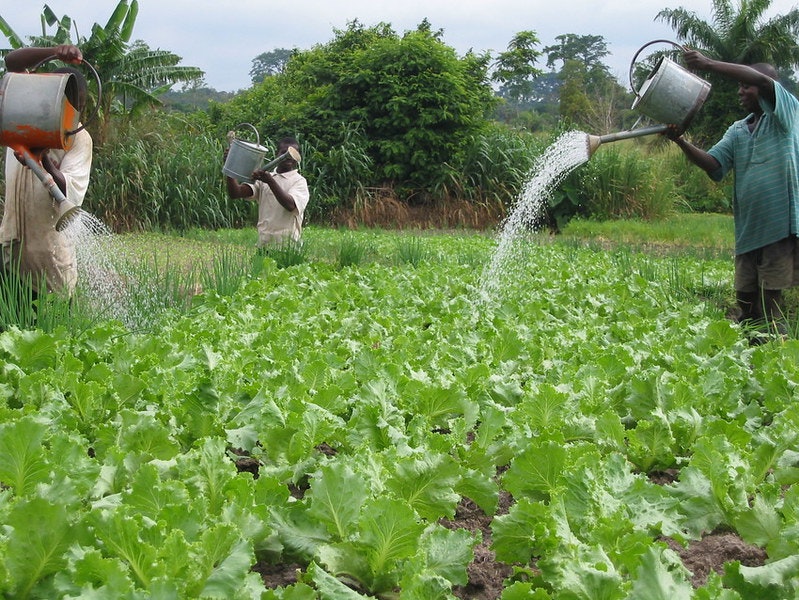
Climate change affects all spheres of life, particularly those aspects that depend on the environment. Farming communities are a case in point.
Most often the effects of climate change on farmers are classified into two categories – economic and non-economic. The economic effects are losses that can be quantified or measured in monetary terms. Non-economic effects are losses that cannot be quantified or measured in monetary terms. Examples include loss of indigenous knowledge, cultural heritage and sense of place and belonging.
Research and policy strategies have focused on understanding and addressing the economic effects of climate change. Less so the non-economic aspects. I study food and agricultural systems in Ghana. In a recent paper my colleagues and I sought to understand the non-economic effects of climate change on farmers in Ghana.
Our findings have implications for climate change adaptation strategies and policies across the global south.
It is important to note that our research is not in any way suggesting that climate change is the only process driving changes in the farming systems and local culture in Ghana. But, based on the interviews we did, we argue that climate change is playing a role.
Our research and its findings
We conducted 30 in-depth interviews and a focus group with farmers in Offinso, a farming area in southern Ghana. Offinso is traditionally known for both food and cash crops production in Ghana. Farmers in the area produce crops that include maize, vegetables, pawpaw and cocoa. Agriculture in the area is largely rain-fed.
Farmers were asked to describe the weather patterns over a 30-year period. Their responses showed that they had experienced variable weather patterns, a situation that is affecting their farming activities.
For example farmers were no longer able to predict rainfall patterns and farming seasons. Farmers indicated that 30 years ago, the rains were constant during specific months of the year. This enabled them to plan and organise themselves for their yearly farming activities, as they were able to predict rains and start of the farming season.
But rainfall patterns have become very variable.
A consequence of this was that farmers could no longer exchange labour in a system known as Nnoboa. Farmers explained that when they could predict the farming season, they organised themselves at the start of the farming season for Nnoboa. This is often based on the principle of helping one another on the farm as a way of building social bonds. Nnoboa was largely practised at the start of the rainy and farming seasons, when land preparation and planting of crops are required.
But the variable nature of the rains had distorted the farming seasons and organisation of Nnoboa – communal labour. Instead farmers were relying on their nuclear families or hired labour. This reflected a much more individualist – as opposed to a communal – approach to farming.
We also asked farmers to describe how climate change affected their mental well-being. We asked them to describe climate change effects that made them anxious, depressed, grief, helpless, hopeless and sad.
They explained that extreme weather events such as storms and droughts destroyed their crops, leaving them emotionally distressed, helpless and sad. It was clear from the responses that extreme weather events are not new to farmers. Nevertheless, they expressed the view that major changes in weather patterns had become more frequent.
Way forward
Global efforts are underway to curb carbon emissions. Nevertheless changing weather patterns, drought and storm conditions continue to pose both economic and non-economic effects on vulnerable people.
The neglect of the non-economic aspects of climate change in research and policy threatens to worsen the vulnerability of farmers. This gap needs to be filled so that appropriate conventional and local adaptation strategies and policies can be designed to address the effects of climate change in developing countries.


