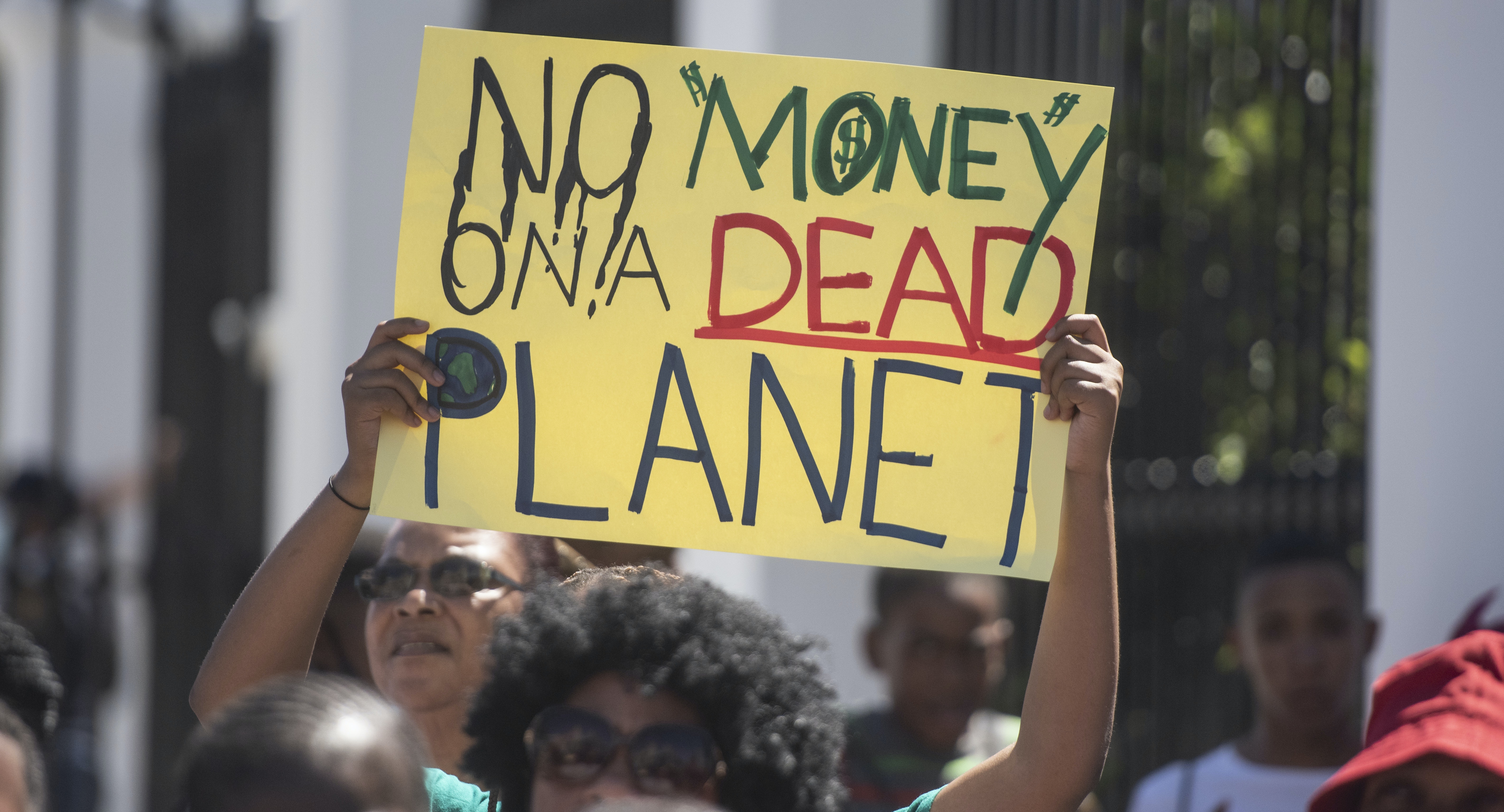
Climate change is a major threat to food production, and is displacing people and increasing the risks to health globally. Addressing climate change requires vast resources, including financial investment to decarbonise economies and produce food sustainably. Above all, it requires international cooperation and commitment – based on an accurate understanding of the relevant issues.
However, less developed countries also have competing challenges. In South Africa, for example, poverty, inequality, violence and access to education and employment tend to overshadow climate change efforts.
In 2022, the South African government started thinking about how to incorporate environmental challenges in the national budget using evidence from 11 ongoing projects. This is an important step towards treating climate change as a national priority. However, at present other socioeconomic challenges plaguing the population are at the centre of the government’s national spending.
This is understandable. In South Africa, one in every four women aged 18–49 years old has experienced violence from an intimate partner. HIV prevalence is at 13.5% and current unemployment is the highest in many years at 33.9%. South Africans regard these as urgent issues warranting immediate attention. They are reflected in the country’s National Development Plan.
All these concerns are linked, however. Climate change poses an additional risk to current and future endeavours to protect livelihoods, grow the economy, and prevent disease and loss of life. It’s therefore important to know what the public thinks about environmental issues and the value of addressing them.
This was the motivation for my study of the attitudes of South Africans towards environmental issues in relation to competing socioeconomic challenges.
The study used the 2017 South African Social Attitudes Survey of a nationally representative sample of people. In the survey, 3,173 adults chose what they saw as the three most important challenges in South Africa at the time. Environmental issues were on the list they could choose from.
Environmental issues did not appear in the top 10 most important challenges they identified. Only 0.09% of the respondents reported environmental issues as the most important priority in the country. The environment ranked 17th among respondents’ top priorities. The highest ranked issues were unemployment, HIV and crime.
Analysis of responses revealed that 77.62% of respondents had negative attitudes towards the environment and 22.37% had positive attitudes.
The survey results suggest that South Africans would rather see efforts go into tackling other challenges – even though climate change will intensify those challenges. The results also suggest where efforts to change perceptions could focus.
The survey was carried out five years ago and the COVID-19 pandemic has since had a huge impact on people’s lives. So it is possible that if asked today, climate concerns might rank even lower in the list of priorities for the South African population.
Attitudes and perceptions about environmental concerns
The study population were adults, aged 16 years and older, of both sexes and all races, geographical locations and nationalities. Results were controlled for these demographic and socioeconomic characteristics.
Participants responded to three questions:
-
what they saw as South Africa’s three most important challenges (in order)
-
whether “people’s taxes” were being used for the environment
-
whether more taxes should be spent on the environment.
Out of all the respondents, 65% listed unemployment (1st), 15% stated HIV/AIDS (2nd) and 11% cited crime and safety (3rd) as the top three challenges in the country. Only 0.09% of the respondents listed the environment as their top priority. This last group of respondents were all male.
Environmental issues did not appear in the top 10 of the second or third most important challenges either.
The list of second most important priorities was led by: crime and safety; service provision; corruption. Here, environment came in at 15th (1.04%). Of those who ranked environment 2nd, 69% were female.
The list of third most important issues was dominated by: poverty; corruption; education. Environment was 10th (3.18%), with a more even mix of male and female.
Participants who ranked social challenges as a main priority were also more likely to have positive attitudes towards environmental challenges. This shows there is a common group within the population that could be targeted for environmental and social change movements.
Among respondents who believed that more tax money should be spent on the environment, 62.28% were male and 37.72% female.
Males and urban residents were more likely to have negative attitudes to environmental issues than females and rural residents.
The groups that were inclined to be negative about the environment were: older than 16-19; female; black; less educated; unemployed.
The finding that females do not prioritise environmental challenges as much as males is an opportunity to inform females about the immediate benefits that climate change strategies could present to the care and daily functioning of their households. About 42% of households in South Africa are headed by females.
Implications for climate change efforts
These results tell us that economic, social and health competing interests currently overshadow environmental interests in South Africa. This is justifiable at present, but many of these issues will be exacerbated by climate change in the future, adding another challenge to the country’s development prospects.
Second, efforts to reduce the competing challenges could create an opportunity for more awareness around environmental change and development concerns.
Strategies that focus on including females and rural residents, among others, should be developed to inform and assist the public to reduce carbon footprints and create sustainable technologies.
In doing so, there are two important factors to remember. Interventions should not cost the public more and make the population more vulnerable. And the solutions sought and information communicated should be suited to the population’s livelihoods, food production and consumption needs, and economies. That is, an African led strategy and solution is required.


