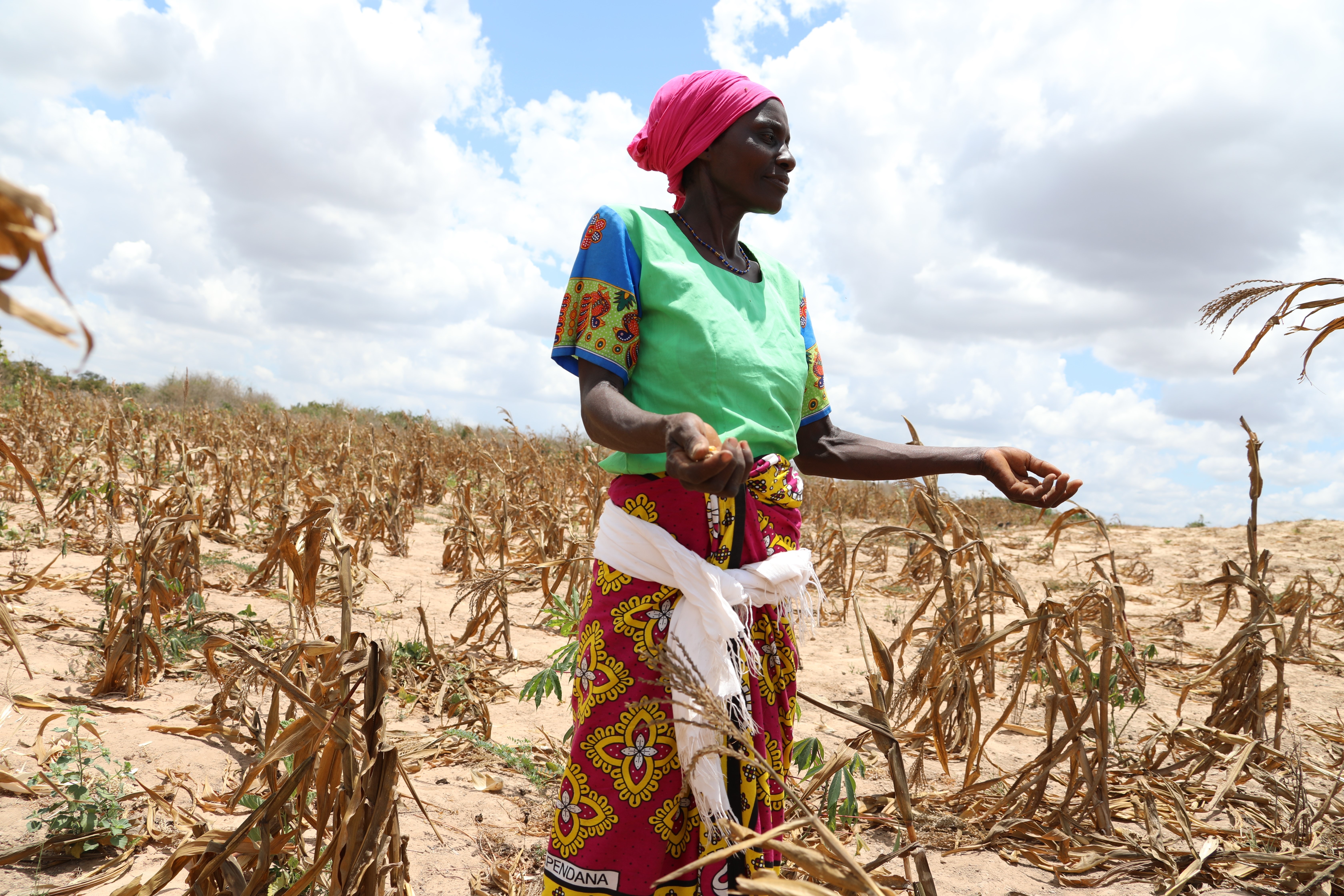
In the waning hours of the year’s biggest climate change conference – COP27 – we learned of a deal to create a loss and damage fund. This is essentially a source of finance to compensate poor countries for the pain they are incurring because of climate change. An often-cited example of such suffering is the ongoing drought in the Horn of Africa region, which has put some 22 million people at risk of severe hunger.
While some have heralded this agreement as long overdue climate reparations, others point out that the loss and damage fund does nothing to address the root causes of climate change – fossil fuel emissions.
Here I seek to raise a different concern: this approach glosses over the fact that the types of food production systems that the global community has fostered in Africa leave the poorest more exposed and vulnerable to climatic variability and economic shocks. These food production systems refer to the ways people produce, store, process and distribute food, as well as the inputs into the system along the way.
Historically smallholder and women farmers have produced the lion’s share of food crops on the African continent. Over the past 60 years, global decision makers, big philanthropy, business interests and large swaths of the scientific community have focused on increased food production, trade, and energy intensive farming methods as the best way to address global and African hunger.
This approach to addressing hunger has failed to address food insecurity on the continent. Moderate to severe food insecurity affects nearly 60% of Africans today. It’s also resulted in food systems that are now more vulnerable to climate change.
The idea that the solution is to produce more dates back to the colonial period. It’s bad for the global environment, highly vulnerable to climate and energy shocks, and does not feed the poorest of the poor.
I approach this topic as a nature-society geographer who has spent his career studying agricultural development approaches and food systems in west and southern Africa. Through this work, I have come to see agroecology as more accessible to the poorest.
Vulnerable food systems
Each time there has been a global food crisis, variations on the formula of increased agricultural production, trade and energy intensive farming methods have been the favoured solution. These include the first Green Revolution of the 1960s-1970s, commodity production and trade in the 1980s-1990s, the New Green Revolution for Africa and public-private partnerships in the 2000s-2010s.
Many scholars now understand that food security has six dimensions, of which only one is addressed by food production.
Looking at all six dimensions reveals the complex drivers of hunger. These include:
-
food availability – local production and net imports
-
access – the ability of households to acquire food that is available
-
utilisation – the cooking, water and sanitation facilities needed to prepare healthy food
-
stability of food prices and supplies over time
-
sustainability – the ability to produce food without undermining the resource base
-
agency – people’s ability to control their food systems, from production to consumption.
Decolonising African agriculture
So, how did we get here?
Certain countries and businesses profit from productionist approaches to addressing hunger. These include, for example, Monsanto, which developed the herbicide Round-Up. Or the four companies (Archer-Daniels-Midland, Bunge, Cargill and Louis Dreyfus) that control 70%-90% of the global grain trade.
The productionist focus is also engrained in the agricultural sciences. Tropical agronomy, now known as “development agronomy”, was central to the colonial enterprise in Africa. The main objective for colonial powers was to transform local food systems. This pushed many African households away from subsistence farming and the production of food for local markets. Instead, they moved towards the cultivation of commodity crops needed to fuel European economic expansion, such as cotton in Mali, coffee in Kenya, and cacao in Côte d’Ivoire.
While forced labour was employed in some instances, head taxes became the preferred strategy in many cases for facilitating commodity crop production. Forced to pay such taxes in cash or face jail time, African farmers begrudgingly started to produce cash crops, or went to work on nearby plantations.
Loss of risk management practices
Accompanying the transition to commodity crop production was a gradual loss of risk management practices like storage of surplus grain. Many farmers and herders in Africa have had to deal with highly variable rainfall patterns for centuries. This makes them some of the foremost experts on climate change adaptation. Farmers would also plant a diverse range of crops with different rainfall requirements. Herders moved across large areas in search of the best pastures.
In the name of progress, colonial regimes often encouraged herders to be less mobile throughout East Africa. They also pushed farmers via taxation policies to store less grain in order to maximise commodity crop production. This opened up farmers to the full, deadly force of extended droughts, a situation that is well documented in northern Nigeria.
Many problematic approaches have continued in the post-colonial period.
Various international and national policies and programmes have encouraged African farmers to produce more crops, using imported seeds, pesticides and fertilisers in the name of development or hunger alleviation.
Even though African farmers may be producing more, they are left exposed to the ravages of variable climatic conditions.
Agroecology and the way forward
Agroecologists can offer a different way forward. They seek to understand the ecological interactions between different crops, crops and the soil and atmosphere, and crops and insect communities. They seek to maintain soil fertility, minimise predation from pests and grow more crops without using chemical inputs.
Agroecologists often collaborate with and learn from farmers who have developed such practices over time and are in tune with local ecologies. This combination of experiential knowledge and formal science training makes agroecology a more decolonial science. It is also more accessible to the poor because there’s no need to buy expensive inputs or risk becoming indebted when crops fail.
The fact that agroecological farming is less expensive has not been lost on the business community. They would lose out substantially if conventional farming approaches were no longer associated with hunger alleviation.
Furthermore, those in the agricultural sciences who have supported productionist approaches to hunger alleviation also see agroecology as a threat as it could lead to a decline of prestige and research funding.
There are signs that the global community may be on the cusp of a major shift in thinking with regard to food systems, climate change and hunger.
A global food crisis has led some to question why previous solutions have not worked. We also now have an emerging, more decolonial science of agroecology that is increasingly accepted within the United Nations system. It’s backed by a powerful social movement that refused to back down when corporate agricultural interests tried to hijack the 2021 UN Food Systems Summit.
In some cases, there are also large institutional donors experimenting with agroecological approaches, something almost unheard of a decade ago.
Lastly, there is a new set of leaders within some African governments who understand what agroecology offers.
The ravages of climate change and hunger do not occur in isolation, but are part of the system we have built. That means we can build something different. The current crisis lays bare this problem and the right combination of new ideas, resources and political will can solve it.


