Compendium of new research celebrates African solutions to national and global problems:

Africa Day celebrates the foundation of the Organisation of African Unity in 1963. It’s all about recognising, as the First Congress of Independent African States held in 1958 in Ghana put it, “the determination of the people of Africa to free themselves from foreign domination and exploitation”. Indeed, it was previously called African Liberation Day.
The continent is now formally free of colonial rule. Nevertheless, the aim of remembering and furthering the fight for self determination remains relevant as ever. This year has seen Africa – once again – characterised as a set of helpless states that face devastation by the coronavirus pandemic.
Such lifeless and homogenising depictions fail to recognise the ability of African communities and governments to overcome major health challenges such as Ebola. They also ignore the remarkably varied and dynamic – and in many cases effective – response of different groups and individuals to the COVID-19 pandemic. As Kenyan writer and political analyst Nanjala Nyabola recently put it:
Africa is not waiting to be saved from the coronavirus.
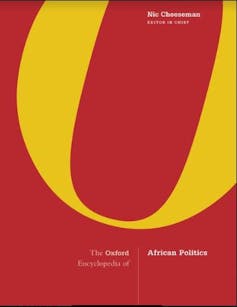
A new major publication – the Oxford Encyclopaedia of African Politics – contains many important chapters that make the same point on a wide variety of topics. With 122 authors, 109 articles and more than a million words, it is one of the largest volumes on African politics ever published.
Chapter after chapter shows the ability of leaders, intellectuals and activists to find their own solutions to national and global problems.
Recognising African agency
All too often, the achievements of African countries are overlooked. Conflict and controversy make for more attention-grabbing headlines than peace and democracy. Yet, while the continent features more than its fair share of authoritarian repression, in some respects African countries are leading the way.
As political scientist Mamoudou Gazibo points out, countries like Ghana and Senegal became democracies despite the fact that they faced a particularly challenging context. They lacked the kind of national wealth, strong state and large middle class that many theories suggest are necessary for a smooth transition out of authoritarian rule. Yet they have proved that democracy is feasible in Africa.
Similarly, Liberia and Sierra Leone should also be seen as remarkable – but not, as is usually the case, because they had horrific civil wars. Instead they should be recognised for overcoming extreme and prolonged violence to forge a pathway back to democracy. In addition to maintaining political stability, both countries have experienced peaceful transfers of power via the ballot box.
In all these cases a combination of good leadership, institution building, and the support of ordinary people for democratic values has enabled African states to change their futures for the better.
Yet this story is rarely told.
One reason is that stories like this don’t fit with the popular narrative that democracy is somehow “unAfrican”. In other words, that modern governance was introduced to the continent by the West.
This is not only untrue. It also turns history on its head.
As political scientist Kidane Mengisteab shows in one of the chapters of the book, in many countries “traditional institutions of governance” featured important checks and balances on how power could be exercised. These measures were typically destroyed, eroded, or radically transformed by colonial rule. This paved the way for the emergence of authoritarian regimes after independence.
Similarly, multiparty elections were not reintroduced in Africa in the early 1990s simply because the UK and the US decided this was a good idea. These freedoms and rights were fought for by activists, opposition leaders, trade unionists, religious leaders and ordinary citizens who risked their personal safety to bring down authoritarian governments. Some paid with their lives.
Recognising African genius
A major casualty of the tendency to overlook the creativity and contributions of African leaders and intellectuals is the neglect of African political thought. Africa has produced some of the most thoughtful and articulate leaders in the world on how political systems can best be designed. These have included Kwame Nkrumah, Tom Mboya and Leopold Senghor. Yet the continent is often treated as if it is devoid of interesting political ideas and ideologies.
Read more: How Kwame Nkrumah used metaphor as a political weapon against colonialism
This is one reason why many African intellectuals have been attracted to the idea of the African renaissance. In his chapter Sabelo J. Ndlovu-Gatsheni describes this as:
a ‘re-membering’ of a continent and a people who have suffered from ‘dismembering’ effects of colonialism and ‘coloniality’.
This concept continues to inspire both ideas and action, and fed into the #rhodesmustfall and “decolonize the university” campaigns that began in South Africa and had ripple effects across the world.
Yet despite this, African contributions continue to be downplayed – even within intellectual movements that are supposed to be all about breaking down racist assumptions and hierarchies. Take post-colonial theory, which analyses the enduring legacies of colonialism and disavows Eurocentric master-narratives. It is often said that African intellectuals have played a minor role in developing post-colonial critiques. Yet Grace Adeniyi Ogunyankin, an expert in gender studies and critical race theory identifies
African thinkers and activists who are intellectual antecedents to the post-colonial thought that emerged in the 1980s and 1990s.
This is often overlooked, she points out, because some – though by no means all – of those working in these frameworks have been “dismissive of African theorising”.
Recognising African leadership
The path-breaking leadership shown by many African countries has also been criminally overlooked. When asked to name two of the most advanced and progressive constitutions in the world, how many people would say Kenya and South Africa? Outside of the continent, my guess would be almost no one. Yet as legal and constitutional expert Muno Ndulo argues, the constitutions introduced in these countries over the last years 30 years enshrine democratic norms and values. They also go well beyond their European and North American counterparts by institutionalising socio-economic rights (South Africa) and the principle of citizen participation in the budget making process (Kenya).
While including a clause in a constitution doesn’t mean that it is automatically respected, historically marginalised groups have mobilised creatively to demand the rights they are supposed to enjoy under the law. African women, for example, are not waiting for others to save them from patriarchy. They are mobilising across the continent to claim their rights. According to Robtel Pailey, an activist, academic and author,
African women have simultaneously embraced and challenged cultural and socio-economic norms to claim and secure citizenship rights, resources and representation.
Recognising African diversity
These are, of course, just a small number of the stories that deserve to be told. The encyclopaedia includes articles on everything from political parties and elections to the role of China and migration, oil and religion. But despite featuring a chapter on every sub-region, political institution, and major trend, there is still so much more that needs to be said about a continent that is remarkably diverse.
That is one reason why we should celebrate the showcasing of the voices of African journalists and researchers, and share them far and wide.
As Nelson Mandela once said,
Education is the most powerful weapon which you can use to change the world.

Nic Cheeseman is the editor of the volume discussed in this article.
Source: The Conversation – Articles (AFRICA)
Read more on The Conversation.
Join the fun: Add Your event | Submit a Press Release | Add your listing.


