For nearly three decades, the Democratic Republic of Congo (DRC) has been embroiled in violence. Millions of people have been killed, and an estimated 5.6 million others displaced by civil wars, local feuds and cross-border conflicts.
Studies have identified several reasons for the persistence of war, especially in the volatile east of the country. These include ethnic intolerance, the illegal exploitation of the country’s vast natural resources and a Congolese elite that benefits from the chaos.
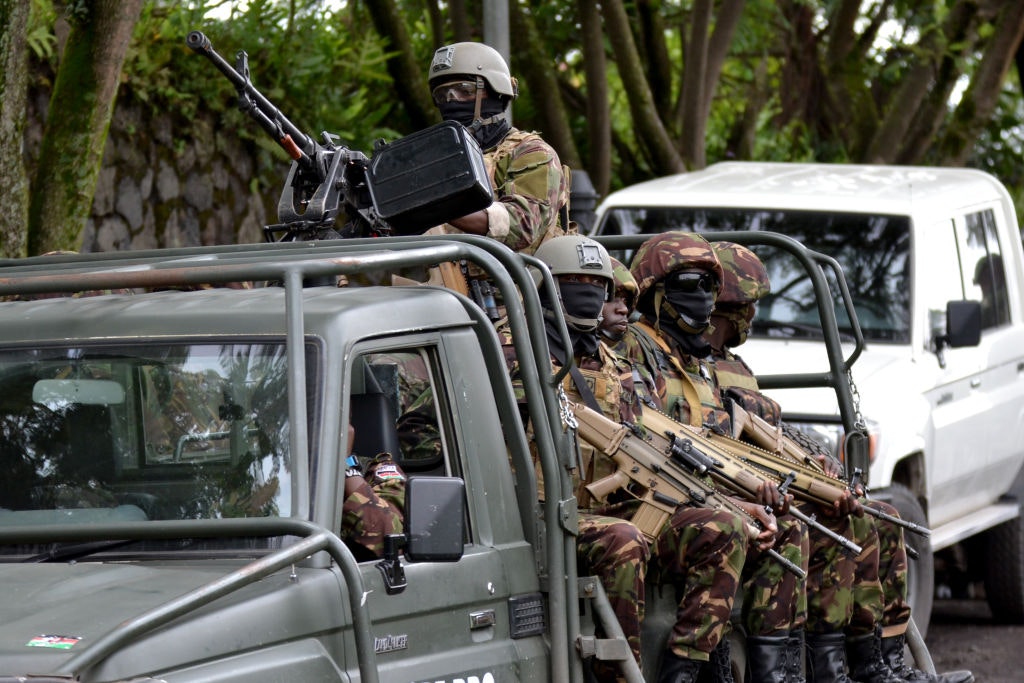
Neighbouring countries – including Rwanda, Burundi, Uganda and most recently Kenya – are locked in the ongoing conflict, which has been termed one of world’s deadliest since the second world war. Much of the current violence is centred in Ituri, North Kivu and South Kivu provinces, which lie on the DRC’s eastern border. Combined, they are about seven times the size of Rwanda.
Consolidating peace efforts across the vast territory has proved difficult. Scholars writing for The Conversation Africa have highlighted a range of factors driving the conflict – and the challenges in the way of addressing them.
1. The birth of M23
Since the 1990s, armed groups have been part of the political economy of eastern Congo. Communities created self-defence militias in response to foreign-backed armed groups accused of using war to loot the country’s riches.
Over time, armed mobilisation turned into a goal in itself: to make money, to express political power or simply for the youth to cope with the chaos. Today, more than 120 armed groups are present in eastern DRC.
One of these is the March 23 Movement (M23). Kasper Hoffmann and Christoph Vogel analyse the development of M23 since its beginnings in 2012.
Read more: What M23’s on-and-off insurgency tells us about DRC’s precarious search for peace
2. Regional dynamics
The DRC has accused Rwanda of violating its sovereignty by supporting M23. A United Nations report supported this contention. Kigali, however, has dismissed the findings as “false allegations”.
Tensions between Rwanda and DRC date back to the 1994 genocide in Rwanda. Many of the perpetrators of this violence, which killed about a million Rwandans, fled to the DRC, at the time called Zaire. The post-genocide Rwandan government launched military operations in a bid to force the perpetrators back home to face justice. Rwanda believes the DRC continues to provide refuge for those behind the 1994 massacre. Jonathan Beloff explains why both nations hold old suspicions of each other.
Read more: Rwanda and DRC’s turbulent past continues to fuel their torrid relationship
3. The lingering effects of colonialism
Colonial ways of governing indigenous populations sowed seeds of ethnic tension in present-day Congo. Jacob Cloete’s research set out to establish whether a conflict in North Kivu in 1993 that grabbed headlines was the starting point of the current violence in eastern Congo. He argues, however, that it was the culmination of a much older one rooted in Belgian and German colonialism. As he explains:
Based on a racist notion popular among African colonialists at the time, the two colonial administrations gave privileged status to some of the local population based on ethnicity.
Read more: How conflicts intertwined over time and destabilised the DRC – and the region
4. Questioning the UN’s intervention
Over three decades of war, the Congo has received tens of billions of dollars in humanitarian aid and hosts one of the largest United Nations peacekeeping missions. The mission was established in 1999, and its mandate expanded in 2010 to include the protection of civilians.
The UN mission has long been blamed for failing to stabilise the country despite more than two decades of intervention. But as Delphin Ntanyoma explains, the UN is being blamed for what should be the DRC government’s responsibility: de-escalating violence and finding long-term solutions.
Read more: The UN is under attack in eastern Congo. But DRC elites are also to blame for the violence
5. Rewarding rebellion
Christopher P. Davey’s research into the Banyamulenge – a sub-group of the Congolese Tutsi ethnic group who originally come from the province of South Kivu in eastern DRC – adds to debate on the factors driving Congo’s violence. He argues that the Banyamulenge’s experiences illustrate how violence in the Congo multiplies across borders, blurs the lines between victim and perpetrator, and is used to win a place in government rather than to overthrow it. Davey notes that:
I believe that to stop the cycle of violence, the DRC and its regional allies need a new status quo that doesn’t reward rebellion but decreases its appeal.
Read more: Burundi’s Gatumba massacre offers a window into the past and future of the DRC conflict


