When the COVID-19 pandemic began, not much was known about SARS-CoV-2 (the coronavirus) and its survival in food, on various materials and on surfaces. Since then, several food safety agencies have assessed the risk of potentially acquiring the virus from contaminated food or food packaging. The consensus is that currently, there’s no evidence it’s a food safety risk.
The main route of infection is from person-to-person via contact with one another, respiratory droplets and aerosols from coughing, sneezing and talking. Therefore, it’s not considered a foodborne virus.
We surveyed the scientific literature to see what it said about the safety of food and SARS-CoV-2. This included the survival of the virus, how it’s transmitted and how it can be inactivated in food and on surfaces.
Overall, the evidence suggests that the virus is not a risk to food safety. But it has caused disruptions to the global food supply chain.
One research question was whether the virus is transmitted via the faecal-oral route. The question arose because a study had found viral genetic material in anal swabs and blood taken from patients. This was an important point because one of the symptoms of COVID-19 is diarrhoea. However, there are no reports to date showing faecal-oral transmission of the virus.
Furthermore, several studies have concluded that diarrhoea in COVID-19 patients isn’t likely to occur from ingesting contaminated food. Rather, it’s from the pathway of the virus, from the respiratory system to the digestive tract.
Where the coronavirus survives
Viruses tend to survive well at low temperatures. Freezing can actually preserve them. So it’s likely that SARS-CoV-2 would survive freezing of food. But several studies have indicated that this virus and similar ones are inactivated by cooking food at frequently-used temperatures.
The coronavirus appears to be stable at different pH values (3–10) at room temperature. More alkaline and more acidic conditions beyond this range appear to inactivate the virus. This means it’s unlikely to survive the acidic environment of the stomach.
It’s also likely that the virus in food will be at low concentrations. Importantly, the coronavirus, like other viruses, cannot multiply outside of their hosts. Therefore, it cannot multipy in food.
It’s well-established that viruses causing respiratory infections can be transmitted by indirect contact through the environment. This happens when a person touches contaminated surfaces and then touches their mouth, nose or eyes, without first washing their hands.
Various experimental studies on the survival of the coronavirus on different types of surfaces under different conditions have been conducted. The virus was found to survive on different surfaces for different periods of time, depending on environmental conditions and initial viral load.
Nevertheless, one must be aware that survival may be different to these studies, in a more realistic setting, outside the laboratory. The US Centers for Disease Control and Prevention and other similar agencies and organisations don’t consider contaminated surfaces a main route of transmission of SARS-CoV-2.
Current consensus is therefore that SARS-CoV-2 is not transmitted by food and is highly unlikely to be transmitted by food packaging material, but it could be spread by touching contaminated surfaces and then touching your mouth, nose or eyes. It’s therefore very important to properly clean and disinfect food contact surfaces and especially high-touch surfaces and utensils in a food environment.
Disinfection and prevention
SARS-CoV-2 belongs to the coronavirus family of enveloped viruses, which makes them susceptible to detergents and a variety of other microbicides, even more so than fungi, vegetative bacteria and yeasts.
Studies have shown that the fatty layer surrounding the virus is disrupted, leading to inactivation of the virus when using 0.1% sodium hypochlorite (diluted household bleach), 0.5% hydrogen peroxide and 62%–71% ethanol. These solutions all significantly reduce SARS-CoV-2 on surfaces, after one minute of exposure.
Several agencies have published a list of approved disinfectants for use against SARS-CoV-2 in industrial settings, namely the United States Environmental Protection Agency, Health Canada and the European Union.
In conclusion, the greatest risk related to COVID-19 remains person-to-person transmission and aerosolised transfer in the food environment, including manufacturing, retail and food service. In fact, there have been several person-to-person COVID-19 outbreaks among farm workers and in food processing establishments.
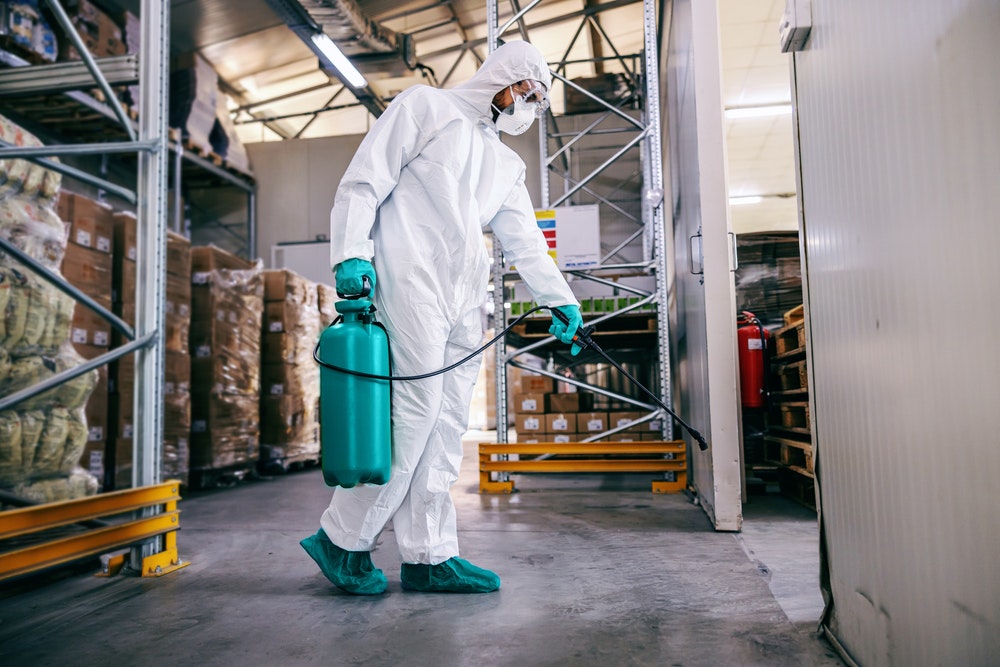
This is why it’s important to adhere to proper hygienic measures by wearing appropriate personal protective equipment (such as masks) and practising proper hand hygiene and physical distancing. Food companies – like any others – need to ensure that their employees are vigilant about mask-wearing, hand-washing, maintaining a physical distance and regular cleaning and disinfection of high-touch surfaces and utensils.
In summary, the discovery of SARS-CoV-2 on food or food packaging may raise concerns about food safety, but it doesn’t indicate a risk for public health. Therefore it should not be a basis for restricting food trade or initiating a food recall. Thinking about the food supply chain in a connected way – integrating health, food security and sustainability – will be an important part of controlling any future pandemics.


