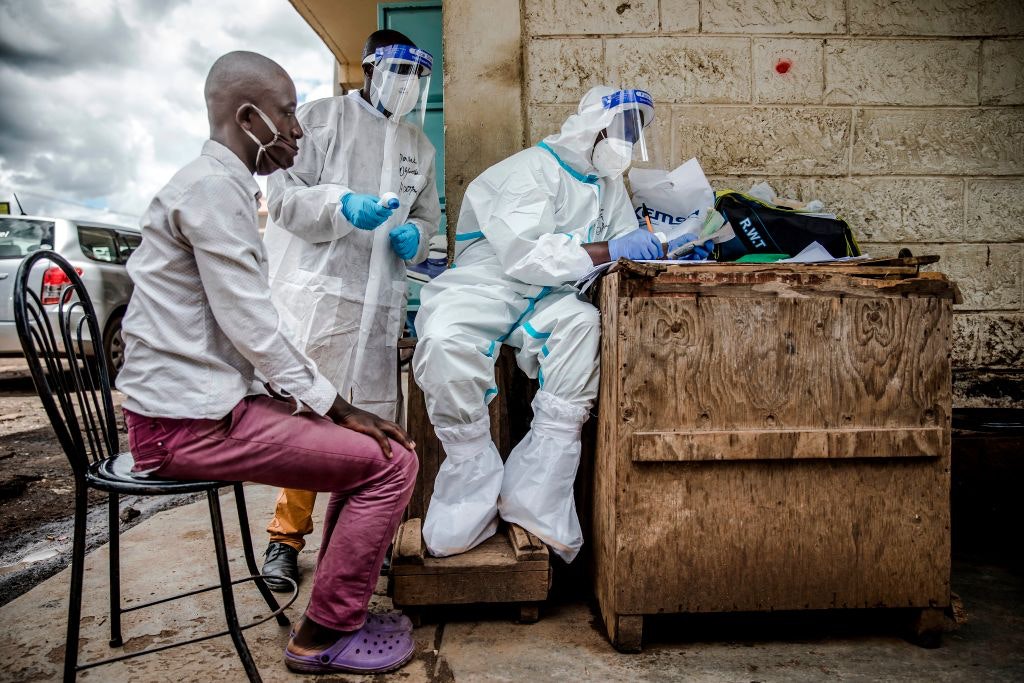
The African Population Health Research Centre, based in Kenya, has been mining data across 47 countries in Africa, tracking differences in COVID-19 infection, illness and deaths among men and women. Sylvia Muyingo lays-out their key findings and explains why tracking these data is important.
What did you set out to track? Why?
I am part of a team that is tracking the latest COVID-19 global data broken down by sex, also known as sex-disaggregated data. It is the world’s largest database of sex-disaggregated data on COVID-19 and is a joint effort between the Global Health 50/50 (an initiative dedicated to gender equality in global health), the African Population and Health Research Centre and the International Centre for Research on Women.
We are tracking publicly available national data from 187 countries. This amounts to 99% of global cases and 99% of global deaths. For Africa, we report on all 47 countries covered by the World Health Organisation.
The tracker captures information on a wide range of data. This includes testing, confirmed cases, hospital admissions, intensive care unit (ICU) admissions and deaths by sex.
We’re tracking the data for three general reasons.
First, COVID-19 will affect men and women differently. It is therefore important to identify, produce and disseminate statistics that reflect the lives and realities of women and men. This will form the basis of gendered policies. These would, for instance, include stimulus packages that offer greater social protection to support women’s income and health insurance. Gendered policies would also take into account the secondary effects of the pandemic, such as gender-based violence and the availability of non-COVID-19 related medical supplies.
Second, early analysis of emerging COVID-19 data showed that just a few countries reported sex-disaggregated data. As of January 25, 2021, global data from our tracker indicated that about 60% of cases and 70% of deaths had sex-disaggregated data.
During the month of November, just seven African countries (Chad, Equatorial Guinea, Kenya, Liberia, Malawi, Nigeria, and South Africa) reported sex disaggregated data for both COVID-19 cases and deaths. Twenty-nine countries (62%) were not publicly reporting data on COVID-19 cases or deaths by sex. Over the course of the pandemic, the number of countries reporting any data by sex has only slightly changed or remained the same.
Knowing this means that efforts can be made to plug the data gaps. The tracker is also an advocacy tool to encourage governments, that are not collecting this data, to do so. Most national programmes in response to COVID-19 continue to ignore gender differences in health. Our tracker provides policymakers with an accessible database to monitor the situation.
A third reason for the initiative is that before it was launched there was no initiative that consolidated existing data and shared information for countries reporting sex-disaggregated data. The tracking system makes this possible.
From the data you’ve gathered, what have you learnt about how COVID-19 is affecting women and men differently?
The data is sparse which makes it hard to identify any trends. Of the countries with the highest case loads (South Africa, Ethiopia, Nigeria, Algeria, Kenya, Ghana, Zambia, Uganda, Namibia, Mozambique, Zimbabwe, Cameroon, Côte d’Ivoire, Senegal, Democratic Republic of Congo), just three – Kenya, Nigeria and South Africa – reported data by sex on cases and deaths.
Our most recent information is from the latest upload which was done on January 24, 2021. From what we have seen so far, men accounted for a larger proportion of cases (60%) and deaths (70%). South Africa however was an exception. In South Africa, men account for a smaller proportion of cases (42%) and a similar proportion of deaths (51%).
We also saw that, although more men than women account for confirmed cases in the African region, we do not know the sex of individuals who are tested because the data is incomplete. Only two countries (Central African Republic and South Africa) have publicly available data on testing disaggregated by sex.
Data by sex on hospitalisations is important because it helps to provide an understanding of severe illness that can inform preventive public health activities. It also helps to inform public health policy and actions when it comes to funding and supply decisions. However, data on hospitalisations was publicly available for just three countries – Equatorial Guinea, Eswatini and South Africa. Of these, 60% of those hospitalised were men.
One of your key findings was that many countries failed to prioritise sex-disaggregated data. Why is it important to collect sex-disaggregated data?
Only with sex-disaggregated data on testing and cases can we begin to understand the differential impacts of disease. COVID-19 is no exception. The availability of data by sex and gender is important for national responses when it comes to prevention, treatment and control of COVID-19.
For instance, for public health messaging programs on testing and risk mitigation behaviours that include affected groups. It would also help with clinical guidelines for COVID-19 that include pregnant women.
Incomplete or irregular reporting of data by sex poses a significant challenge in designing, monitoring and implementation of effective COVID-19 national responses. And countries should prioritise gender statistics to fulfil their commitment to gender equality.
The data is clearly vital and the cost of adding it to existing data collection is minimal. Sometimes it’s just an extra box to tick or column to add.


