Since its emergence in late 2019, SARS-CoV-2 has caused illness (COVID-19) and death in all countries in the world. The restrictions put in place to reduce the spread of this virus have devastated economies and livelihoods the world over. By the end of June 2021, the World Health Organisation estimated that there had been 180.4 million cases of COVID-19 and 3.9 million associated deaths globally.
From the outset, communities were concerned about the impact of SARS-CoV-2 on children. This was justifiable because many other respiratory viruses such as influenza and respiratory syncytial virus disproportionately affect children. With their immature and developing immune systems children have larger amounts of virus in their respiratory tract and release the virus from there for longer durations. This puts them at the centre of transmission of those viruses – to each other at schools and to adults and siblings at home. It was not surprising that early interventions to delay the spread of COVID-19 included shutting down schools.
But COVID-19 has bucked this trend of affecting children more than adults.
SARS-CoV-2 is known to infect children of all ages, from newborns to older adolescents and teens. But children have not been the drivers of the COVID-19 pandemic to date.
This is because children are less likely to:
Our surveillance data in South Africa indicate that this lower risk of infection, disease, death or transmission experienced by children is age-dependent. Among children, the likelihood of infection, disease or death generally increases with age. Older teens and adolescents are acquiring COVID-19 at rates similar to adults in some instances. This routine surveillance has been in place since the beginning of the COVID-19 pandemic. The aim is to monitor disease trends in children and inform policy around prevention, care and treatment for children.
Read more: What South Africa’s teachers brought to the virtual classroom during COVID-19
The South African experience
By mid-June 2021, South Africa had conducted 12.3 million tests and detected 1.8 million cases. Children 19 years or younger accounted for 13.4% of tests conducted, 10.2% of new cases reported, 4.2% of COVID-19 associated hospital admissions and 0.7% of COVID-19 associated deaths. This is despite children this age accounting for 36.6% of the South African population.
This age group was 3.7 times less likely to test for COVID-19, 5.7 times less likely to test positive for COVID-19, 13.3 times less likely to be admitted to hospital with COVID-19 and 6.7 times less likely to die in hospital once admitted compared to adults older than 19 years.
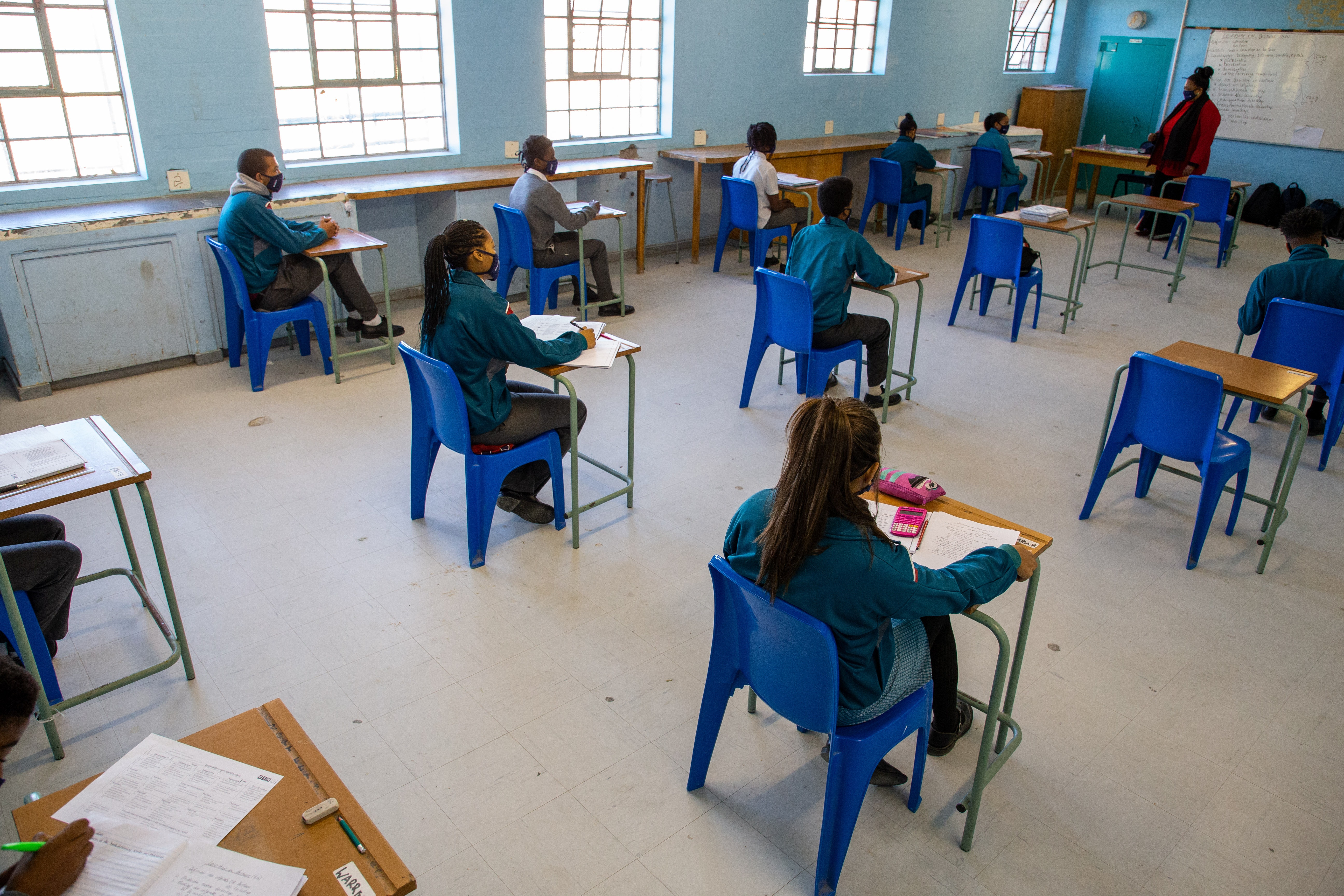
The data to date has not shown or suggested an association between case or admission rates with the opening and closing of schools in the country.
Given the adverse social and psychological impacts of closures on schools, it is encouraging to know that schools are not driving the COVID-19 pandemic. They can safely remain open provided there is implementation of and adherence to non-pharmaceutical interventions for COVID-19 prevention.
Read more: How African countries can reform education to get ahead after pandemic school closures
Some groups among children experience higher rates of illness and these bear more discussion.
First, the increased case rates in older teens and adolescents, at rates similar to adults older than 19 years in the third wave, requires monitoring. Since the onset of the third wave to the peak, the fraction of all COVID-19 cases aged 19 years or younger was averaging 14.6% as opposed to around 9% in the first and second waves. Half of the cases were occurring in older teens and adolescents 15-19 years, bringing the case rate in this group on par with adults older than 19 years.
This could have been as a result of:
- generally increased testing in children in the third wave. More testing would pick up more cases, including mild or asymptomatic ones.
- increased testing in response to cluster outbreaks in schools, leading to more testing among symptomatic or mildly symptomatic children and adolescents
- increasing vaccination rates among adults, leaving younger individuals contributing more cases; and
- the Delta variant itself – which may have a greater predilection for children, although there is not yet any conclusive data to support this.
Second, infants under the age of one have experienced higher hospital admission rates compared to other children, especially after the second wave. In our most recent report, infants made up 2.2% of cases 19 years or younger but contributed 19.3% of the admissions and 31.8% of deaths in this group.
Read more: COVID-19 school closures in South Africa and their impact on children
It is unclear why these infants are admitted to start with or what the causes of deaths are. Generally infants are much more likely to be admitted with non-COVID-19 conditions compared to older children. There is routine testing of all admissions at many hospitals, so it is possible that many of these admissions are for other reasons, with COVID-19 an incidental finding. More data are needed to investigate reasons for admission in this age group.
Lastly, children with underlying conditions made up 19.3% of children admitted with COVID-19 but 56% of those who died. The most commonly reported underlying conditions among those admitted were chronic respiratory diseases, diabetes, HIV and tuberculosis (active and previous). HIV, diabetes and tuberculosis were common among those who died.
What about vaccination?
South African children are not yet eligible for COVID-19 vaccination and may not be for a while. The reasons for this include the lower risk of disease and the need to prioritise the elderly; limited information on the efficacy and safety of the vaccines in children; and limited number of vaccines which are licensed for use in children.
Some countries in Europe and North America have opened up vaccination to children 12-16 years although coverage in this age group is still low. As more children are vaccinated in these countries, more data on side effects and effectiveness will be collected and many lessons to inform rollout in South Africa will be learnt.
In the South African setting, there is a case for the expedited vaccination of children with underlying conditions and older teens and adolescents based on burden of cases and hospitalisations in these two groups respectively.
Until then the onus is on everyone to ensure vaccination of adults around children to achieve herd immunity, and adherence to non-pharmaceutical intervention to reduce transmission in the community and spillover into schools.


