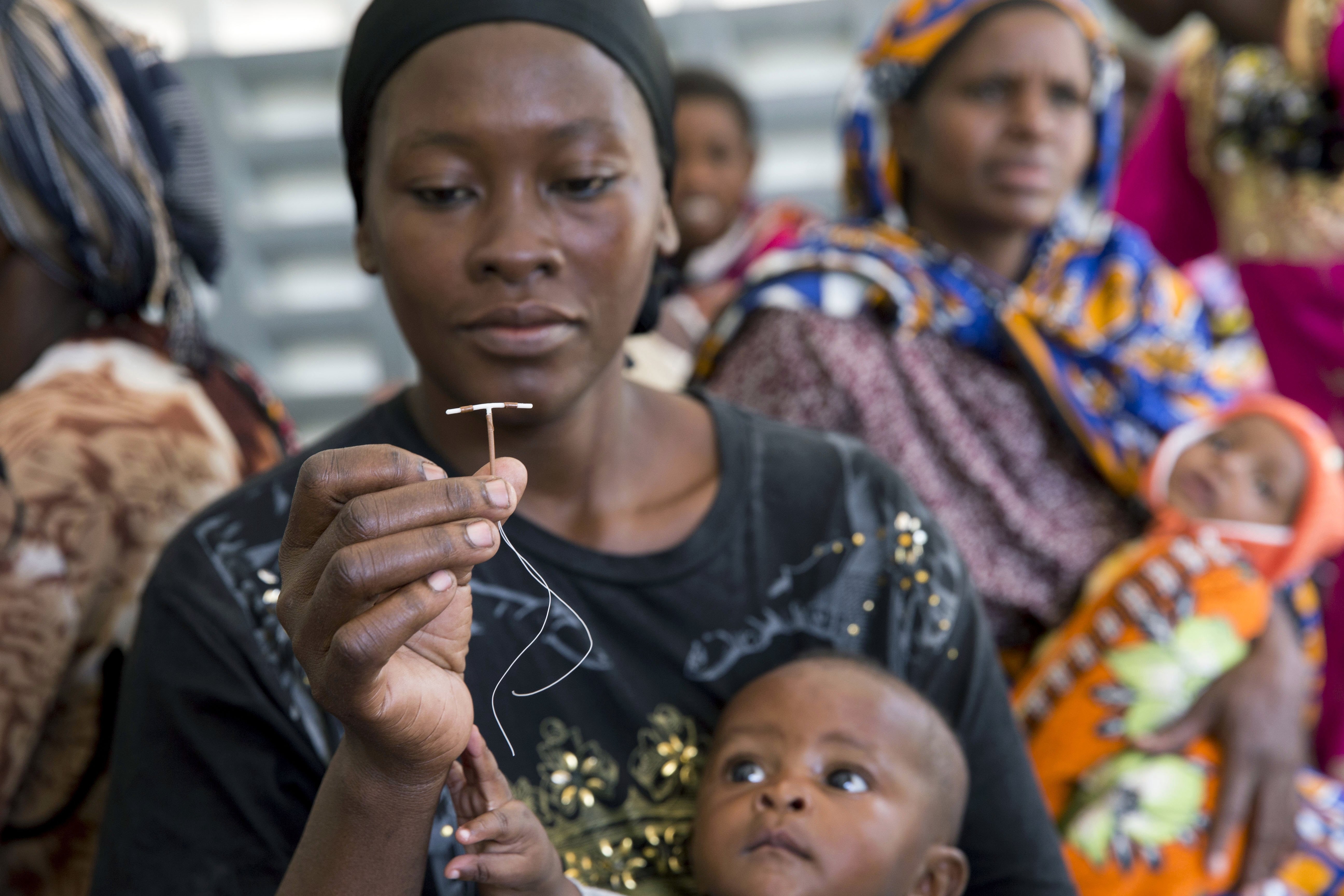
The COVID-19 pandemic has affected the sexual and reproductive health needs of women across contexts. To curb the spread of disease across sub-Saharan Africa, many governments imposed early lockdown measures, including closures of borders, enforcement of curfews, and restrictions on movement.
During these initial lockdown periods (around March to June 2020), modelling projections and data collected from health providers warned that women would have difficulty accessing sexual and reproductive healthcare, including contraceptive services.
Health services were threatened in a number of ways. Clinical staff in charge of COVID-19 interventions had limited access to personal protective equipment. The closure of workplaces and transport services affected supply lines, and stock outs of many contraceptive methods were seen within the next three to six months. The fear of an increased risk of COVID-19 infection from health facilities discouraged women from seeking services.
In some settings, clinical activities deemed “non-urgent”, such as prenatal care, were often delayed. At the same time, the lockdown itself may have increased women’s exposure to gender-based violence as a result of longer periods in the presence of perpetrators, usually intimate partners, and more limited opportunities for seeking help.
Read more: Sexual and gender-based violence during COVID-19: lessons from Ebola
Early reports were helpful in advocating for women’s sexual and reproductive health needs. But few studies were able to quantify the actual impact of the COVID-19 pandemic and of its mitigation measures on the women’s lives and well-being. Specifically, population-level data were needed to help us understand how the pandemic affected women’s need for and use of contraception – and pinpoint who might be most at risk of experiencing unintended pregnancy.
In our recent research we aimed to answer these questions by surveying women in four African countries. We looked at how COVID-19 impacted their sexual and productive health needs and access. What we found was surprising and contrary to the fears of experts and activists. Overall, the women we spoke to were able to avoid unintended pregnancies. But women’s need for contraception and contraceptive use must be an ongoing priority. The findings showed certain groups to be particularly vulnerable.
Need for and use of contraceptives
The Performance Monitoring for Action study conducts annual surveys on women’s reproductive health needs across sub-Saharan Africa. These surveys are generally done face-to-face by trained interviewers. But due to COVID-19 mitigation measures, normal procedures were not possible.
We therefore conducted a phone-based survey from May to June 2021. The survey included questions specific to COVID-19 knowledge and reproductive health behaviours since COVID-19 restrictions.
Our analyses included 7,245 women who were married or living with a partner in Burkina Faso, Kinshasa (Democratic Republic of the Congo), Kenya, and Lagos (Nigeria). We included these geographies because we had already collected data between November 2019 to February 2020 – just before the COVID-19 pandemic – and could compare key reproductive health indicators between time points.
Both need for contraception and actual use of contraception differed substantially across the four geographies.
Lagos was the only setting where women’s need for contraception rose. It increased by 5% between pre-COVID-19 and the survey following the onset of the pandemic. Increases in contraceptive need were not observed in other settings.
Contrary to our expectations, we found that overall contraceptive use among women in need of contraception increased in most settings. This increase was significant in rural Burkina Faso and in Kenya.
Across all four geographies, we saw that the economic fallout of the pandemic impacted women’s lives.
Most women reported a partial loss in household income since COVID-19 restrictions. In Kinshasa, however, the impact was more severe. Nearly 70% of women reported complete loss of household income. Accordingly, increases in contraceptive use were seen for women who had experienced partial economic losses in Kenya and rural Burkina Faso, perhaps corresponding to changing fertility intentions in times of economic uncertainty.
Fortunately, our overall findings are not aligned with predictions and media reports that there would be large numbers of unintended pregnancies as a result of decreased access to reproductive health services. In fact, our findings on overall increases in contraceptive use in Kenya and rural areas of Burkina Faso point to women acting on their reproductive preferences and seeking to prevent pregnancy.
Importantly, however, some women may not have been able to use contraception to prevent unintended pregnancy in the early stages of the pandemic. We also looked at these trends by sociodemographic characteristics. We found that some women may be at increased risk of unintended pregnancy – specifically, young women in Lagos and women without children in Kinshasa. Understanding the reasons for increased contraceptive need and decreased contraceptive use for these groups is critical.
Young women already face stigma in accessing contraceptive services and this is likely heightened during the pandemic due to closure of youth-friendly services. Women who have never had children may similarly face familial and societal pressure to conceive soon after marriage, regardless of their competing financial or educational aspirations. Ensuring that all women and girls are able to achieve their childbearing goals must remain central throughout the pandemic, and beyond.
Read more: Why Nigeria’s weak health system affects women and girls the most
Looking ahead
Overall, these results are encouraging.
But the sexual and reproductive health needs of women and girls must remain a priority for governments, international donors, and service providers. This is especially important as many countries experience new waves of COVID-19 cases and enter continued periods of restrictions.
Contraception should be considered a basic need in sub-Saharan Africa and other places where health systems are weak and fragile. Access should not be affected by pandemics or other situations that necessitate restrictions on movement.
Family planning policies and programmes in these settings should prioritise the reproductive and sexual health needs of women at all times. And more so during health emergencies, where women also face disproportionate economic and societal setbacks.


