COVID-19: South Africa should build on HIV activism to foster behaviour change:
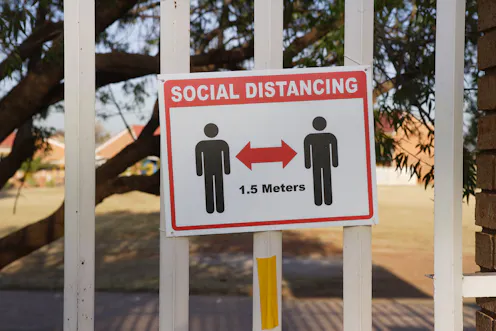
During a recent run in Newlands Forest, Cape Town, I encountered a few runners and walkers without masks. When I asked one of them where his mask was, he replied:
I am running outdoors and if you don’t like it, then stay at home.
As we passed each other I shouted back that it was not about his safety, but the protection of others. I was puzzled by his insistence that wearing a mask or not was simply a matter of individual choice. South Africa’s national health department requires cloth masks to be worn in public.
Despite current scientific consensus, why has it been so difficult to convey the message that wearing a mask in public is a sign of care about the health of others? If scientists are correct about the efficacy of masks, then surely refusing to wear one is much like driving drunk – an irresponsible and antisocial act that demonstrates a lack of concern for the consequences of one’s actions.
It would seem from other parts of the world, such as the US and Brazil, that the politicisation of masks and social distancing by political leaders has seriously interfered with COVID-19 public health messaging. In South Africa, one of the difficulties in getting some people to wear masks has to do with libertarian arguments that it is up to individuals to decide whether to follow state and public health recommendations, and anything else would be an infringement on their liberty.
Drawing on my own research on AIDS activism, I argue that a great deal can be learned from the HIV messaging by activists and health professionals during the late 1990s and early 2000s.
Until a COVID-19 vaccine becomes widely available, public health messaging must contribute towards transforming mask wearing, social distancing and washing hands into everyday, habitual practice.
One of the key lessons from the AIDS pandemic is that it is not simply a matter of acquiring information about the disease: what is equally important is the capacity to change actual behavioural practices to reduce transmission of HIV.
AIDS activism
The height of the AIDS crisis in South Africa was in the late 1990s and early 2000s. At the time, the civil society group Treatment Action Campaign (TAC) and the medical non-profit Médecins Sans Frontières (MSF) embarked on nationwide treatment literacy campaigns. The organisations wanted to convey the basics of AIDS science and antiretroviral therapy to their rank-and-file members as well as the wider public.
Some of these activists became what the sociologist Steven Epstein refers to as “lay experts”. They were able to translate their knowledge and experiences as activists and people living with HIV into forms of expertise and scientific capital that were recognised by scientists and policymakers.
The highly successful “citizen science” campaigns took place at a time when there were hundreds of AIDS-related deaths a day.
But this trust in science and experts did not come easily. In the initial stage of the pandemic, AIDS activists and health professionals had to contend with a range of alternative understandings of AIDS. These included beliefs in witchcraft as well as widespread silence and avoidance of talking about this sexually transmitted life-threatening disease because of fear, taboo, shame and stigma.
Another major factor to contend with included former President Thabo Mbeki challenging orthodox AIDS science. In order to counter the former President’s dissident position, activists and public health professionals had to come up with clear and accessible AIDS science messaging.
In my book, From Revolution to Rights, I show how “AIDS literacy” was disseminated by activists in public spaces and institutions such as railway stations, taxi ranks, shebeens, schools, factories, religious institutions, universities as well as door-to-door campaigns.
It was only because of concerted grassroots campaigns from activists and health professionals that knowledge about AIDS science spread and treatment eventually became available in South Africa’s clinics.
Fortunately, it seems that the struggle for AIDS treatment, and the successful dissemination of AIDS literacy throughout South Africa, laid the foundation for relatively widespread citizen trust in science and expertise. This trust in science has also been reinforced because AIDS treatment has managed to extend the lives and improve the health of so many millions of people living with HIV.
What now?
It is now up to government to drive prevention campaigns that can persuade citizens that small measures like wearing masks and social distancing can not only save lives, but are also acts of decency and symbolic recognition of the vulnerability of frontline health professionals, essential workers, the elderly and those with comorbidities.
The co-morbidities of HIV, diabetes, hypertension, obesity and tuberculosis (TB) render millions vulnerable to the novel coronavirus.
By 2018 7.7 million people in South Africa were living with HIV while 301,000 South Africans became ill with TB and 63,000 people died from the disease.
Surely fit and healthy cyclists and runners living safely and securely in the suburbs would wear masks to protect those citizens more at risk than them, including their parents and grandparents?
Read more: African countries are moving to make masks mandatory: key questions answered
Perhaps the small act of wearing a mask could come to be seen as a sign of ubuntu (humanity) in action. I am reminded here of Dr Dr Bernard Rieux’s conversation with the journalist Rambert in Albert Camus’s 1947 novel “The Plague”:
There’s no question of heroism in all this. It’s a matter of common decency. That’s an idea that may make people smile, but the only means of fighting a plague is – common decency.

Steven Robins receives funding from the South African National Research Foundation (NRF) and is a board member of the Institute for African Alternatives.
Source: The Conversation – Articles (AFRICA)
Read more on The Conversation.
Join the fun: Add Your event | Submit a Press Release | Add your listing.


