It’s been two years since the new coronavirus, SARS-CoV-2, and its disease, COVID-19 were declared a global public health emergency. During this period, there have been over 433 million confirmed cases of COVID-19, including over 6 million deaths, reported to the World Health Organization. The pandemic changed life across the globe, through lockdowns, sickness and lives lost. It also sparked life-saving research and analysis. The Conversation Africa brings you some of the highlights of its coverage of variants, vaccines, lockdowns and their effects over the period – and what what’s been learned about health systems, policy making and humanity.
Mutations
In December 2019 China reported a cluster of mysterious deaths caused by a novel coronavirus – the latest in a string of coronaviruses to affect people. Like others around the world, countries in Africa started putting systems to screen for and deal with possible cases. At the time very little was known about the virus or where it came from.
Now, two years later, the origin of the pandemic is still unknown and SARS-CoV-2 has shown many faces.
Read more: South African health experts have identified a new lineage of SARS-CoV-2: what’s known so far
This article published in August 2021 explored, through the Network for Genomics Surveillance in South Africa, the changes in SARS-CoV-2 since March 2020. South Africa was one of the first countries to introduce systematic and coordinated genomic surveillance, testing the genetic makeup (genome sequencing) of SARS-CoV-2 from patient samples representative of different geographic regions and over time. Understanding these changes were important because the virus was mutating and in the case of the Delta variant led to more transmissibility and sicker people.
By late August 2021 the delta variant accounted for over 90% of cases in Southern Africa. This was a concern because it had mutations which made it spread faster. Delta was also the variant that saw the most COVID deaths. The graphic below shows the impact it had.
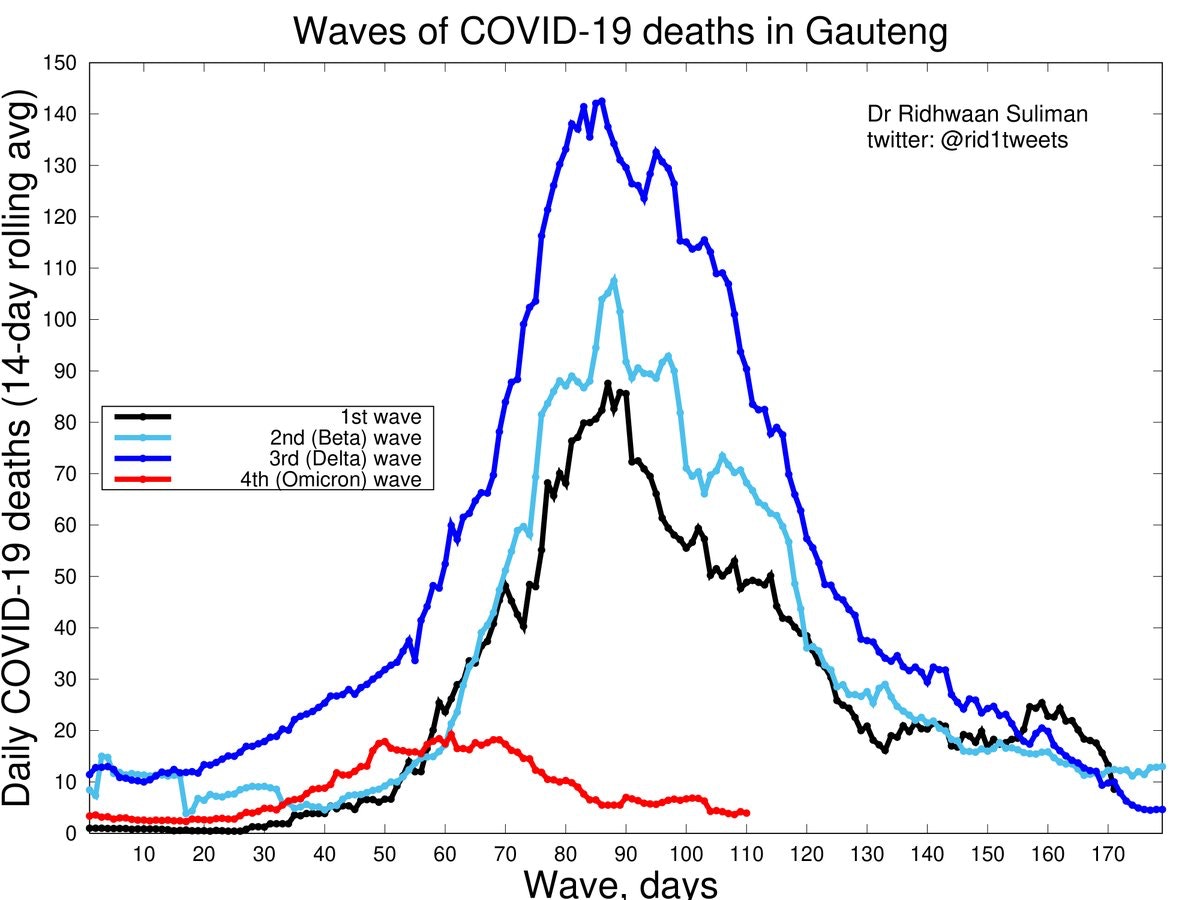
Delta rapidly came to dominate the epidemic globally, causing major waves in many countries, including those with advanced vaccination rollout programmes.
In November 2021 South African scientists discovered the omicron variant . Amid much uncertainty, other countries stopped travel to and from South Africa. Colleagues at The Conversation Weekly spoke to South African scientists about the inside story of discovering omicron.
Waves
Since the outbreak of the COVID-19 pandemic, the number of positive cases across the world, as well as in individual countries, has come in a series of peaks and falls.
Within the first two years, most countries had experienced huge second or third waves. Some countries have recorded four regular waves, of varying peaks, and a few had a lingering second wave. The Africa Data Hub produced a map for The Conversation Africa detailing a timeline of the various waves experienced by African countries.
Vaccination
A highlight of this pandemic is how quickly effective vaccines were developed and rolled out. But the inequity of manufacturing, and distribution, caused outrage. This put under the spotlight Africa’s dependence on external governments, donors and multinational organisations. South Africa, along with India, took the lead in lobbying the World Trade Organisation to suspend intellectual property rights on COVID vaccines for the duration of the pandemic. Developed countries started vaccinating people against COVID as early as December 2020. But developing countries, including those in Africa, faced a host of challenges in getting access to the jabs.
The map below shows the rollout across the continent:
Vaccine access remains a problem. African countries don’t have the capability to manufacture their own vaccines.
A number of ideas have been mooted to address the challenge. This included steps to set up the first COVID messenger RNA (mRNA) vaccine technology transfer hub on the African continent, in South Africa.
Read more: Africa’s first mRNA vaccine technology transfer hub gets to work
A turning point
Omicron marked a turning point in the pandemic, according to Shabir Madhi, dean of the Faculty of Health Sciences and professor of vaccinology at the University of the Witwatersrand in South Africa. He detailed how South Africa changed tack in dealing with COVID, noting the following key points:
-
Governments will increasingly be looking for ways to live with the virus, cognisant of the detrimental indirect effects that restrictions have been having on the economy, livelihoods and other aspects of society.
-
Vaccine and natural infection induced immunity to omicron has been relatively preserved.

-
The drive to ensure higher uptake of vaccines, including booster doses for high risk groups, needs to continue.
-
There is room for the gradual relaxing of non-pharmacological interventions. In particular, token gesture “hand hygiene” and superficial thermal screening should be scrapped. And there is little reason not to be allowing events such as attendance at outdoor sports events.
Recovery time
COVID-19 seems to be at a turning point. Restrictions, travel and lockdowns are being relaxed all over the globe. Vaccination still remains critical especially for people over the age of 60 and people who have comorbidities.
Is the pandemic over?
As Madhi explained in this article:
It depends what metric you use. If it’s about infections, we’re not at the tail end. If it’s about the number of deaths that will transpire from COVID-19 during 2022, relative to the number of deaths that will transpire from other preventable causes of death in countries such as South Africa, then I believe the country has pretty much arrived towards the end of this pandemic.


