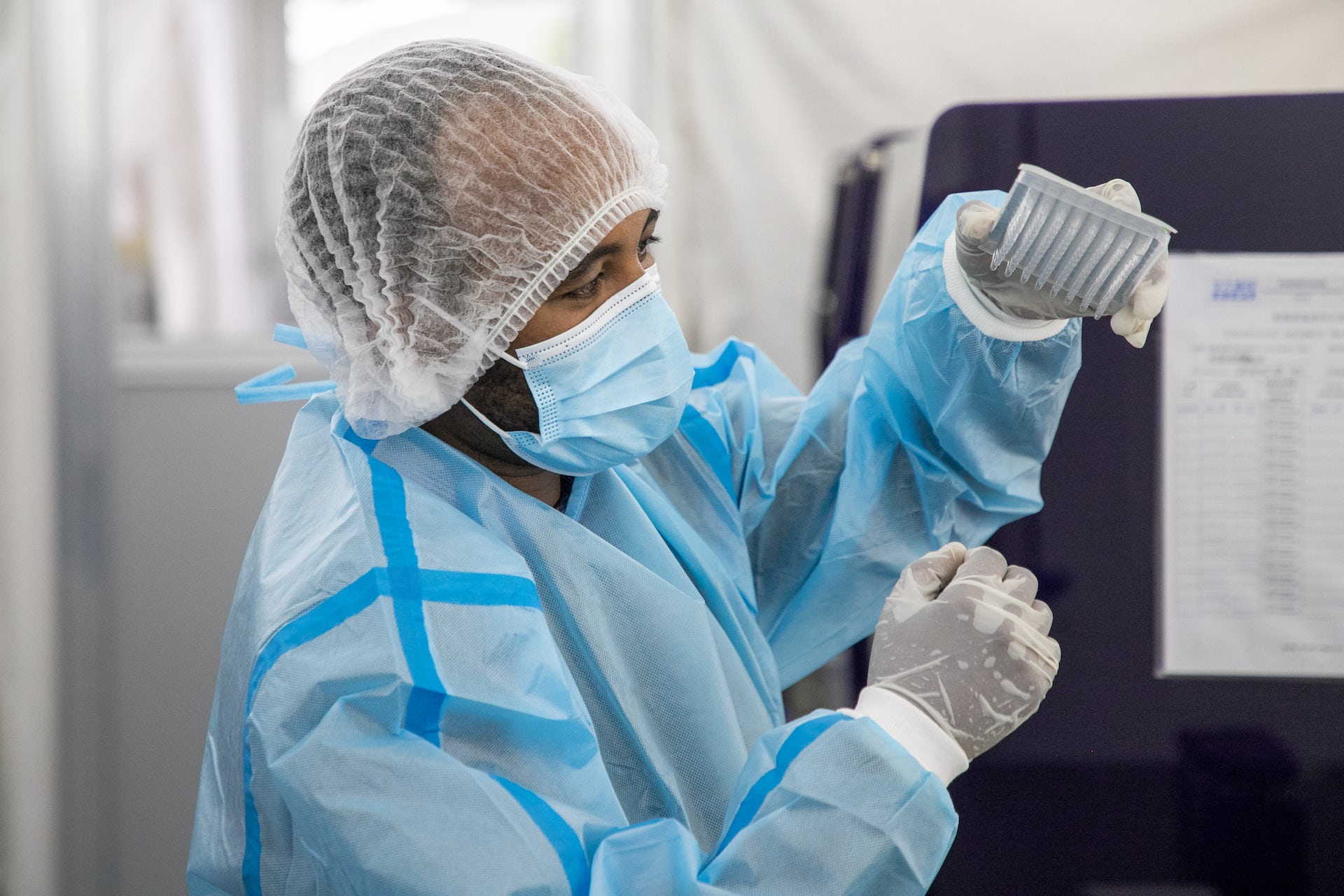
In March 2020, weeks before the World Health Organization (WHO) declared COVID-19 a pandemic, its director-general Tedros Adhanom Ghebreyesus delivered a speech in which he emphasised the importance of testing:
… the most effective way to prevent infections and save lives is breaking the chains of transmission. And to do that, you must test and isolate. You cannot fight a fire blindfolded. And we cannot stop this pandemic if we don’t know who is infected. We have a simple message for all countries: test, test, test.
The pandemic exposed critical shortcomings of existing diagnostic techniques. It revealed an urgent need for tests that are faster, simpler, cheaper and more scalable than existing methods, and just as accurate.
Three years on, the global face of diagnostics has changed. New techniques of disease diagnosis have been developed that can be applied to other emerging zoonotic pathogens such as “disease X” – a hypothetical infectious disease that has the potential to develop into a pandemic.
As a molecular scientist with a keen interest in veterinary disease diagnostics, I have closely followed developments in the diagnostic space since the start of the pandemic. These emerging technologies, together with conventional tests, have the potential to overcome bottlenecks in the current diagnostic procedures. By incorporating these tests into a country’s healthcare system, clinicians and policy makers are better equipped to practise precision medicine and to react to potential outbreaks.
How the tests changed
The first diagnostic tests for SARS-CoV-2 (the virus that causes COVID disease) used established molecular techniques such as reverse transcription polymerase reaction (RT-PCR). These techniques detect and identify organisms by amplifying their genetic material millions of times. Running the tests however requires trained technicians and expensive equipment.
As the pandemic became more severe, other ways to test for the virus had to be developed. Substances and compounds needed to effectively run diagnostic tests were in short supply and many countries did not have the kinds of sophisticated laboratories needed for the existing tests. Low- and middle-income countries like those throughout the African continent had limited finances too and not enough trained specialists to handle the demand.
Isothermal amplification techniques helped to address the need. This is a simple process which rapidly and effectively amplifies DNA and RNA (genetic material) at constant temperature.
Immunological assays also helped. These tests can be used on-site or in the lab and are able to detect specific molecules such as antibodies and antigens. Antibodies are generated in a person’s body when a foreign molecule (antigen) invades the body.
These cost-effective tests provide rapid results and can be used on a big scale even where resources are scarce. The major challenge of these tests is that they are less accurate. Unlike molecular tests, which amplify the genetic material of the virus, immunological assays do not amplify their protein signal. This makes them less sensitive. The risk is high that an infected person might incorrectly be told that they don’t have the virus.
The global diagnostic community realised it was time to look at methods that were as accurate as conventional molecular tests but could be used outside laboratories and on a large scale.
Big strides
Scientists needed a new generation of rapid, accurate, accessible and affordable diagnostic tests. The National Institutes of Health in the US set up the Rapid Acceleration of Diagnostics programme (RADx) in 2020 to fund innovative point-of-care and home-based tests and to speed up the development, validation and commercialisation of these tests.
One particularly interesting change in this space is the use of CRISPR. The technology was previously known for its use in gene editing. But now it has revolutionised diagnostics with the launch of SHERLOCK and DETECTR, two innovative CRISPR-based kits used for the detection of SARS-CoV-2. These are particularly sensitive and specific and provide a visual colour readout using a commercially available paper dipstick, making them suitable for use as a point-of-care test.
The versatility of these techniques enables researches to apply the same principles to the detection of other infectious diseases too.
There have also been advances in using biosensors, nanotechnology, smartphone-based tests and wearable technologies for diagnostics.
Read more: What is CRISPR, the gene editing technology that won the Chemistry Nobel prize?
Overall, in the past three years, the focus of disease testing has moved from simple detecting and understanding to incorporating speed, efficiency and portability of the tests.
Problems remain
While there is a lot to celebrate in the diagnostic space, problems remain. There are barriers in developing and disseminating tests, particularly in poorer countries. Fairer access to quality testing and improved data sharing between countries is needed to eliminate the inequity in diagnostics.
The lack of resources to deliver a robust regulatory system in low- and middle-income countries also poses a serious challenge. Companies have less incentive to develop and commercialise products where there is weak regulation. Thus countries still depend on tests that are manufactured elsewhere.
As the world moves out of its pandemic response phase, it is likely that investment in diagnostics will fall. With a reduced need for tests, the economic return of investing in developing tests will diminish.
This is unfortunate as there are still so many healthcare challenges worldwide and unless disease surveillance is proactive, it won’t be possible to predict where the next pandemic might emerge from. The momentum created by the COVID pandemic offers an opportunity and should be used to build on the things that worked well in the diagnostic industry and to improve on the things that didn’t.


