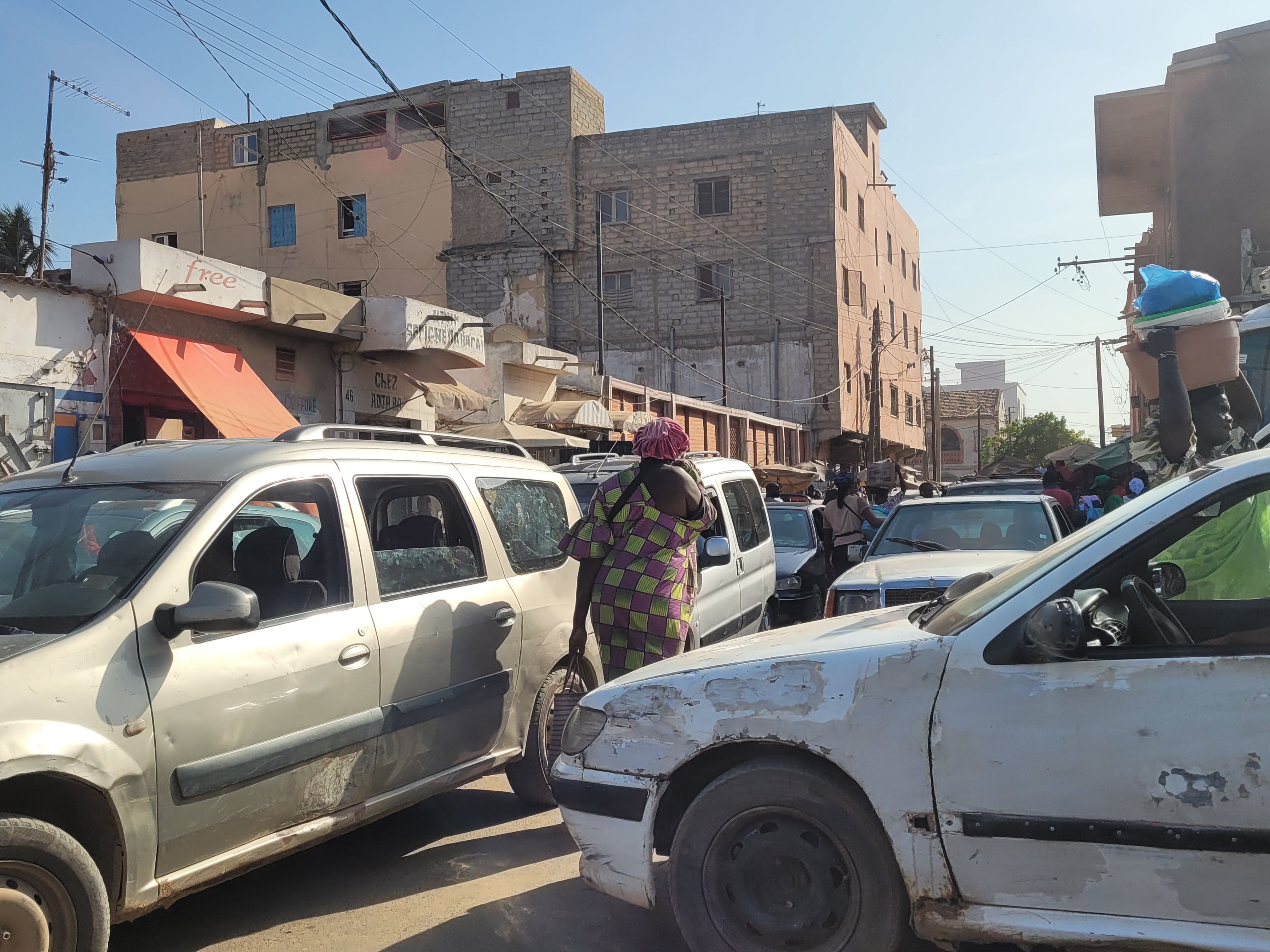
Africa’s major cities are growing at a rapid pace. In Dakar, Senegal’s capital, for instance, the population has almost doubled in 20 years, reaching 4 million inhabitants today.
But in most metropolises, like Dakar, planning isn’t keeping up with the expansion. One example of this is the city’s transport system. Public transport plays a fundamental role in providing access to any city. However, in many cities, it’s lacking, particularly in areas of urban sprawl. This worsens the quality of life for people living in these areas, where there is a shortage of jobs and amenities.
Meeting essential needs – such as employment, social interaction, healthcare, education and food – depends on mobility. In a context where incomes are low and public services and facilities are scarce, daily travel is necessary but difficult.
Dakar is attempting to better organise its transport system to meet growing travel demand. Bus Rapid Transit (BRT) and suburban railway lines are constructed or under way. But public transport remains insufficient. Various forms of informal transport fill this gap and account for a significant proportion of motorised trips. Among them are taxis which people share, commonly called “clandestine taxis” or “clandos.” But they’re illegal because they operate without a licence.
Clandos are typically old, unmarked sedan cars which carry four to six passengers. Many clandos operate in the Dakar region. There is no official figure, because clandos aren’t registered. However, according to our estimates, there are well over 5,000 operating regularly. People know them as they run along fixed routes, leaving the taxi stand when they are full. Most of the time, the stands are well located, close to main roads or main buildings. They also serve remote areas. They are more expensive than buses but provide a better quality of service.
We carried out research on how people move around Dakar and found that clandos play a vital role, particularly in the city’s outskirts. Even if bus operators consider them as competitors, in most situations clandos are complementary to them and should be better integrated into transport and planning strategies for the peripheral areas.
How to move around in the peripheries
Our research – based on the 2015 Dakar household travel survey and a survey we carried out in 2021 and 2022 – found that residents in Dakar’s peripheral areas are on average poorer than the city’s other residents. Because of this, they mainly travel on foot and their access to public transport is limited. When they use motorised transport, a significant proportion of their trips are made by clandos.
People generally use clandos for two types of trip:
-
long commutes from the peripheries to the centre. They generally use the clando for a part of the trip, to get to or from bus stops. Clandos help people to avoid long trips on foot and actually contribute to increase the number of people taking buses. Most of these commuters are men.
-
short, local trips within the outskirts. These trips are shorter, and less expensive, than the long commutes. They account for almost two out of three trips made by clandos. The users are a fairly diverse group: housewives, schoolchildren, informal workers.
Clandos are sought out for their speed and comfort. Our surveys show that they are relatively expensive for households. That explains why the use of clandos may be irregular and limited to certain types of trips, like visiting relatives, going to the clinic or coming back from the market.
Urban planning and clandos
Currently, decision-makers are focusing on organising public transport around mass transit. This means that informal modes, like clandos, are doomed to vanish on the grounds that they compete with high-capacity transport; or at best will be used only as a feeder mode to buses and mass transit.
The role clandos play – as a complementary mode, for both feeder services to public transport stops and, more importantly yet, for internal trips in peripheries – offsets their contribution to unnecessary competition and congestion.
Better recognition would make it possible to take better advantage of their unique strengths and capabilities and enable them to play a full role in supporting mobility and daily life. In practice, this means better consolidation of the operation and of the distribution of stands in the public space, less police harassment, access to credit for drivers who own their vehicle and for owner-investors to renew the vehicles.
These considerations must be incorporated into a more comprehensive analysis of the urbanisation of peripheral areas and the need for public action to address transport and urban planning in an integrated way. Considering clandos in planning could initiate a bottom-up development of the transport system. It may also offer job opportunities in the context of a very tight labour market.


