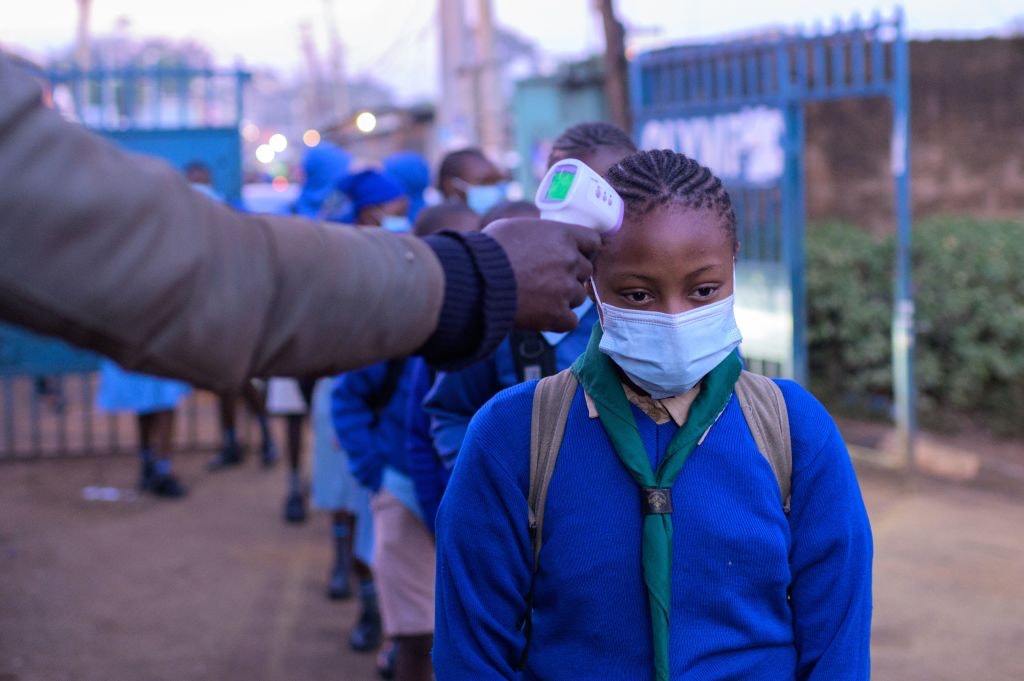
In Kenya, the pandemic disrupted learning for 15 million students in primary and secondary institutions. Schools closed on 16 March 2020, were partially reopened on 19 October 2020, and fully reopened on 4 January 2021.
During the period of closure, the government committed to providing learning opportunities for children locked down at home through a variety of measures.
Through the Kenya Institute of Curriculum Development, for instance, it began to broadcast lessons that could be accessed by households. It also sought to boost access to online learning platforms, including through the Google Loon project that aimed to increase connectivity in remote areas. Less than a year after launch, however, Google shut down its Loon division. Other measures the government put in place to reach learners included the Kenya Education Cloud, Zoom video conferences and WhatsApp lesson plans.
Despite these measures, one hurdle that became quickly apparent was the digital divide. There were also gender and socio-economic gaps, as well as learning losses brought on by the shock of COVID-19.
While some students had access to digital learning platforms, a survey on remote learning found that this access was unequal. On average, 22 out of 100 children accessed digital learning resources. Students in private schools and urban areas had more access than others.
The African Population and Health Research Center (APHRC) conducted a study on adolescents and their parents in urban informal settlements. It found that 82%, 50% and 78% of households in the study owned a TV, radio and digital device (smartphone, computer or tablet), respectively. But only about 57%, 32% and 33% of adolescents, respectively, used these devices to access educational content. This was because parents and students did not know about available programmes, or when and why they should tune in.
This gap was further emphasised by officials from school heads associations who were surveyed by Usawa Agenda, which works to ensure equity in access to quality education in Kenya. These officials said fewer than 10% of their students accessed digital learning platforms.
Knowledge gap
Additionally, children from poor backgrounds, particularly girls, often rely on schools for food and other essentials, like sanitary towels. With schools closed, many were forced to resort to desperate measures to access these necessities. This led to an increase in teenage pregnancies in the country with the onset of the pandemic. Further, evidence suggests that when children stay at home, they face higher chances of being exposed to gender-based violence.
Research has also shown that children potentially lose a full year of learning if schools are shut for just three months. These learners are not able to cope with the curriculum when they go back to school, and there is a higher likelihood of their falling further behind with time.
In Kenya, looking at maths knowledge alone, an April 2021 report found that 53% of students fell behind in their ‘maths age’. The average loss was estimated to be 13 months, which means their maths knowledge had fallen back by more than a year from before schools closed. The greatest learning losses were seen in learners in lower grades, those in rural areas and girls.
Researchers explain that remediation, coupled with reorienting the curriculum to align with children’s levels of learning, has the potential to fully address the learning loss caused by the pandemic.
Our research further highlights the role parents play in addressing some of these education gaps. It’s important to encourage and empower them to help children learn, as well as create safe environments. Parents additionally need financial support, especially if they have lost livelihoods, and need digital skills themselves.
The APHRC study has suggested ways to improve access to e-Learning platforms. These include sensitising parents and students on available TV and radio programmes, and the importance of tuning in. These programmes should also be broadcast consistently, which would allow students to plan their time around them.
Nelson Muhia, a research officer at the African Population and Health Research Center, contributed to this article.


