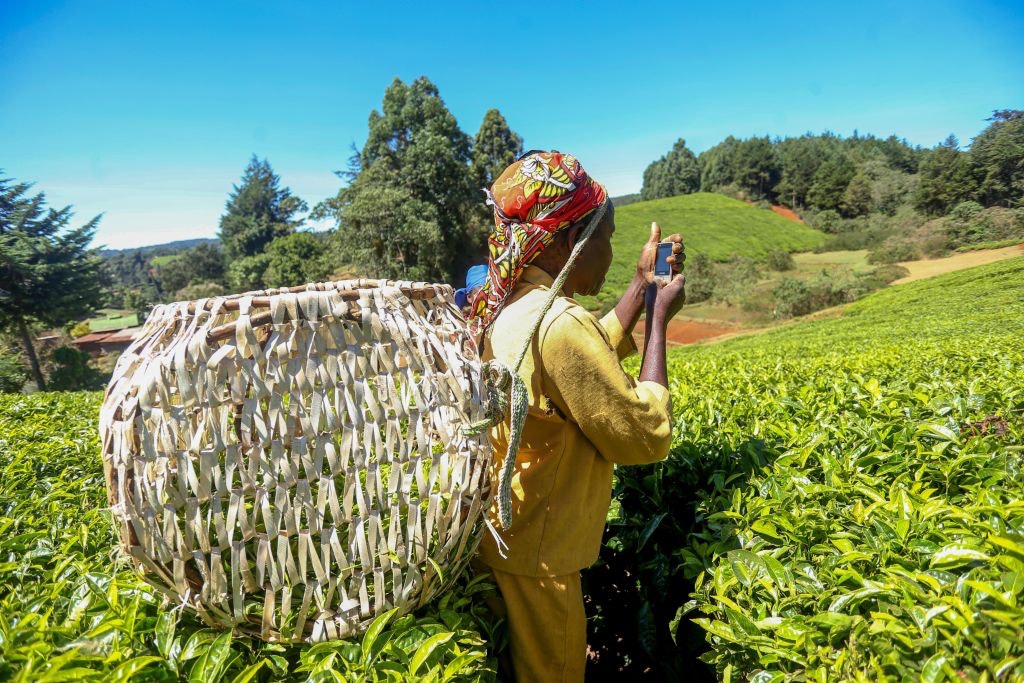
Digital agricultural services have proliferated across Africa over the last decade. Most are services that work on mobile phones, although more advanced technologies are in use too – like satellite images, sensors, blockchains and big data analytics.
The services offer access to information, markets and financial products.
Kenya is at the forefront of this development in Africa. The country is home to numerous service providers that seek to solve problems in food and agriculture using digital technologies. In 2020, the GSM Association counted 95 such services in Kenya. This is around twice the number found for instance in Nigeria, the country with the second highest digital agricultural services prevalence in Africa. Providers range from small start-ups to large companies that mainly offer advice, finance and market linkage.
But scaling up these solutions remains a challenge. A study on digital agriculture in sub-Saharan Africa showed that only a few service providers managed to register more than one million users. In Kenya, it’s estimated that only 20% to 30% of farmers use a digital agricultural solution. This is better than other countries in the region – but still low.
In our research, we examined how to support the scaling of digital agricultural services in Kenya. We found that uptake could be increased by building digital bridges in the form of digital platforms that bundle such services for easy access and use. But human bridges are also needed that link service users and providers.
The insights from the research can help service and platform providers design and scale solutions that suit different users. They can also inform policies and investments needed to create the conditions for scaling these services.
What we did
We conducted a survey of 758 likely users of hypothetical digital platforms that would aggregate digital agricultural services in Kenya. All the potential users had access to the internet or basic data connectivity. Respondents were contacted via relevant Facebook groups and invited to complete the survey online.
A second in-person survey shed light on how agricultural intermediaries in Kenyan value chains use digital technologies in their work. These included 296 input dealers, output dealers and extension agents. Our research offers the first comprehensive study of the digital capabilities of agricultural intermediaries. More commonly, studies focus on agricultural producers.
What we found
Our research showed that likely users would see value in aggregator platforms if they made digital agricultural services easier to find and assured their quality. They would also like platforms to be open to a wide range of value chain actors with diverse levels of digital skills. Our findings also highlighted that human interaction still matters. It should complement digitally enabled contacts and transactions.
Aggregator platforms can help scale up digital agricultural solutions in a number of ways:
Accessibility and usability: The platforms could make digital agricultural services easier to locate and use. This would help users navigate the often confusing array of services on offer. For instance, platforms could provide a one-stop shop for a diverse range of services that are easily searchable and only require a single registration and payment system. They would need to be usable with different types of digital technologies and skills.
Value enhancement and trust building: Aggregator platforms would be valuable if they could guarantee the quality and reliability of digital agricultural services. This would build trust in the services. They could do so, for instance, by setting, monitoring and enforcing quality standards for participating service providers or introducing user rating systems.
Human intermediaries could also play an important role in building trust.
Inclusivity: Users would like aggregator platforms to include a wide range of value chains and actors. Through their networks, intermediaries could get more actors to use aggregator platforms.
Of course, aggregator platforms don’t offer all the answers to scaling digital agricultural solutions. They would need a supportive policy environment. But there are gaps. These include:
-
Insufficient digital skills. This needs to be addressed by integrating related training at all levels of education.
-
Poor technology infrastructure. This would require expanding access to high-speed mobile networks, affordable smartphones and reliable electricity, particularly in rural areas.
The way forward
Various factors have contributed to Kenya’s leadership role in digital agriculture in Africa. Mobile network infrastructure expanded early on, supported by government policies which attracted the necessary investments and fostered competition.
Digital business development was largely driven by dedicated individuals, innovation hubs and so-called angel investors. Together they created a conducive innovation environment for local start-ups developing digital solutions for a technology-savvy customer base of relatively well-educated users.
The widespread adoption of M-Pesa also played an important role. It facilitated the provision of digital agricultural services that require financial transactions.
The country needs to build on these successes. The digital transformation of Kenya’s agriculture will become a reality if it can link viable digital solutions providers with potential beneficiaries. That requires digital bridges connecting diverse services and users. But it will also require human bridges to narrow the technological and skill gaps, to build trust in service provision and to reach those who are not yet connected.
Aggregator platforms that integrate agricultural intermediaries into their design are one avenue for building such bridges. This will happen if they understand the different demands and capacities of their users. The design and marketing of digital agricultural services will have to match users’ needs and abilities. Similarly, public and private investments in skills, infrastructure and the business environment are crucial for such platforms to fulfil their potential.


