Drastic action is needed to ensure a better future for South Africa’s children:
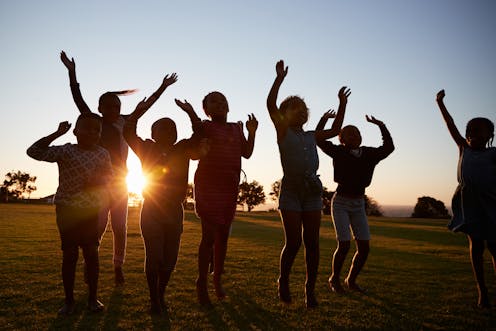
Remarkable progress has been made in the health and well-being of children and young people since 1990. But profound inequality means that little has changed for many in the world’s poorest regions. Children around the world also face unprecedented dangers from climate disruption and unregulated commercial actors.
These are the findings of a report recently published by a WHO-UNICEF-Lancet commission on redefining and accelerating progress on child health and well-being. The commission is made up of child health, climate change and health systems researchers and advisors from universities, nongovernmental organisations, UNICEF and the World Health Organisation.
The commission developed a new “flourishing index” which assessed children’s health, education, growth and experiences of violence. It also created a sustainability index which ranked countries based on their excess greenhouse gas emissions. Strikingly, no country did well on sustainability, flourishing and the absence of inequity. All three are essential for securing the future of children and young people.
The commission reported on the performance of 180 countries and gave them a ranking. As commissioners from South Africa, we have focused here on how South Africa performed.
The country was in 127th position on the flourishing index, lower than countries with much fewer resources. For example, Vietnam is a lower middle-income country but is in 58th position on the flourishing index. On the sustainability index, South Africa ranked 150th and Vietnam 85th. This means that children face many more health, development and sustainability challenges in South Africa than in Vietnam, despite South Africa being more economically advanced than Vietnam.
South Africa stood out as a unique example of a country that performed poorly across both the flourishing and sustainability indices.
The numbers
Elements driving the low flourishing index score in South Africa include glaring, persistently high levels of poverty, food insecurity and lack of access to basic services.
More than half (59%) of South African children lived in homes with a monthly per capita income less than R1,183. This is below the national poverty line. A third of households still don’t have access to safe sanitation.
School attendance is high – 90% of children aged 7-16 are in school. But the quality of education is poor. Only 34% of children in lower secondary school (13-15 years old) have a minimum proficiency in maths. This is compounded by an intractably high stunting rate – 27% of children under five are stunted (too short for their age). This contributes to learning challenges and consequently poor earning potential.
Young women and girls also experience extremely high levels of gender-based and intimate partner violence.
These indicators captured in the flourishing index highlight the enormous gaps that remain for children and young people in South Africa.
The sustainability index indicates that the problems don’t end there. The country has extremely high carbon emissions, unusually for an upper middle-income country. South Africa’s carbon emissions are driven by the heavy reliance on coal for energy and heavy industry. The country is already experiencing the impact of climate breakdown through severe drought conditions. Keeping emissions under control requires action on new policies that allow for renewable energy production.
In addition to inequality and climate disruption, the commission found that children were targeted by harmful marketing practices. Large companies that dominate the food and beverage environment are become more widespread in South Africa and have been implicated in rising obesity – 13% of children under five are overweight.
Companies manufacturing breast milk substitutes contravene the government’s regulations with inappropriate marketing and sponsorship to influence health professionals. Marketing of breast milk substitutes is one of the reasons for the low breastfeeding rates. In South Africa, 41% of infants six to eight months of age aren’t being breastfed. The government needs to be more stringent about enforcing existing legislation. It should educate people about unhealthy diets and make it easier to follow healthy diets. And it should regulate big food companies.
Recommendations
Children and young people face unprecedented threats to their health and well-being from inequality, commercial marketing and climate breakdown. Drastic action is needed to address this. Steps identified by the commission include:
-
Controlling emissions: Without change, there is a 93% chance that global warming will exceed 4 degrees Celsius by 2100, with catastrophic consequences. Stopping greenhouse gas emissions as quickly as possible is essential to ensure a liveable planet for future generations.
-
Controlling harmful marketing: Children face increasing exposure to commercial advertising and social media promoting inappropriate foods, alcohol, tobacco and gambling. For example, the increase of harmful marketing directed at children has contributed to a 10-fold increase in childhood obesity since 1975. Corporate self-regulation has failed. New global frameworks are needed to control harmful marketing targeting.
-
Involvement of children: Children’s contributions lead to improved social cohesion and more equal communities. It is their future; their voices must be heard and they must have the means to hold adults accountable.
-
Multi-sectoral action: No one sector is going to solve the problem. Sectors beyond health and education must be involved. Municipalities also need to be strengthened, because it is robust local governments that connect households and communities to national initiatives.
-
Leadership: Courageous leadership is called for at all levels. Child well-being is often delegated to smaller departments, bundled with disability and women’s issues. This must change.

Mark Tomlinson receives funding from Conrad Hilton Foundation, World Health Organization and UNICEF.
Asha George is supported by the South African Research Chair's Initiative of the Department of Science and Technology and National Research Foundation of South Africa (Grant No 82769) and the South African Medical Research Council. Any opinion, finding and conclusion or recommendation expressed in this material is that of the author and the NRF does not accept any liability in this regard.
Tanya Doherty receives funding from The South African Medical Research Council
Source: The Conversation – Articles (AFRICA)
Read more on The Conversation.
Join the fun: Add Your event | Submit a Press Release | Add your listing.


