The population of Eswatini (previously called Swaziland) is slightly below 1.2 million people, and about 58.9% of the people live below the nationally defined poverty line – living on less than US$1.9 a day. For years Eswatini has also had the highest prevalence of HIV and AIDS in the world. In 2019, about 27% of the country’s population was HIV positive.
One of the devastating effects of HIV and AIDS, coupled with poverty, has been the escalating numbers of vulnerable children in the country. For example, in 2012, the number of children classified as vulnerable in Eswatini was estimated to be at 181,000. In 2016 this number had escalated to 241,377 – about 71% of the 339,968 child population.
Vulnerable children are children who are orphaned, live in a child-headed household or come from a poor family background. Despite the different situations that make them vulnerable, these children share one thing in common – and that is extreme poverty and unmet basic needs for survival. In 2005 the country committed itself to providing free education for vulnerable children. The policy only came into effect in 2009, and aligning the commitment with practice has been a mammoth task to achieve.
An illustration of this is that only 51% of the vulnerable children in the country do not make it into secondary school.
In my PhD I explored how vulnerable children in three rural primary schools in Eswatini experience school, and the ways in which they make meaning of gender. The aim was to understand the implication of these factors on their social welfare, gender equality, their quality of education and experiences of school.
For my thesis I drew on eight pieces of research. I found an intricate interchange of culture, tradition and societal narratives in the way the vulnerable boys and girls constructed gender and also experienced school.
Poverty acted as a contextual site for the experience of school and gender, in ways that aggravated the gendered inequalities against both the vulnerable boys and girls.
I argue that the vulnerable children of Eswatini have challenges that affect their experience of school. In the school contexts they are discriminated against by both insensitive teachers and learners. In the home contexts, these children have greater responsibilities that compete with their study time.
Vulnerabilities
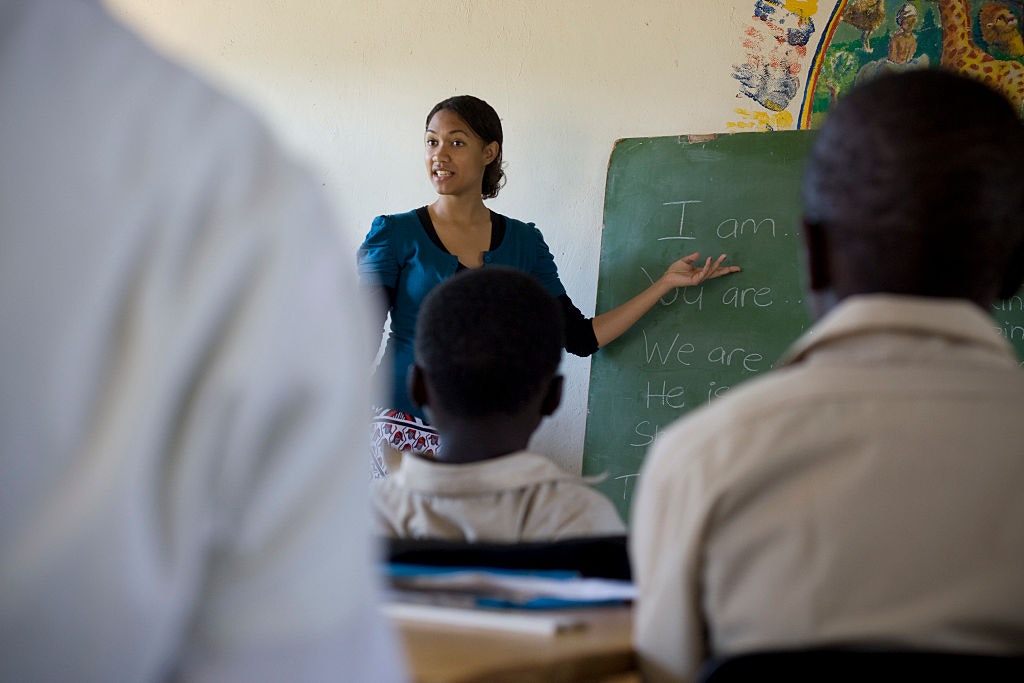
The study was conducted in three primary schools in rural areas of Eswatini. Thirty children (ten from each participating school) participated in the study ranging in age from 11- 16 years. Individual and focus group interviews were used. I also spoke to nine teachers, (three from each school) aged between 24 and 60 years.
I found that the schooling experiences of these children weren’t only framed by and based on poverty and vulnerability. They’re also constrained by the complex dynamics of the two. While the trauma of losing parents and living in poverty affected these children psychologically, some lacked basic things like candles.
For some, the burdens that came with the responsibility of ensuring the welfare of the whole family were too heavy on the young children. All of these made it harder for them to cope with and succeed at school.
The findings also highlighted that besides poverty and vulnerability, gender was also a strong determinant of the vulnerable boys’ and girls’ experiences of school. I found that stereotyped constructions of gender compromised the learners’ schooling experiences.
My research found that boys in rural Eswatini were under social pressure to conform with ideas about masculinity. For example, in rural schools boys felt that to be male they should be heterosexual, and they judged each other on the basis of heterosexual relationships. The boys within these relationships were expected to be providers as “real men”. That is, the girls expected money from these boys, yet vulnerable boys didn’t have the means. The result was that they experienced disgrace, ridicule and social exclusion at school from the girls and other boys.
In the family context the expectation was that boys should be strong and take responsibility for their siblings. In two of the schools, the principals revealed that these stereotyped constructions of masculinities forced many boys out of the school system to go look for low paying jobs, to take care of their families.
Similarly as my previous study found, girls saw heterosexuality as their only way to financial security. Some girls engaged in sexual relationships just for financial gain. In these relationships the girls had to silently endure physical abuse and emotional and sexual exploitation.
Going forward
A country as poor as Eswatini cannot afford to compromise the education of its children. The question therefore is what can be done to ensure academic success for the vulnerable children?
Approaching the problem requires an understanding of the complex entanglements between the children’s vulnerability, their family dynamics, school life and academic performance. To help these children, the government should take a lead to ensure the country’s economic situation improves. This would be one positive step towards relieving both the vulnerable boys and girls off their economic burdens.
On the other hand, teachers must consider the diversity of their learners, and move beyond concentrating solely on academic performance. They need to attend to individual learners’ needs and the barriers to the pupils’ education.
There is also need to rethink the social norms that have compromised the girls’ and boys’ schooling. Boys don’t have to take on more responsibility than they can manage, and girls be encouraged to claim the power to shape their own lives.


