According to Ethiopia Humanitarian Response Plan (HRP) 2022, the country has been experiencing one of the most severe La Niña- induced droughts in the last decade following the fifth consecutive failed rainy season since late 2020. The areas most affected are Afar, Oromia, SNNP, Somali, and Southwest regions. This prolonged drought, that commenced in 2020, has severely compromised the already fragile livelihoods. To make matters worse, poor water, sanitation and hygiene (WaSH)-related services have also negatively contributed to the challenges, including a lack of safe and adequate water supply, widespread open defecation and poor personal hygiene practices. In some drought-affected regions, people have also been displaced in search of water, pasture, and assistance.
The World Health Organization (WHO) in Ethiopia, in partnership with the European Commission Humanitarian Aid & Civil Protection (ECHO), has been playing a critical role in the Ethiopian government’s response to drought and WaSH intervention particularly responding to cholera outbreak through training, water quality monitoring, providing water treatment chemicals, and guiding the overall water, sanitation and hygiene (WaSH) interventions in affected and high-risk areas.
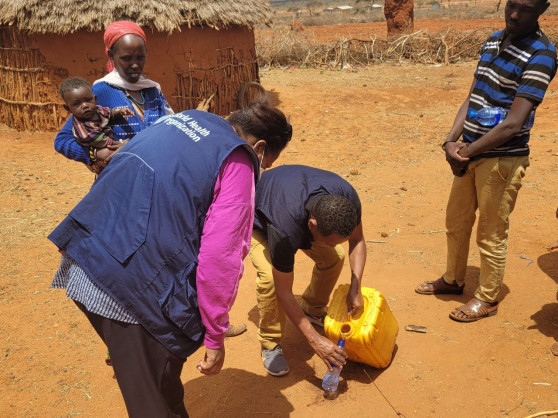
In August, through partner staff training, WHO delivered hands-on training on drinking water quality monitoring and surveillance for Environmental Health Officers in the drought affected regions. This activity is part of the ongoing efforts to strengthen water quality surveillance capacity in drought-affected areas, including those with active cholera outbreaks. WHO has supported technically and financially the training of 181 health workers on practical skills of water quality monitoring and IPC/WASH.
In these drought prone regions, sanitary surveys of drinking water supply are conducted using a structured checklist for 129 water sources, including household water storage and health facilities. Accordingly, about 67% (87) of water sources had a high potential risk of environmental contamination.
WHO staff, with government counterparts, promote household water treatment and safe storage. They regularly assess access to safe water supply in communities and health facilities. A total of 275 drinking water samples from households, IDPs, Health facilities and protected water sources were tested for faecal coliform presence using a portable field test kit. Out of the 275 samples tested for faucal coliform, over 82% (225) were positive, while the remaining 18% (50) were negative. In terms of public health risk, 59% (163) of the samples revealed a medium to high risk of potential for waterborne diseases.
WHO and partners are conducting hygiene promotion sessions in communities and schools in the Cholera affected Guradamole woreda, Somali Region. The team also held community dialogues with influential leaders, awareness sessions with service providers, and conduct door-to-door visits. In collaboration with local NGOs, prevention messages have been disseminated. The risk communication and community engagement team organized nineteen sessions on cholera prevention and control in Somali and Oromia regions for over a hundred thousand people.
Distributed by APO Group on behalf of World Health Organization (WHO) – Ethiopia.


