Explainer: why South Africa’s energy generator is in so much trouble:
Eskom is by far the largest of South Africa’s many state owned companies. This near monopoly power utility is in crisis. It’s the single largest threat to South Africa’s economy, according to a former minister of finance. The Conversation Africa spoke to Adjunct Professor Rod Crompton about why this is the case and what can be done.
How is power generated and distributed in South Africa?
Electricity markets in most countries consist of three parts: generation, transmission and distribution. Most electricity is generated by using heat to boil water to create steam which in turn spins a turbine that generates electricity.
South Africa’s cheap and abundant coal resources made coal generated electricity an obvious choice for many years. Initially, power stations were owned by municipalities and large mining and industrial concerns. But as the costs of recapitalisation emerged, government was persuaded to take over responsibility for power.
Eskom is among the biggest power utilities in the world, famous for its ability to handle vast tonnages of low grade coal. Eskom accounts for over 90% of power generating capacity. Its power plants are mostly coal with one nuclear station and some pumped storage (water). Only a few minor power generators have remained outside Eskom’s fold.
More recently, international climate change pressure caused government to introduce renewable power generation through bidding rounds. These private investors were given 20 year price guarantees underwritten by government – some at exorbitant prices. Nevertheless, as these technologies became more globally popular, some of them – solar (photo voltaic) and wind power – emerged as the lowest cost generators.
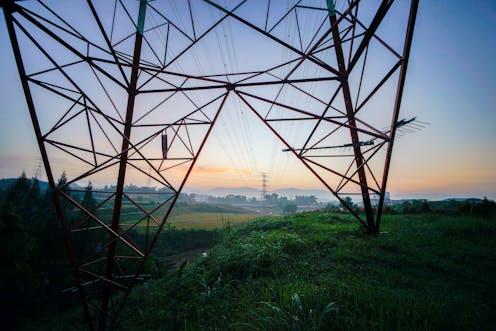
All power generation is tied into Eskom’s national transmission grid that moves electricity from generation stations to demand areas. Transmission is a natural monopoly. If you want to use the transmission grid you need Eskom’s permission.
Transmission lines end where high voltage power is stepped down to distribution networks until it reaches residential customers – at 220 volts. In many areas Eskom sells to municipal distributors.
So, Eskom is a vertically integrated near monopoly responsible for generation, transmission and distribution.
Is this monopoly situation unusual in the 21st century?
In many countries competition between power generators has been encouraged to drive down prices. Transmission, being a natural monopoly, remains just that; but like toll roads they are open to all who obey the “road rules” and pay the toll. The same goes for distribution to a lesser extent.
What’s the trouble with Eskom?
Eskom has two major problems. Its operating costs are too high and it can’t pay its debt. It owes over R400 billion and does not generate enough cash to pay even the interest on its debt. It’s reached the end of the road.
Eskom has been getting steep tariff increases in recent years but these have driven some customers off-grid and shut others down. Eskom’s sales have been declining by about 1% per annum. The less it sells, the higher the tariff it wants, and the less it sells – the utility death spiral.
How did it get here?
The main cause of its troubles is its decision to build two of the biggest coal fired generating plants in the world, (Medupi and Kusile). These plants are running way behind schedule, they’re over budget and the bits that are complete don’t work properly. They are probably the single largest disaster in South Africa’s economic history.
“State capture” (patronage networks), corruption and poor management have led to over staffing and neglected maintenance, resulting in constant breakdowns. Electricity theft, a culture of non-payment and defaulting municipalities have deepened the crisis. Eskom is owed over R30 billion.
What are the answers?
Eskom needs to simultaneously reduce operating costs, increase tariffs and shed a big chunk of its debt. There is no painless way for South Africans to deal with their Eskom crisis. And it can’t wait until the national elections on 8 May 2019.
President Cyril Ramaphosa appointed a team of advisers and has announced that Eskom is to be split into three subsidiaries: generation, transmission and distribution. This has been a government policy since 1998. This should increase cost and debt transparency and may lead to increased efficiencies, especially if competition is allowed.
Read more: Why South Africa’s latest plan for state-owned power giant could work
Ramaphosa hinted that Eskom will be allowed to invest in renewables, possibly to absorb surplus staff and avoid retrenchments that have been so vehemently opposed by the unions. Some think this is too little too late. He passed the debt hot potato to the minister of finance’s budget speech on 20 February 2018.
Energy Minister Jeff Radebe said Eskom must prepare for increased competition, presumably in generation. The transmission network needs to be opened to allow this. The courts have stopped Eskom from switching off defaulting municipalities. Esokm’s crisis gets worse every day. Government will have to sort out municipal non-payment or allow towns and cities to go dark or let Eskom collapse.
Until the President’s statement, government seemed paralysed. Will words turn into the effective action that’s needed to save South Africa from its power utility?

Rod Crompton is the Director of the African Energy Leadership Centre at Wits Business School which receives funding from the CHIETA. He is a non-executive director of Eskom and a member of SANEA and the South African Association of Energy Economists.
Source: The Conversation – Articles (AFRICA)
Read more on The Conversation.
Join the fun: Add Your event | Submit a Press Release | Add your listing.


