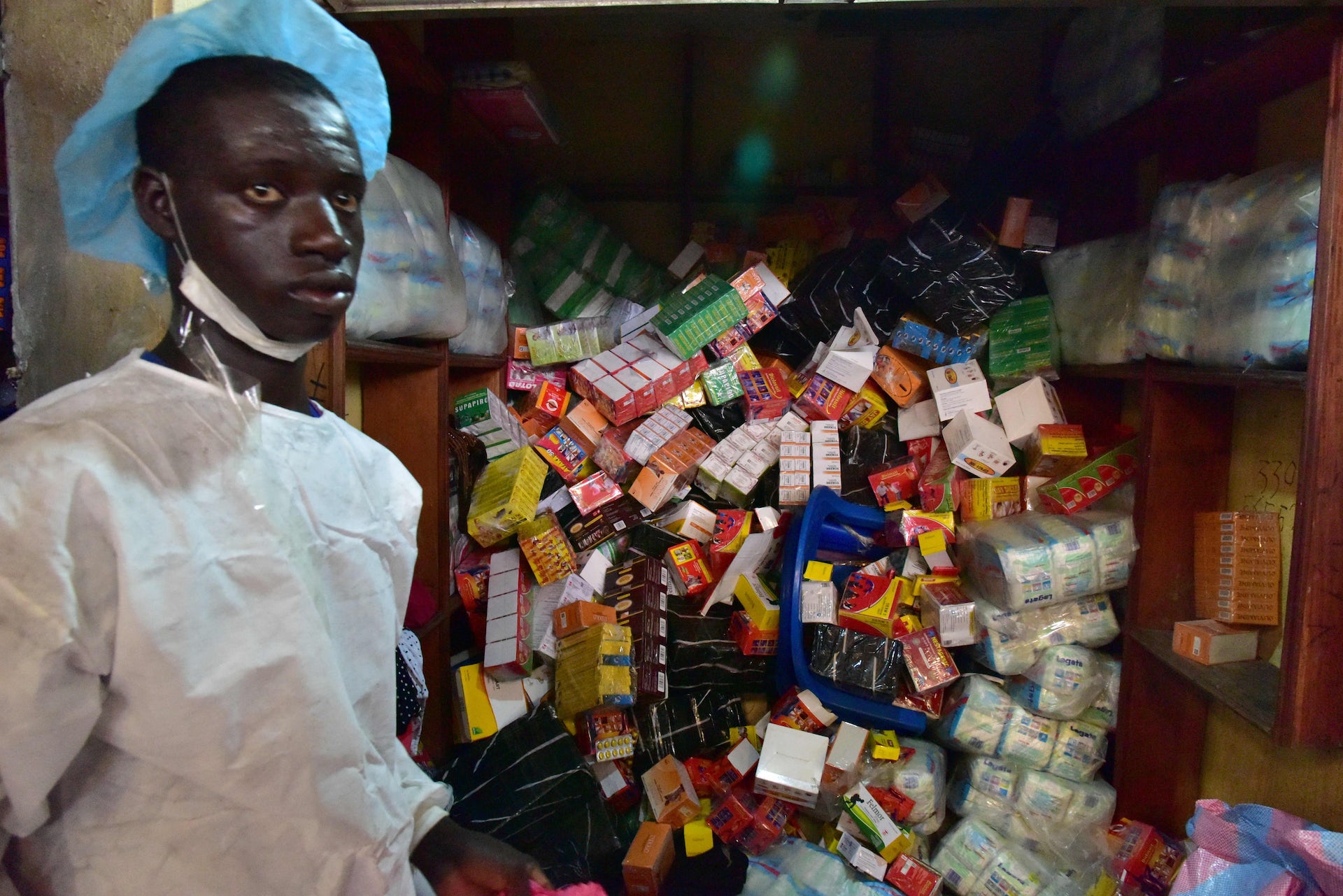
At the end of a long day, you realise you’re starting to get a headache. So you buy painkillers from the street vendor, and take two. But how do you know what those pills really are? The vendor isn’t a pharmacy. There’s no package insert listing ingredients or dosage instructions. What if you’ve just tried to treat your headache with counterfeit medicine?
The term “counterfeit medicine” refers to medicines that are deliberately and fraudulently falsified or mislabelled. Also called sub-standard or falsified medicines, they would have failed to pass the quality measurements and standards which are approved by medicine regulatory authorities. They aren’t to be confused with generic medicines – those are cheaper, but still scientifically proven to be safe and efficacious versions of patented medicines.
The most common fakes tend to be the most popular medicines: painkillers, antibiotics to treat infection, anti-malarials, anti-retrovirals, sexual stimulants, or weight loss medications.
Counterfeit medicines are a huge problem in many African countries. Research has shown that many developing countries have a high prevalence of substandard medicines. For instance, up to 88.4% of antimalarials in some African markets have been reported as being fake. Using ineffective medicines causes between 64,000 and 158,000 deaths from malaria every year in sub-Saharan Africa.
Giving people medicine that won’t work or isn’t made properly is obviously dangerous. Over 250,000 children worldwide die from these medicines each year. In the past year alone more than 300 children died after ingesting counterfeit cough or pain syrups.
Read more: Cough syrup can harm children: experts warn of contamination risks
Work is underway to strengthen governments’ surveillance of counterfeit medicine. For instance, in many African countries pharmacists are being trained to create awareness of such medicines and their possible infiltration into the medicine supply chain. This will make them better prepared to detect fake medicines and share information with their patients.
However, educating the end users of medicines – the patients – is the most important pillar of safe medicine use. Consumers must know how to visually inspect medicines for expiry dates and other identification markers. Being able to tell the difference between a good quality medicine and a fake one can make the difference between life and death.
As a pharmaceutical expert, I want to share my advice on three steps to take to spot a fake.
Buy your medicines from legitimate places
First, buy your medicines from licensed retail shops, pharmacies and dispensaries – they should display their licences on their walls. Pharmacists and their assistants are trained in the handling of medicines. They’re legally and ethically liable for the medicines under their control. This means they’ll source products through formal medicine channels which are less likely to be infiltrated by fakes.
Pharmaceutical personnel are also involved in their country’s pharmacovigilance system, which monitors the safety of medicines. It’s able to pick up and report serious side effects and injuries which may be caused by medicines. This system makes it possible to remove fake medicines.
Do not buy medicines from online pharmacies. In most African countries, there are no legitimate online-only pharmacies. Legitimate online pharmacies should also have a physical presence in the country. Research shows that the internet is the largest source of counterfeit goods as most traders operate outside national borders and national laws governing the quality of medicines and their proper handling.
Buying medicines from unregulated markets may seem to be cheaper, but it’s extremely risky.
Inspect your product
Make sure to visually inspect the medicine’s external packaging.
It should be labelled with the product name, the details of the manufacturer – such as their name and physical address – and its expiry date. Where possible, check the batch number – this is a serial code which can be used to trace when and where the product was made.
If it’s a product you have used before, try to match it with previous packaging. Take a photograph of the product if you’re using it often for future comparison.
Make sure the product is intact
Open the package and ensure that the medication is intact. Tablets, for instance, may be blister-packed. Make sure that the blisters have not been tampered with and the seal hasn’t been broken. The blisters must all look the same and possess an expiry date and the name of the product. If the product is packaged as loose tablets or capsules in a bottle or dispenser packaging, ensure that they look uniform with no obvious discoloration, mottling (the skin of the pills looks marbled), chipping or mould.
Some powder residue in pills is acceptable, but there shouldn’t be too much at the bottom. This could mean the tablets are not well compressed. There should be no smell, for instance of vinegar. Capsules should be shiny and not cracked, sticky or clumped.
Oral liquids are more difficult to assess, but a bad odour or industrial or petrol-like smell is a sign of poor quality. The liquid should be easy to pour into a spoon and come out smoothly without clumps or solid particles. Liquids easily get contaminated with mould or bacteria so the bottle should be well sealed at the point of dispensing and when being used. Any remaining dose should be discarded within a month. Antibiotics should be discarded within seven days of opening if they have not been finished for whatever reason.
When you’ve spotted a fake
If you suspect that your medicine is of poor quality or fake, then you should report it to the clinic, pharmacy or national medicine regulator. Every country in Africa has a national medicine regulatory authority either as an independent agency or within the health ministry.


