Urban agriculture as a global phenomenon is widely promoted as a sustainable land use practice. On small plots and in big projects, using sophisticated technology or simple solutions, city dwellers around the world are producing food. Growing food in a city can improve local food security and express local culture.
Little information is available, though, on what kinds of spaces and technologies urban agriculture requires. This sort of information would be useful to architects and built environment specialists when they design buildings and urban spaces that can accommodate urban agriculture.
As part of a larger research project on the climate change adaptation potential of urban agriculture, our study explored the spatial, material and technological characteristics of selected urban agriculture farms. We looked at how it’s done in dense urban settings in four countries: Belgium, the Netherlands, Singapore and South Africa.
The selection of countries aimed to present diversity of context, climatic conditions and forms of urban agriculture. Belgium, the Netherlands and Singapore are developed and high-income countries. South Africa is a developing context and therefore offers a contrasting perspective.
We interviewed farmers, architects and engineers. We asked about the choices they’d made about site, layout and management, what had influenced them, and whether they had experienced any problems. We also observed the materials and methods used, any adjustments to existing buildings or infrastructure, access to the site, and movement around it.
In this process we identified various ways of using space and technology under different conditions. We grouped them into eight farm types, ranging from low-tech to sophisticated solutions.
Our typology is useful because we found that urban agriculture is very diverse in its form and application. This diversity means architects and other specialists in the built environment risk getting their design proposals wrong. By defining the types and linking them with spatial, material and technology needs, we offer professionals information they can use when introducing food production into their projects.
Our overview of urban farming highlights the need to develop and use appropriate technologies in poorer and rapidly growing cities. These are the features of most sub-Saharan African cities.
Eight types of urban farms
The eight farm types emerged from the way they use space (planted in soil or on/in buildings), the level of control over growing conditions (like ambient temperature, light, nutrients, water and air flow), and the use of other resources. The latter may be waste sources (such as waste water, bio-matter or waste heat), internet and connectivity networks, and human labour (such as the immediate community).
The farm types we identified were as follows:
-
community or allotment farms that are farmed for personal or community use
-
community or commercial soil-based farms that use growing tunnels
-
farms integrated with the built environment, and presenting aesthetic or cultural functions with less focus on produce output (for example demonstration kitchens, or restaurants that promote ethical, sustainable consumption)
-
productive commercial farms that are integrated within the built environment (for example hydroponic farms, greenhouses and rooftop greenhouses)
-
farms that are part of buildings, circulating resources within the building (like integrated rooftop greenhouses)
-
farms integrated into buildings or urban spaces which share resources with a wider neighbourhood
-
indoor farms with artificially controlled conditions (like indoor commercial hydroponic farms)
-
completely automated commercial farms that control the planting process, nutrient management and indoor growing environment.
We observed certain strategies and trends.
Firstly, urban farmers often activate unused spaces. These may be empty lots, leftover spaces next to properties or infrastructure, empty buildings, or rooftops.
Secondly, urban farms ranged widely in size. We documented farms ranging from 3,220m² to 4m². Some of the soil-based organic farmers were particular about microclimate (sun, shading, soil quality and water availability). Some of the more technologically advanced farms were good at manipulating microclimates. They could grow food in seemingly unlikely places, like enclosed storerooms or cupboards.
Thirdly, we documented farms that benefited financially and otherwise from being part of multifunctional spaces. For example, they incorporated restaurants, education programmes, therapy spaces, sport facilities and social gathering spaces.
But we also came across urban farmers who actively discouraged a multifunctional approach. In South Africa, urban farms tended to be isolated – for example on rooftops – and the public were mostly excluded. The main reasons were food safety and the risk of theft or damage. The farmer’s main aim was to grow produce to secure an income.
Urban farms are often assumed to contribute to public spaces in cities. Some are part of large urban regeneration initiatives. But our findings prove this isn’t always the case.
Finally, we saw a range of technological applications and solutions. Many farms used highly sophisticated growing technologies. They include zero-acreage farms, which don’t use farmland or open space, but are part of buildings. Hydroponics (growing plants in nutrient-rich water) and vertical agriculture (growing plants on vertical structures) are zero-acreage methods.
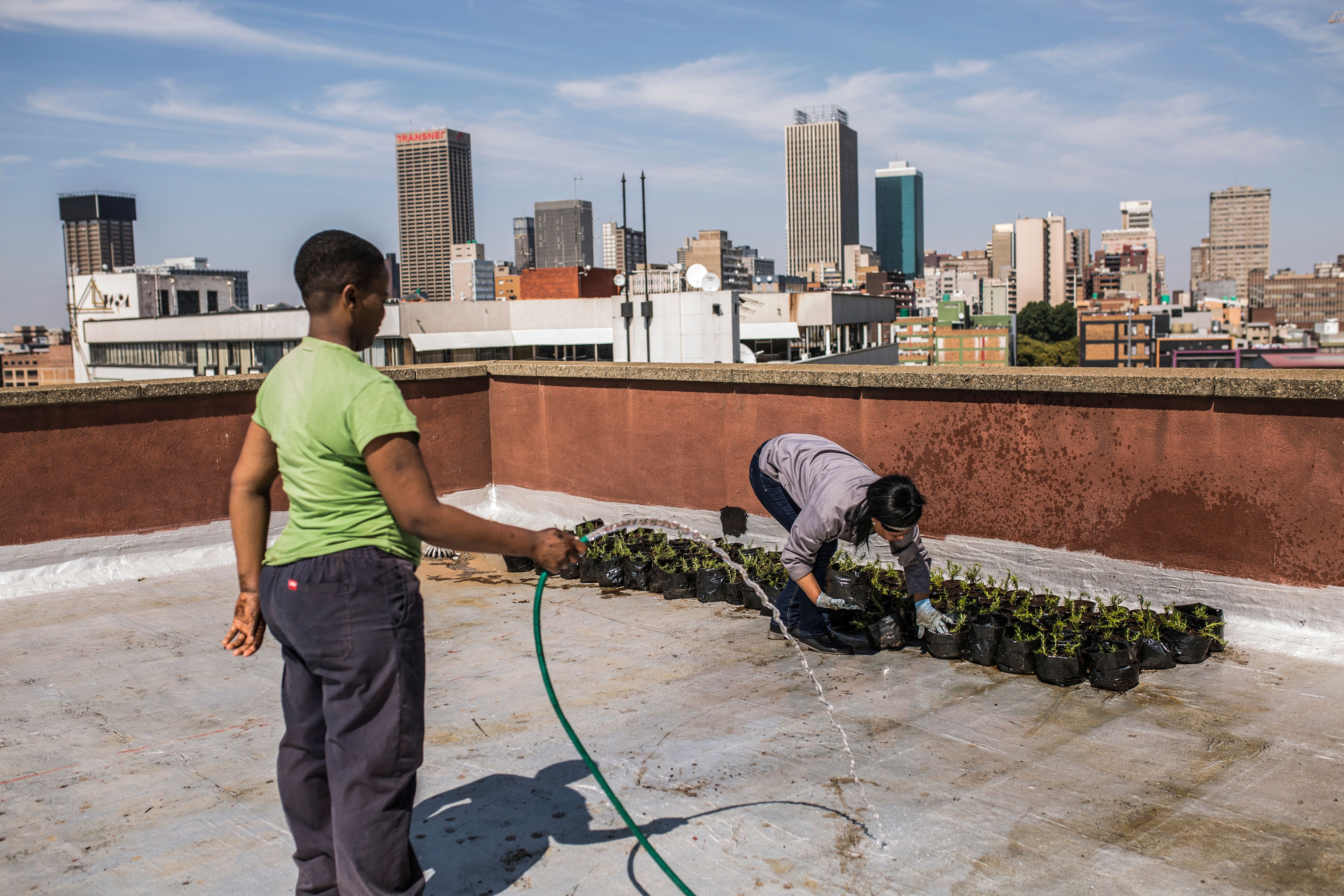
But other farms used technology like discarded objects, self-made solutions and organic or recycled materials. This reflects intentions to develop more sustainable farming solutions and save project costs.
We noted that low-tech farming technology was highly flexible. High-tech solutions were often inflexible once implemented. For example, one farmer had to completely replace the growing equipment because the technology didn’t suit local growing conditions.
Other farmers noted that the integrated nature of the farming systems forced them to grow only a small selection of crops.
Critical findings
Urban agriculture can offer cities several benefits. But certain types of urban farming, especially zero acreage farms, can potentially impede sustainable development. They may be more isolated from their surrounding context, less flexible and adaptable, and less multifunctional. Isolation, and only focusing on food production, reduces the economic potential and social impact of these farms.
The choice of urban agriculture technology is an important consideration for urban planners, architects, developers and farmers working in developing cities.


