Finding ways to keep communities alive after mine closures:
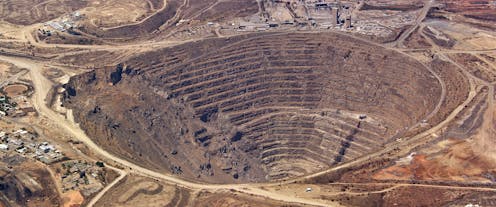
South Africa’s economy was built on the mining industry. But the sector has been in decline for decades. Mining contributed R312 billion, or 6.8%, to South Africa’s GDP and 464 667 direct jobs in 2017, a far cry from the 21% contribution to GDP in the 1970’s.
Over the past two decades, 6 000 mines have been abandoned and a large number are expected to be closed in the next ten years. As one consulting analyst and engineer in mining puts it, “we are in mine closure inducement mode right now”. Fixed investment in the industry has been shrinking over the past 10 years, while almost 30 000 jobs have been lost since 2014.
Mine closures create an economic vacuum, especially if the mines have been the only generator of economic activity in an area. Essential services, such as medical and health facilities, can also disappear if they were provided for by mining companies. Distressed communities are left behind to fend for themselves.
Towns like Carletonville, Kroondal and Witbank in South Africa have already felt the impact.
A mine closure is a multifaceted injury that occurs in a narrow time frame. Communities don’t have a chance to adapt. It’s therefore important for closures to be planned and managed throughout a mine’s life cycle so that when the inevitable happens, people are better prepared.
We have been conducting research into different approaches to mine closures, viewed from several angles. The research covers a range of topics. These include how value can be added by treating acid mine drainage through biomining, evaluating sustainable development in the context of mines preparing for closure, evaluating the legal requirements to facilitate mine transformation and investigating the economic complexity required to grow the South African economy beyond primary resource extraction.
A great deal of research is going into green mining – an approach that involves mining metals and minerals for the benefit of local communities and in ways that lead to minimal environmental degradation. This includes planning beyond mine closure, while the mine is still operational.
Members from each of the teams involved in the research at the University of Cape Town are trying to find more integrated opportunities to address the complexities of mine closures. Our approach has been to address the challenge through a multi-faceted approach that involves collaboration across disciplines. This approach takes into account the perspectives of natural scientists (including bio, environmental and inorganic chemists), chemical engineers, legal specialists and developmental economists.
Opportunities beyond mining
An area we are exploring is whether the infrastructure left behind after mine closures can be put to new use.
One key insight is that the infrastructure that supports mining can also be used for agriculture.
Another avenue of research investigates planting fibre-producing plants such as bamboo or hemp on mine land. The attraction here is that fibre-producing plants could achieve multiple objectives.
The first is that they have the ability to rehabilitate the land itself. Fibrous plants are particularly useful because they selectively absorb metals from the soil.
Secondly, communities can diversify a local economy by changing the land use from mining to agricultural activity. This could spur the development of downstream industries, including the manufacturing of textiles and furniture which can be produced from the fibre and stems of some of these plants.
An inter-disciplinary approach has been adopted in exploring the possibility of using fibrous plants on land previously used for mining.
For example, the Centre for Bioprocessing Engineering Research from the University of Cape Town, is reviewing the available information on fibrous plant suitability. This is done by assessing the best match of plant and degraded land. Key considerations include:
-
the features of the geography and soil;
-
the resilience of the plant and its productivity; and
-
the nutrient and water requirements.
At the same time the minerals to metals group is assessing the potential for plants removing metal from the soil, the impact of plant type on removal, and ease of metal recovery. Their goal is to identify the most suitable crop types to achieve not only the best outcome for economic diversification, but also rehabilitation of the land.
The project draws on existing research that’s already been done around the economic potential of bamboo in South Africa.
Opportunities
South Africa isn’t short of opportunities in which to try out new approaches. Mine closures are a regular occurrence. Lonmin, for example, has announced that over the next three years it will be closing some operations with the loss of over 12 000 jobs.
Moving from the concept of mine closure to mine transformation – taking into account the environmental as well as societal and economic effects of mining – provides new opportunities to fill the economic and governance vacuum of mines closing, easing the traumatic transition for affected communities and contributing to securing resilient future livelihoods.

The Department of Science and Technology (DST) and the National Research Foundation (NRF) have awarded funding for this communities of Practice project, via existing Research Chairs under the South African Research Chairs Initiative (SARChI) funding instrument.
Cheri-Leigh Young receives funding from The National Research Foundation (NRF). This funding is provided for research pertaining to the project discussed in this article.
Francois Steenkamp receives funding from The National Research Foundation (NRF). This funding is provided for research pertaining to the project discussed in this article.
Jennifer Broadhurst works for the University of Cape Town, and is affiliated with the NRF South African Research Chair in Minerals Beneficiation.
Sue Harrison receives funding from the Department of Science and Technology through the NRF, holding the SARChI Chair in Bioprocess Engineering and being a member of the Community of practice project on this topic
Source: The Conversation – Articles (AFRICA)
Read more on The Conversation.
Join the fun: Add Your event | Submit a Press Release | Add your listing.


