First steps to tackling South Africa’s abalone poaching:
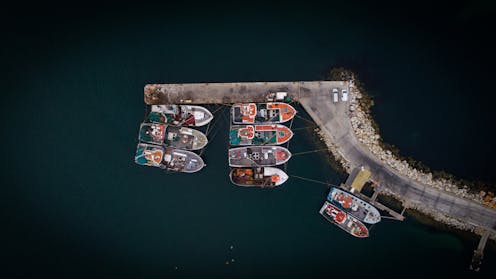
South Africa faces the possible collapse of several inshore fisheries, particularly certain species of linefish, abalone and West Coast Rock Lobster. If nothing is done, not only will the ecology be poorer and change in many unexpected ways, but sea-derived livelihoods will collapse. The social structures that have maintained communities and relationships with the sea will follow.
In South Africa abalone is threatened because of a number of failures. These include a lack of opportunities combined with poverty in small towns along the country’s coast, as well as inefficiencies in fishery management.
Abalone is a mollusc of the genus Haliotis. It’s found in most parts of the world except one or two continental coasts and the polar regions. Along South Africa’s coast, baby abalone –- called spat -– shelter among the sea urchins that cohabit with the shellfish on our rocky shores. The muscular and mucous-rich meat of the sea snail is delicious. It’s been eaten along the South African coast for millennia.
The inside of an abalone shell – the opposite of its rough and camouflaged exterior – is covered in smooth nacre that runs a spectrum of colours from white to blue to purple. It’s this hidden beauty that earned it its Afrikaans name from the Dutch, perlemoen or “mother of pearl”.
The most sought-after species in South Africa is Haliotis Midae. It’s this species that’s highly prized in Asia, particularly China, and enjoys the same status as luxury foods such as the infamous shark-fin and bird’s nest soups.
Since the 1990’s, international trafficking in abalone has skyrocketed. Sophisticated syndicates move it in amounts that usually equal several million rands’ worth. This booming illegal trade has affected the country’s coastal socio-ecologies in two particularly devastating ways. One, the species is highly over-exploited; two, the lucrative nature of these poaching networks has roped in local and international criminal networks.
Currently, the South African government and these poaching networks are locked in a downward spiral of violence that’s seen the increased militarisation of both poaching and law enforcement activities.
I saw this first hand in my research along the Indian Ocean coastline where I witnessed the effect of two decades of organised poaching on small coastal communities.
What’s driving the illegal demand
Since 1994 the government has attempted to transform the fishing industry to make it more inclusive. However, it’s failed to give small-scale fishers the number and size of fishing rights they were expecting, or that they needed. The disappointment this caused led to an explosion of what was termed “protest fishing”, where large groups of disgruntled fishers would fish illegally, often out in the open and in front of the public and media to make their case for the recognition of their livelihoods.
Additionally, the end of apartheid meant that South Africa’s borders were opened up. This had an impact on both legal and illegal activities.
The protest fishers needed a market for their catch, which was by definition illegal. This environment created the perfect scenario for foreign interests to step in. One of the biggest markets was China. It quickly became apparent that what this market wanted most –- and was willing to pay highly for –- was abalone.
The lucrative nature of this new industry soon attracted the attention of syndicates in South Africa and abroad. Many protest fishers were co-opted into highly profitable networks of poachers that were intimately tied to established gangs.
Breaking the cycle of illegal activity is going to be tough, but there are things that the government can do.
What can be done
The government needs to curtail the socio-economic conditions that make poaching not only the most lucrative, but often the only option, for employment in impoverished fishing villages.
For example, hotspots such as Gansbaai in the Overberg and Hangberg in Cape Town are characterised by a lack of housing, employment, opportunity and skills-based education. By focusing both on communities’ well being and on good governance, many of the factors that threaten the natural resource sectors would be ameliorated.
Here are additional steps the government must take:
-
Root out the corruption at the Department of Agriculture, Forestry and Fisheries. The department’s leadership has been compromised for decades. It’s no wonder that some fishers question the authority of such inefficient management.
-
Forensic task teams must be established and authorised to follow the flows of capital into and out of coastal communities, as well as the Marine Living Resources Fund. Community, here, refers to both fishers and Fisheries Branch personnel.
-
Bring back the Green Courts. These special courts were regionally based and dealt only with environmental crime. Both the prosecutors and judges had specialised knowledge and the court didn’t need to prioritise between environmental crime and other serious crime such as murder, rape or robbery. When operating, the Green Courts had an over 80% success rate at convicting. Currently, environmental crimes are often relegated to the bottom of the schedule because they’re not seen as urgent. This has resulted in endless delays in hearing cases of poaching, and under-prosecution of environmental crime.
-
The small-scale fisheries policy needs to be realistically assessed for its capacity to uplift communities who’ve been waiting in increasingly desperate anticipation for its implementation since 2007. It cannot be the only option for long-term upliftment along our coasts.
Abalone are not charismatic creatures. They’ll never inspire the same national outrage or proliferation of bumper stickers as the rhino. Yet, their value is no less. Fixing the myriad of problems that have spawned this illegal industry won’t be easy. However, by assuming that the Department of Agriculture, Forestry and Fisheries is capable of addressing the problem on its own, we’re condemning all such efforts to failure. With political will, and coordinated effort between government departments, almost everything is possible.

Marieke Norton has previously received funding from the South African National Research Foundation through the Research Chair in Marine Ecology and Fisheries, as well as the SeaChange Fund, also NRF.
Source: The Conversation – Articles (AFRICA)
Read more on The Conversation.
Join the fun: Add Your event | Submit a Press Release | Add your listing.


