Anyone who reads even a little about science and technology will be familiar by now with the idea of genome sequencing. This process involves breaking an organism’s DNA into fragments to study their compositions or sequences. Then the fragments are aligned and merged to reconstruct the original sequence.
But why sequence an organism’s genome? What’s the value for ordinary people and the world more broadly? The answers are immediately obvious when it comes to the medical field. Understanding what makes a disease “tick” offers scientists a way to treat or prevent it. Sequencing the genome of a crop or animal can improve agricultural yields or make species hardier in shifting climates.
It’s a little tougher to explain the value of sequencing the genome of plant pathogens, the organisms that cause diseases in plants. But this has become a critical part of the work of microbiologists and plant pathologists. And it is important, far beyond the laboratory: by carefully studying plant pathogens’ genomes, researchers have been able to design specific double stranded RNA fungicides to short circuit some pathogens’ abilities to harm plants.
These fungicides have not yet been deployed commercially but have huge potential – only targeted species will be affected and so the process is likely to be more environmentally friendly than any involving chemical fungicides. This research has the potential to protect crops, benefiting agriculture and contributing to food security.
For the past 13 years I’ve focused on sequencing one plant pathogen’s genome. Here’s where that scientific journey has led.
Pine trees at risk
I sequenced the genome of a fungus called Fusarium circinatum in 2009; it was the first fungal genome sequence to be conducted on the African continent.
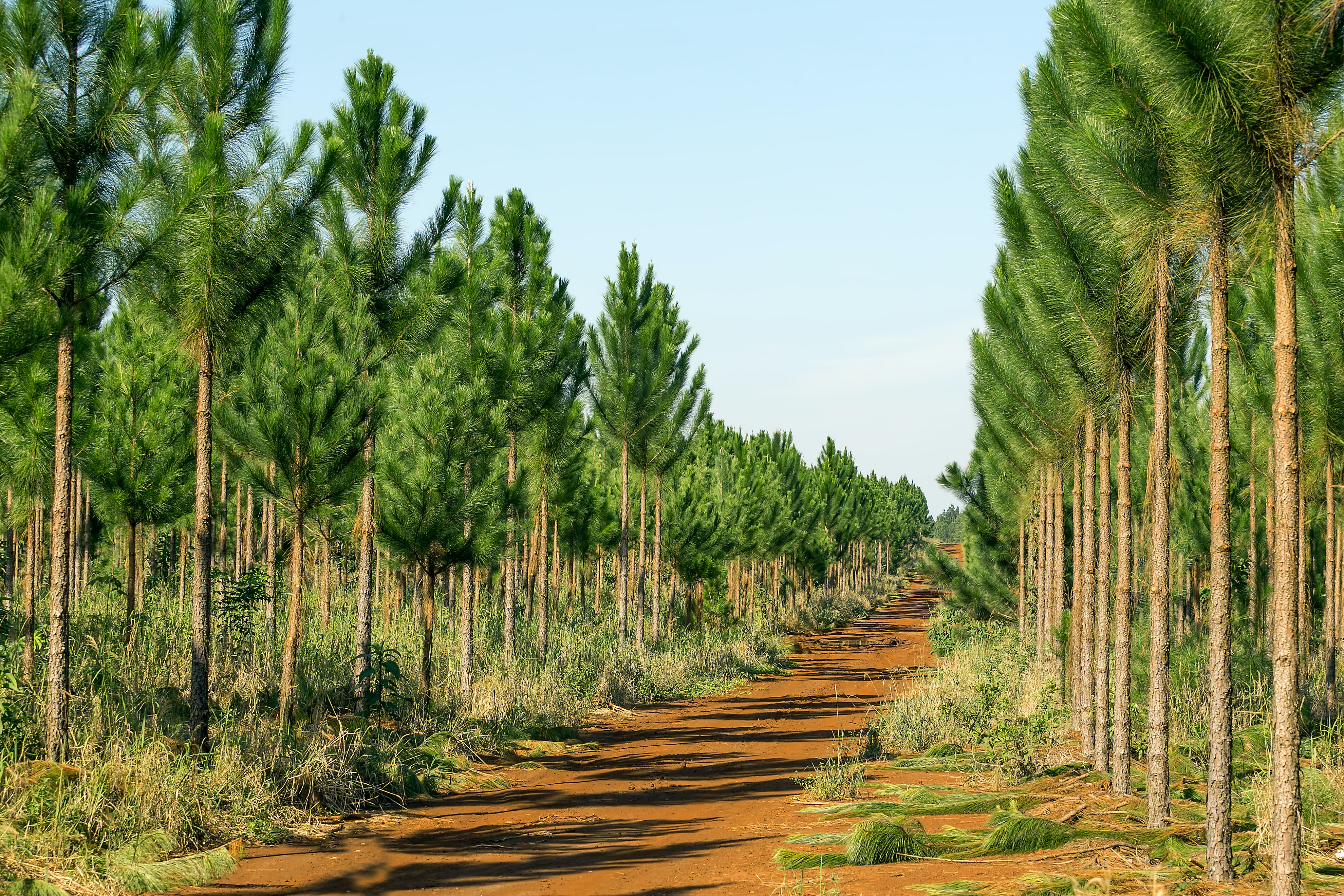
I started studying this pathogen more than 20 years ago because it was killing seedlings in South African pine nurseries. Fusarium circinatum causes pitch canker on pine trees, which makes trees exude pitch or resin. In severe cases the fungus causes tree death. This fungus is considered to be the most important pathogen threat to the global plantation pine industry. It is also potentially devastating in some areas of the southern US, Central America, Europe and Asia, where pines are found naturally.
Trees are extremely important in carbon sequestration. They also produce oxygen – it is estimated that, daily, one tree can produce enough oxygen for four people. Trees have huge economic value, too, providing timber for our homes and paper and packaging for many uses in our daily lives. It is difficult to estimate the total value of pine plantations globally but the South African industry is estimated to contribute more than US$2 billion to the country’s Gross Domestic Product annually.
Sequencing the genome was just the beginning. Follow-up studies published in 2021 involved knocking genes out of the genome and studying what happened. This process is a bit like first identifying and lining up all the parts, then removing these parts one at a time to see what difference they make to the functioning of the fungus. Sometimes we need to understand how gene products (proteins) interact with each other and then more than one gene might be removed from a genome.
In this way, my colleagues and I can learn which genes are important to the processes that Fusarium circinatum uses to cause pitch canker and which are not. Now we’re working to target the important genes in studies to manage the pathogen.
It’s time-consuming work: this fungus has around 14,000 genes. This is more than the yeast that is used to ferment beer, which has 6000 genes, but less than the estimated 25,000 genes in the human genome. Luckily technologies are evolving rapidly to enable routine gene knock-outs. This involves a protein which acts a bit like DNA-specific scissors allowing deletion of a specific sequence of DNA. The position where the protein cuts is guided by using small pieces of RNA sequence that are identical to the target DNA sequence.
Read more: What is CRISPR, the gene editing technology that won the Chemistry Nobel prize?
Another of our key findings is that Fusarium circinatum has acquired, through horizontal gene transfer from other organisms, a group of five genes that apparently enhance its growth.
This discovery has been very useful in developing a specific diagnostic tool using LAMP PCR (Loop-mediated isothermal amplification) to identify this pathogen. This is a special kind of highly sensitive test that was developed to allow for in-field detection of pathogens. It also doesn’t require specialised training. This is useful because trees only recently infected with Fusarium circinatum can be asymptomatic. It’s crucial to determine the presence of the pathogen as early as possible so its spread can be better managed.
New skills, new possibilities
The rise in studies that sequence plant pathogens’ genomes has also opened up opportunities for scientists to develop new skills. The data generated by genome sequencing sometimes outstrips the number of researchers available to analyse it. During pandemic lockdowns in South Africa, some students in my research programme learned how to code and developed skills in bioinformatics, using computers to capture and analyse biological data rather than working in a laboratory.
With these new skills, as well as fast-improving technology, we may well crack Fusarium circinatum’s code once and for all. And that will help to guard pine trees against a dangerous, costly pathogen.


